Home Pricing About Us Contact

Best AI Tools for Ecommerce Product Photography in 2026

A Practical Buyer’s Guide for Online Sellers, Brand Managers, and Studio Owners

Online shoppers decide whether to buy within roughly three seconds of landing on a product page, and the photo does most of the talking. In 2026, ecommerce sellers no longer rely on expensive studio shoots alone — they pair human creativity with AI-powered software that removes backgrounds, builds lifestyle scenes, retouches models, and pushes images straight to Shopify, Amazon, or Etsy. The shift is dramatic: AI product photography now cuts costs by 70–95% per image compared with traditional shoots that often run $200–$5,000 per session Digital Applied Research.

This guide breaks down the best AI tools for ecommerce product photography in 2026, what to look for before you subscribe, how to combine AI with human retouchers for premium results, and which platforms genuinely earn their seat in your workflow. Every recommendation reflects real-world ecommerce use cases — fashion, jewelry, home goods, beauty, and DTC brands — rather than generic hype.

Need flawless cutouts before you feed images to AI? Try Photofixal’s professional clipping path service for pixel-perfect edges that AI tools can build on.


Why AI Product Photography Matters More Than Ever in 2026

The shift from studio-only to hybrid workflows

Brands today juggle hundreds — sometimes thousands — of SKUs across multiple marketplaces. Hiring a photographer for every fresh drop drains both time and budget. AI tools fill that gap by generating studio-quality visuals in minutes, not days. According to recent ecommerce benchmarks, high-resolution product images deliver up to a 94% higher conversion rate than low-resolution alternatives Nightjar Research.

What AI handles brilliantly today

  • Background removal and replacement at scale
  • Generative lifestyle scenes (kitchen, beach, studio, runway)
  • Color correction, white-balance, and shadow casting
  • Virtual try-ons and on-model fashion shots
  • Batch retouching across thousands of SKUs
  • Upscaling low-resolution images to print-ready quality

Where AI still falls short

AI rarely nails luxury fabric textures, transparent glass reflections, or jewelry sparkle on the first try. That’s why most successful brands run a hybrid pipeline — AI for speed, human retouchers for precision. If you sell premium goods, plan to combine both.


What to Look for in an AI Product Photography Tool

Before you pick a platform, evaluate it against these practical criteria:

  • Accuracy of edge detection — clean cutouts on hair, fur, lace, and translucent items
  • Batch processing capacity — can it handle 500 to 10,000 images at once?
  • API access — for plugging into Shopify, WooCommerce, or PIM systems
  • Generative scene quality — do backgrounds look photorealistic or obviously fake?
  • Marketplace compliance — Amazon’s pure-white background rule, Etsy’s lifestyle preferences
  • Pricing transparency — credit systems versus flat monthly plans
  • Mobile editing — for sellers who shoot and list on the go
  • On-model and try-on features — essential for apparel and jewelry

The 10 Best AI Tools for Ecommerce Product Photography in 2026

Below sits the curated shortlist after months of testing across diverse product categories. Each tool earns its spot for specific reasons, not just popularity.

1. Claid.ai — The All-in-One AI Suite for Scalable Catalogs

Claid.ai keeps its crown in 2026 thanks to generative backgrounds, intelligent upscaling, and a developer-friendly API that automates edits for thousands of SKUs without losing texture detail. Subscriptions start at $15/month, with enterprise tiers unlocking unlimited processing.

  • Best for: mid-to-large retailers running Shopify, Amazon, or Magento stores
  • Standout feature: text-to-background generation for contextual scenes
  • Real-world impact: brands report listing times dropping by roughly 40%

2. Photoroom — The Mobile-First Speed Champion

Photoroom dominates the agile DTC space with one-click removals, template-driven backgrounds, and smooth mobile apps. It easily handles batches up to 500 images and shines for sellers on Etsy, Depop, and Shopify. Plans begin at $9.99/month, plus a generous free tier.

  • Best for: solo founders, small teams, and mobile-first sellers
  • Standout feature: seamless iPhone-to-Shopify pipeline
  • Bonus: AI Shadows that mimic natural lighting

3. Flair AI — Drag-and-Drop Studio Quality

Flair AI gives creators a virtual photo studio inside the browser. Drag a product onto a scene, drop in props, light it like a photographer would, and let the AI render the final shot. The Starter plan runs $149/month with 500 image generations Rewarx Studio Review.

  • Best for: cosmetics, drinkware, and home goods brands
  • Standout feature: scene composer with object placement control
  • Pro tip: train a brand model to keep visuals consistent

4. Pebblely — The Lifestyle Background Specialist

Pebblely keeps its focus narrow and sharp: upload a product, get gorgeous lifestyle backgrounds. There’s no on-model feature, but jewelry, candles, and skincare brands love the natural results.

  • Best for: Etsy, jewelry, and small-batch artisans
  • Standout feature: 40+ ready-made aesthetic themes
  • Pricing: starts free, paid plans from $19/month

5. Booth.ai — Studio-Grade Photoshoots Without the Studio

Booth.ai targets brands that previously paid $300+ per SKU for traditional photography. Upload a reference photo, describe the scene, and receive 4K-resolution renders within minutes Booth.ai on YC.

  • Best for: skincare, fashion, and lifestyle brands launching catalogs
  • Standout feature: high-resolution outputs ready for billboards or banners
  • Watch-out: best results need detailed prompts

AI generated your scene, but the cutout still has fuzzy edges? Send it to Photofixal’s image masking experts for hair-fine accuracy on tricky products.

6. Adobe Photoshop with Firefly — The Professional’s Hybrid

Photoshop remains indispensable for serious product retouchers, and Firefly’s generative fill, expand, and AI background tools now work directly inside layers. The combo offers unmatched flexibility, especially when you pair it with a strong raster editor for photo editing workflow.

  • Best for: studios, agencies, and detail-driven retouching teams
  • Standout feature: non-destructive AI edits with full layer control
  • Plan: included with Creative Cloud Photography (~$19.99/month)

7. Evoto — The Retouching Powerhouse for People-Centric Shots

Evoto automates skin smoothing, eye enhancement, and reflection removal across batches — essential for fashion, beauty, and influencer-style ecommerce shoots. Plans start near $9.99/month.

  • Best for: apparel, swimwear, beauty, and lifestyle imagery
  • Standout feature: tonal grading that keeps skin tones realistic
  • Bonus: cuts post-production time roughly in half

8. Pixelcut — The Template-Driven Quick Generator

Pixelcut packs thousands of backgrounds, video exports, and free batch editing into a friendly interface. Pro plans start at $9.99/month and unlock unlimited generations.

  • Best for: DTC brands building dynamic ads
  • Standout feature: still-to-video conversions for TikTok and Reels
  • Use case: cross-channel content for promo campaigns

9. Remove.bg — The Veteran Background Eraser

Remove.bg still leads for five-second background extractions and pairs nicely with API-driven workflows. Free credits get you started; volume pricing scales to about $0.20 per image.

  • Best for: high-turnover catalogs and inventory pipelines
  • Standout feature: dependable transparency on white-on-white shots
  • Limitation: removal only — no scene generation

10. SellerPic — Virtual Try-On for Fashion & Accessories

SellerPic generates virtual try-ons and on-model lifestyle shots from a single flat-lay photo. Apparel sellers have reported conversion lifts around 25% after switching to interactive previews. Plans begin at $29/month.

  • Best for: clothing, eyewear, and accessory brands
  • Standout feature: AI human models in diverse sizes and ethnicities
  • Bonus: short product video generation included

Comparison Snapshot: Which Tool Fits Your Store?

ToolBest ForStarting PriceBatch SizeOn-Model
Claid.aiMid-large retailers$15/moUnlimitedNo
PhotoroomDTC & mobile sellers$9.99/mo500No
Flair AIStudio-style scenes$149/mo~500No
PebblelyEtsy & artisansFree / $19/moLimitedNo
Booth.aiPremium catalogsCustomHighLimited
Photoshop+FireflyPros & studios$19.99/moManualYes
EvotoFashion & beauty$9.99/mo300+Yes
PixelcutDTC + video adsFree / $9.99/moUnlimitedNo
Remove.bgHigh-volume cutoutsPay-per-useAPINo
SellerPicApparel try-on$29/mo200+Yes

How to Build a Winning AI + Human Workflow

Step 1: Start with great source images

AI tools amplify what you give them. Shoot products with even lighting, a clean tripod setup, and a neutral background. Phones with 48MP+ sensors now deliver enough detail for AI upscaling and editing.

Step 2: Run AI for speed

Use Photoroom or Claid.ai for the heavy lifting — background removal, color correction, and lifestyle scenes. Generate three to five variations per SKU so you can A/B test on product pages.

Step 3: Polish with human retouching

AI sometimes leaves halo edges, awkward shadows, or color casts on metallic and translucent products. A trained retoucher fixes these issues in minutes. Brands selling jewelry, eyewear, and luxury goods almost always need this final pass.

Step 4: Optimize for marketplaces

Amazon expects pure white (RGB 255, 255, 255) backgrounds, while Etsy rewards lifestyle context. Use your AI tool’s marketplace presets to export the right format and dimensions.

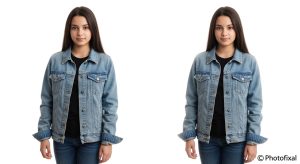
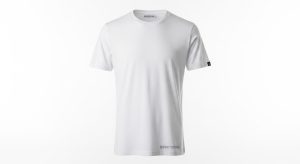
Selling apparel without an in-house model? Get clean, invisible-mannequin shots with Photofixal’s ghost mannequin service — perfect for shirts, jackets, and dresses.

Step 5: Drop natural shadows for realism

Flat-cut products look fake. Realistic shadows ground the product on the page and lift perceived quality. AI shadow tools handle most cases, but premium products benefit from manually crafted drop shadows.


Real Costs vs. Real Returns

A traditional product photoshoot averages $300 per SKU when you account for the photographer, studio, model, and post-production Booth.ai launch. AI workflows often bring that down to $5–$15 per SKU, including subscription and review time. For a 500-SKU catalog refresh, that’s a savings of roughly $140,000+.

Returns matter even more than savings. Brands that paired AI imagery with consistent retouching and shadow work reported:

  • 20–30% lower return rates from clearer product details
  • 25%+ conversion lifts on apparel with virtual try-on
  • Up to 80% faster time-to-listing for new product drops

Ready to make every SKU feel premium? Add lifelike depth with Photofixal’s drop shadow service and watch your product pages convert harder.


Common Pitfalls to Avoid

Relying solely on AI for hero images

AI nails secondary and lifestyle shots, but your hero image — the one shoppers see first — deserves human polish. Treat it like a magazine cover.

Ignoring color accuracy

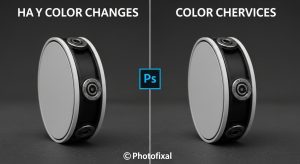
Generative tools sometimes shift product hues, especially in fabrics and cosmetics. A 5% color drift can drive returns. Always proof against the physical product, and use a dedicated color change service when AI gets it wrong.

Skipping marketplace specs

Amazon, Walmart, and Target each have strict image rules. Disqualified images cost rankings and visibility — bake compliance checks into your AI workflow.

Overusing generated humans

AI models look great in thumbnails but can fall apart in close-ups. For premium fashion, mix AI lifestyle shots with at least one real-model image.


Emerging Trends Reshaping Product Visuals in 2026

  • 3D and AR previews — shoppers rotate products before adding to cart
  • Voice-prompted editing — “make the background warmer and add morning light”
  • Sustainability metrics — virtual shoots cut physical sample waste roughly 50%
  • Blockchain-verified authenticity — image provenance for luxury goods
  • Generative video — still products turned into 5–10 second loops for Reels and TikTok
  • Hyper-personalization — product images that adapt to each shopper’s region, season, or browsing history

For a deeper look at how AI is reshaping the underlying editing software, see this analysis of the best raster editor software for photo editing.


Choosing the Right Tool for Your Store Size

Solo sellers and Etsy shops

Start with Photoroom or Pebblely. Both offer free tiers, mobile editing, and quick lifestyle backgrounds without a steep learning curve.

Growing DTC brands

Layer Claid.ai or Flair AI on top of Photoshop + Firefly. You’ll get scene control, batch power, and pixel-level retouching when needed.

Enterprises and agencies

Combine Claid.ai’s API, Evoto for batch retouching, and a professional retouching partner for hero images. Volume + quality + control is the winning trio.

Apparel and fashion-first brands

Lean into SellerPic and Booth.ai for try-ons and editorial shots. Then send hero imagery to a human team for beauty retouching and final polish.


Final Thoughts: AI Speeds You Up — Humans Make You Premium

The brands winning ecommerce in 2026 aren’t choosing between AI and human retouchers — they’re stacking them. AI handles the volume; humans handle the nuance. Photoroom, Claid.ai, Flair, Booth, and Evoto each earn their place, but none replace the careful eye of an experienced editor who notices a stray pixel, a wonky shadow, or a flat color.

Use this guide as your starting point. Test two or three tools on a sample of 20 SKUs, measure conversion impact for two weeks, and double down on what works. Then back your AI workflow with reliable human retouching for the moments that matter most — your homepage banners, hero images, and high-ticket SKUs.

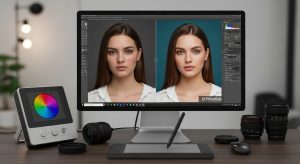
Ready to pair AI speed with studio-quality polish? Explore Photofixal’s photo retouching services and turn good product shots into images that actually sell.


Frequently Asked Questions

1. Are AI product photography tools good enough to replace traditional photographers in 2026?
For most everyday SKUs — yes. AI handles backgrounds, lifestyle scenes, and color correction at a fraction of the cost. However, hero images, luxury goods, and detailed editorial work still benefit from human photographers and retouchers. Most brands now run a hybrid model.

2. Which AI tool is best for small Shopify stores on a tight budget?
Photoroom offers the strongest balance of free features, mobile editing, and Shopify integration. Pebblely runs a close second for lifestyle backgrounds, especially for jewelry and home decor sellers.

3. Do AI-generated images comply with Amazon’s product image rules?
Most leading tools — including Claid.ai, Photoroom, and Remove.bg — export images at the required white background (RGB 255, 255, 255), correct dimensions, and 85%+ frame fill. Always run a final compliance check before bulk uploads.

4. How much can I realistically save by switching to AI product photography?
Brands typically save 70% to 95% per image versus traditional photoshoots. A SKU that costs $300 to shoot traditionally often runs $5–$15 with AI, including subscription and quick human review.

5. Why do AI cutouts sometimes look unnatural around hair or transparent objects?
AI models still struggle with fine hair, lace, glass, and translucent packaging. The fix is simple: pair AI with a professional image masking service for the 5–10% of products that need precision edge work.

6. Can AI tools handle apparel with multiple variants (size, color, pattern)?
Yes. Tools like Claid.ai and SellerPic generate variant-aware images automatically. For apparel, ghost mannequin techniques produce clean, consistent visuals across sizes without paying for multiple model shoots.

7. Will AI product photography hurt my SEO or rankings on marketplaces?
Not if you follow platform rules. Marketplaces care about resolution, background compliance, and load speed — not whether a human or AI created the image. Optimized AI images often outperform low-quality manual shoots.

8. How do I keep my brand’s visual identity consistent across thousands of AI-generated images?
Train a custom brand model inside Flair AI or Claid.ai, lock down a color palette and lighting style, and run a final QA pass through a headshot or product retouching service for hero assets. Consistency is the difference between a brand and a marketplace listing.