Home Pricing About Us Contact

Master fabric retouching with healing brushes, frequency separation, Liquify, and dodge & burn — without making clothing look plastic

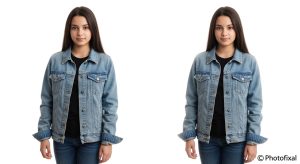
Wrinkled clothing can sabotage an otherwise beautiful photograph. A model’s pose looks confident, the lighting feels cinematic, and then — bam — a creased shoulder seam pulls every viewer’s eye straight to the flaw. The good news is that Photoshop gives you a complete toolkit to iron those wrinkles away digitally, and you don’t need a decade of retouching experience to pull it off.

This guide walks you through every reliable method professionals use to remove wrinkles from clothes in Photoshop, from one-click healing fixes to advanced frequency separation. You’ll also learn the small details — sampling direction, brush hardness, opacity stacking — that separate amateur edits from polished, sellable results. Whether you shoot fashion lookbooks, e-commerce flat lays, family portraits, or wedding albums, these techniques will help your fabrics look freshly steamed.

💡 Short on time or facing a huge batch of product photos? Let our professional photo retouching team iron every wrinkle so you can focus on shooting.


Why Wrinkles Show Up So Strongly in Photos

Cameras exaggerate fabric creases. A small fold that you barely notice in person becomes a hard shadow line under studio strobes or harsh sunlight. Understanding why wrinkles appear so prominently helps you fix them faster.

  • Light direction creates contrast. Side lighting carves deep shadows into every fold.
  • Lens compression flattens depth. Telephoto focal lengths make creases look stacked.
  • Tight fabrics cling. Stretch materials reveal every body curve and seam pull.
  • Movement adds chaos. A model walking or sitting bunches fabric in unpredictable ways.

When you retouch, your job isn’t to erase fabric texture — it’s to balance the highlights and shadows so the garment reads as smooth and intentional. Adobe explains this lighting interaction in their official Photoshop retouching documentation, which is worth bookmarking before you dive into advanced fabric work.

Two Categories of Wrinkles You’ll Edit

Most wrinkles fall into one of two buckets, and recognizing them upfront saves time:

  • Soft creases — light folds that need gentle tone balancing, not pixel replacement.
  • Hard wrinkles — sharp shadow lines and bunched fabric that demand cloning or healing.

Spend ten seconds zooming in and classifying the wrinkles before you pick a tool. That habit alone speeds up your workflow dramatically.


Setting Up Your Photoshop Workspace for Fabric Retouching

A tidy workspace prevents costly mistakes. Before you touch a single pixel, prepare your file properly.

  • Duplicate the background layer with Ctrl + J (Windows) or Cmd + J (Mac).
  • Convert important layers to Smart Objects so filters remain editable later.
  • Zoom to 100% or 200% to see real detail, not a softened preview.
  • Calibrate your monitor so shadow depth and color match real-world output.
  • Group your layers with names like “Healing,” “Frequency Sep,” and “Dodge & Burn.”

These habits keep your edits non-destructive, which means you can backtrack at any moment without re-opening the original RAW file. Non-destructive editing also pairs perfectly with advanced image masking techniques when your subject and clothing need to be isolated from busy backgrounds.


Method 1: The Spot Healing Brush — Your First Line of Defense

The Spot Healing Brush handles roughly 60% of clothing wrinkles you’ll ever encounter. It samples surrounding pixels automatically and blends them into the spot you click.

How to Use It Effectively

  1. Select the Spot Healing Brush Tool (J).
  2. Set the brush slightly larger than the wrinkle width — usually 20–50 pixels.
  3. Choose Content-Aware in the top options bar.
  4. Paint short strokes along the wrinkle direction, never across it.
  5. Release the mouse between strokes so Photoshop recalculates each blend.

When This Method Wins

  • Tiny creases on solid-color fabrics
  • Stray fabric threads or lint
  • Light shadow lines on shoulders, sleeves, or hems

Where It Struggles

  • Patterned fabrics (it smears prints)
  • Fabric near edges (it pulls in background pixels)
  • Long, deep wrinkles with strong shadows

For patterned items like floral dresses or pinstripe shirts, switch tools immediately — the Spot Healing Brush will blur those details into mush.


Method 2: The Healing Brush Tool — Precision Sampling

When you need control over which clean area gets cloned, the regular Healing Brush takes over. You manually pick a sample point, then paint over the wrinkle while Photoshop blends the texture and brightness automatically.

  • Press J (cycle until you reach the Healing Brush).
  • Hold Alt (Windows) or Option (Mac) and click a clean fabric area.
  • Paint over the wrinkle with short, deliberate strokes.
  • Re-sample frequently to keep texture variation natural.

💡 Need wrinkle-free clothing on transparent backgrounds for your store? Our clipping path service delivers crisp cutouts ready for any marketplace.


Method 3: The Patch Tool for Larger Fabric Areas

The Patch Tool shines when wrinkles cover bigger zones — think the entire side of a blazer or the lap area of a seated model.

Step-by-Step Patch Tool Workflow

  • Press J until you land on the Patch Tool.
  • Choose Content-Aware in the options bar (newer Photoshop versions only).
  • Draw a loose lasso around the wrinkled region.
  • Drag the selection to a smooth area of the same fabric.
  • Release, then deselect with Ctrl + D / Cmd + D.

The Patch Tool respects fabric direction better than the healing brushes, which makes it ideal for shirts with subtle weave textures. Keep the Structure slider around 4 and Color around 3 for natural transitions.


Method 4: The Clone Stamp Tool for Patterns and Prints

When you’re working with stripes, plaids, polka dots, or branded prints, the Clone Stamp is your savior. Unlike healing tools, the Clone Stamp copies pixels exactly, preserving the pattern.

  • Press S for the Clone Stamp.
  • Set hardness to 40–60% for soft edges.
  • Lower opacity to 40–60% so you build up coverage gradually.
  • Sample carefully — align the pattern visually before clicking.
  • Re-sample often to avoid repetitive cloning.

A common mistake is cloning at 100% opacity in a single pass. That creates obvious copy-paste seams. Stack three or four lighter passes instead, and the result blends invisibly.


Method 5: Frequency Separation — The Pro Standard

Frequency Separation is the technique high-end fashion retouchers swear by. It splits your image into two layers: one holding color and tone (low frequency) and another holding texture and detail (high frequency). You can smooth the tone layer without destroying the fabric weave.

Setting Up Frequency Separation

  1. Duplicate your layer twice. Rename them Low Frequency and High Frequency.
  2. On the Low layer, apply Filter → Blur → Gaussian Blur with a radius of 6–10 pixels until details disappear but color stays.
  3. Select the High layer. Go to Image → Apply Image.
  4. In the dialog, set Layer to Low Frequency, Blending to Subtract, Scale 2, Offset 128 (for 8-bit images). For 16-bit, use Add, Scale 2, Offset 0, and check Invert.
  5. Set the High layer’s blending mode to Linear Light.

Smoothing Wrinkles With This Setup

  • Click the Low Frequency layer and grab the Mixer Brush or a soft Clone Stamp at low opacity.
  • Paint across wrinkle shadows to even out tones — the texture stays untouched on the high layer.
  • For lingering texture issues, retouch the High Frequency layer with the Healing Brush.

This method preserves microscopic fabric weave, which keeps silk looking like silk and denim looking like denim. Adobe also offers a deeper walkthrough in their official frequency separation tutorial.

💡 Working on portraits where both skin and clothing need attention? Our headshot retouching service handles fabric and complexion in one pass.


Method 6: Dodge and Burn for Shadow Sculpting

Sometimes you don’t want to remove a wrinkle — you want to soften it so the fabric still looks dimensional. Dodge and Burn lets you lighten dark crease shadows and darken raised highlights until the surface reads flat.

The Non-Destructive Dodge & Burn Setup

  • Create a new layer with Shift + Ctrl + N / Shift + Cmd + N.
  • Choose Mode: Overlay and check Fill with 50% gray.
  • Use the Dodge Tool at 5–10% exposure on shadows.
  • Use the Burn Tool at the same exposure on highlights.
  • Toggle visibility frequently to compare with the original.

This approach feels slower at first, but it produces the most realistic results for hero shots — the kind of images you’d put on a homepage banner or magazine spread.


Method 7: The Liquify Filter for Reshaping Bunched Fabric

Sometimes a wrinkle is actually a structural issue — fabric bunches at the waist, a sleeve twists awkwardly, or a hem rides up. The Liquify filter pushes pixels around like digital clay.

  • Convert your layer to a Smart Object first (this keeps Liquify editable).
  • Open Filter → Liquify.
  • Pick the Forward Warp Tool with a large, soft brush.
  • Nudge bunched fabric back into a natural drape.
  • Use the Smooth Tool to blend any harsh transitions.

Keep movements tiny. Heavy-handed Liquify creates that uncanny “melted” look that screams over-edited. For fashion images especially, restraint always wins.


Method 8: Camera Raw Filter for Global Fabric Cleanup

Before you start pixel-level work, run a quick pass through Filter → Camera Raw Filter. The Texture and Clarity sliders can soften minor fabric noise globally, saving you 50% of the manual work.

  • Drop Texture to about -15 for a softer fabric surface.
  • Adjust Dehaze lightly to recover deep shadow detail.
  • Use the Masking tools to apply these tweaks only to clothing areas.

This step is especially helpful when you have dozens of similar product photos. PathEdits also published a helpful overview of Photoshop fabric techniques that complements this Camera Raw approach if you want to dig deeper.


Common Mistakes That Ruin Wrinkle Retouching

Even seasoned editors slip into these traps. Watch for them:

  • Over-smoothing: Fabric ends up looking like vinyl or plastic.
  • Sampling from the wrong area: Healing colors don’t match, leaving visible patches.
  • Ignoring shadow direction: Removing a wrinkle but leaving its shadow creates a ghost line.
  • Working at low zoom: You miss texture mismatches that print or screen viewers will spot instantly.
  • Skipping layer organization: Hours of work disappear because you can’t find the right layer to revise.
  • Forgetting natural drape: Real fabric has subtle folds — perfectly flat clothing looks fake.

A useful trick: zoom out to 25% every five minutes. If the edit looks natural at small size and convincing at 100%, you’re on the right track.


Pro Workflow: A 10-Minute Wrinkle Removal Routine

Here’s a repeatable sequence that handles 90% of clothing photos efficiently:

  1. Duplicate the background layer.
  2. Camera Raw Filter — soften texture globally.
  3. Spot Healing Brush — knock out small creases.
  4. Patch Tool — handle medium areas.
  5. Frequency Separation — smooth tones without losing weave.
  6. Dodge & Burn — refine shadow depth.
  7. Liquify — reshape any structural folds.
  8. Final review at 25%, 50%, and 100% zoom.
  9. Flatten and export as PSD (master) plus high-quality JPEG (delivery).

Once you commit this routine to muscle memory, you’ll edit faster and your results will stay consistent across every project.

💡 Selling apparel online? Pair wrinkle removal with our ghost mannequin service for that polished invisible-model look buyers trust.


Bonus: Pairing Wrinkle Removal With Realistic Shadows

Once your fabric looks pressed, the next step is making sure the garment still looks grounded in the scene. Flat clothing without proper shadows feels cut-out and fake. If you’re styling product shots, follow this excellent walkthrough on adding realistic shadows in Photoshop — it pairs beautifully with the wrinkle techniques above for e-commerce results.


Hardware and Settings That Help

Your tools matter almost as much as your technique:

  • A pen tablet (Wacom, Huion, XP-Pen) gives pressure-sensitive control that mice can’t match.
  • A calibrated IPS monitor prevents shadow misjudgment.
  • 16-bit working files preserve smooth gradients during heavy retouching.
  • A ProRes or NVMe SSD keeps Smart Object filters responsive.

If you’re freelancing, even an entry-level tablet under $80 dramatically improves wrinkle work because you can taper brush strokes naturally.


When to Outsource Instead of DIY

Retouching every garment yourself isn’t always smart. Outsourcing makes sense when:

  • You shoot high volume product catalogs (30+ images per day).
  • Your hourly rate as a photographer beats a retoucher’s flat fee.
  • You face tight deadlines for marketplaces like Amazon, Shopify, or Etsy.
  • Clients demand consistent results across many sessions.

A specialized retouching partner can also handle related tasks — color correction, drop shadows, and background swaps — in the same delivery.

💡 Ready to ship wrinkle-free product photos this week? Photofixal’s expert retouchers deliver 24-hour turnarounds with unlimited revisions.


Frequently Asked Questions

1. What is the fastest way to remove small wrinkles in Photoshop?

The Spot Healing Brush set to Content-Aware mode handles small creases in seconds. Keep your brush slightly larger than the wrinkle, paint along its direction, and release between strokes so Photoshop recalculates each blend.

2. How do I remove wrinkles without losing fabric texture?

Use Frequency Separation. Smooth the low-frequency (color) layer with a soft Clone Stamp while leaving the high-frequency (texture) layer untouched. This preserves the weave so silk, denim, and linen still look authentic.

3. Can I fix wrinkles on patterned or printed clothing?

Yes — but switch to the Clone Stamp instead of healing tools. Sample a matching pattern section, line up the design visually, and paint with low opacity in multiple passes so the print stays continuous.

4. Is the Liquify filter safe for clothing edits?

It is, as long as you use it lightly. Convert the layer to a Smart Object first, use the Forward Warp Tool with a soft, large brush, and compare against the original frequently to avoid that warped, over-edited look.

5. How do I keep edits looking natural and not “plastic”?

Add 1–3% Gaussian noise on a separate overlay layer, drop your retouching layer’s opacity to 85–95%, and zoom out regularly. Tiny imperfections are what convince viewers that the photo is real.

6. How long should removing wrinkles from one photo take?

Simple portraits usually take 5–10 minutes. Complex fashion images, group shots, or high-resolution catalog photos can take 20–40 minutes when frequency separation and dodge-and-burn are involved.

7. Do these techniques work in GIMP, Affinity Photo, or Photopea?

Most of them do. Healing brushes, clone stamps, patch tools, and frequency separation exist in all major editors. Photoshop simply has the most refined algorithms and the largest tutorial ecosystem.

8. What’s the best file format to save wrinkle-edited photos?

Save your master as a layered PSD or TIFF so you can revise later. Export delivery copies as JPEG at quality 90–100 for web or TIFF/PNG for print. Always archive the original RAW file.


Final Thoughts

Removing wrinkles from clothes in Photoshop is part technique, part patience, and part restraint. The best retouchers don’t try to make fabric perfect — they try to make it believable. A model who looks freshly dressed for a client meeting will always sell more than one who looks shrink-wrapped in plastic.

Start with the Spot Healing Brush, graduate to the Patch and Clone Stamp tools, and master Frequency Separation when you’re ready for hero-image quality. Layer in dodge-and-burn for sculpted shadows, and reach for Liquify only when fabric needs structural reshaping. Done well, these methods turn ordinary photos into ones that feel intentional, polished, and ready for a paying audience.

Keep practicing on a variety of fabrics — cotton, linen, leather, sequins, silk — because each one teaches you something new about how light, weave, and color interact. Before long, wrinkle removal will feel less like a chore and more like a finishing touch you actually enjoy.

Photofixal

We are a premier image post-production company specializing in professional shadow creation and product image editing services by expert human editors. Trusted by e-commerce businesses, product brands, and photographers worldwide.

Services

Company

Contact

info@photofixal.com
+880 1714 420630
Dhaka, Bangladesh

© 2026 Photofixal. All rights reserved.

Privacy Policy | Terms of Service |