Home Pricing About Us Contact

Ghost Mannequin Photography: Complete 2026 E-commerce Guide

Why Floating Garments Convert Better Than Flat Lays, Models, or AI Shortcuts

Picture this. A shopper lands on your product page at 11:47 p.m., coffee in hand, comparing three nearly identical hoodies across three different stores. Two of them show wrinkled flat lays on a wooden floor. The third shows the hoodie standing upright, perfectly shaped, with a clean view of the inner collar tag and the exact way the hem falls at the waist — yet there is no model, no mannequin, no distraction. Which one earns the click on “Add to Cart”?

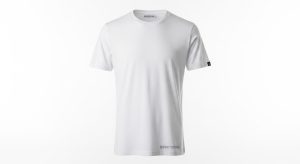
That third image is ghost mannequin photography in action, and it has quietly become the most reliable visual sales tool in modern apparel e-commerce. Brands selling on Amazon, Shopify, Etsy, and direct-to-consumer storefronts now treat the floating-garment look as a baseline standard rather than a luxury upgrade. This guide unpacks the entire process — the gear, the lighting math, the editing decisions, the platform rules, and the budget hacks — so you can produce images that genuinely move products off the shelf.

Want studio-grade ghost mannequin edits without buying a single softbox? Send your raw shots to our ghost mannequin team and get polished, conversion-ready images delivered fast.


What Ghost Mannequin Photography Actually Is

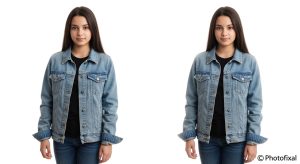
Ghost mannequin photography — also called invisible mannequin, hollow man, or 3D product photography — is a hybrid technique that blends physical shooting with digital compositing. You photograph a garment on a mannequin, capture additional inner-detail shots, and then merge everything in Photoshop so the mannequin disappears. What remains is a garment that appears to wear itself.

The visual result tells your customer three things at once:

  • The garment has a real human shape, not a flat silhouette.
  • The interior details (collar lining, neck tag, cuff openings) are visible and intentional.
  • The brand cares enough to invest in clean, consistent imagery.

That subconscious trust signal is exactly why marketplaces like Amazon prefer this format for apparel main images.

The Technical Definition vs. the Commercial Definition

Technically, ghost mannequin photography is a multi-layer compositing technique. Commercially, it is a conversion optimization tool. Both definitions matter, because the editor working on your file should understand why the customer needs to see the inside neck — not just how to mask it.


Why Ghost Mannequin Beats the Alternatives

Apparel sellers usually choose between four image styles: flat lays, live models, dressed mannequins, and ghost mannequins. Each one has a place, but the ghost approach wins on most metrics for catalog-heavy stores.

  • Flat lays are cheap and fast, but they hide structure. A blazer photographed on a table looks like a deflated balloon.
  • Live models photograph beautifully, yet they introduce expensive variables — fees, scheduling, body-type bias, and pose inconsistency across SKUs.
  • Visible mannequins look dated and violate Amazon’s main-image policy for apparel.
  • Ghost mannequins combine the dimensionality of a model shoot with the consistency and affordability of a flat lay.

Industry data backs this up. According to Shopify’s commerce research, high-quality product photography measurably lifts conversion rates, and structured garments specifically benefit from the 3D effect ghost mannequins provide.


The Real Business Case: Why Stores Switch and Stay Switched

Owners rarely adopt ghost mannequin photography because it looks pretty. They adopt it because the numbers improve.

  • Return rates drop when the customer can clearly see fit before buying. Fewer “this doesn’t look like the photo” complaints means fewer reverse-logistics losses.
  • Conversion rates climb because the imagery removes guesswork. Shoppers stop bouncing to a competitor that shows the inside of the collar.
  • Production costs scale predictably. One mannequin handles hundreds of SKUs across dozens of sizes.
  • Brand consistency strengthens. A grid of 200 ghost mannequin images on a category page reads as a single cohesive brand, not a chaotic flea market.
  • Marketplace compliance becomes automatic. Amazon’s apparel guidelines explicitly accept ghost mannequin images on a pure white background.

The cumulative effect is straightforward: cheaper photo production, higher AOV, lower returns, stronger brand equity. Few visual tactics deliver across all four levers simultaneously.


The Gear You Actually Need (Not the Gear Influencers Sell You)

You can launch a serviceable ghost mannequin workflow on a tight budget. You can also overspend dramatically. Here is what genuinely matters.

Camera and Lens

A mid-range mirrorless or DSLR body paired with a 50mm or 85mm prime lens is the sweet spot. Wide-angle lenses distort shoulders and hems, which forces extra correction in post-production. If you only own a smartphone, shoot in manual or “Pro” mode, lock the white balance, and disable beauty filters.

Tripod

A heavy, stable tripod is non-negotiable. Ghost mannequin compositing relies on perfectly aligned front, back, and inner shots. Any camera shift between frames creates ghosting artifacts that no editor can fully repair.

Mannequin

Choose a detachable-parts mannequin — one with removable arms, neck plug, and ideally a magnetic torso. These designs let you photograph the inside of the collar and cuff without distorting the garment. Neutral matte white or light gray finishes reflect less unwanted color onto the fabric.

Lighting

Two softboxes positioned at 45-degree angles deliver even, shadow-controlled light. Add a third overhead light or a white reflector on the floor to fill in chin and underarm shadows. Continuous LED panels are friendlier for beginners because you see the result before pressing the shutter.

Background

A pure white seamless backdrop simplifies post-production dramatically. Marketplaces require RGB 255,255,255 white, and starting close to that hue saves editing hours.

Editing Software

  • Adobe Photoshop remains the industry standard for premium results.
  • GIMP is the free, open-source alternative.
  • AI ghost mannequin tools like Photoroom and Pixelcut handle high-volume catalogs at speed.
  • Outsourced editing services are the right choice when the volume crosses what your in-house team can finish in a workday.

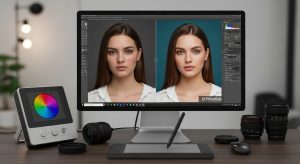
Already shooting on-mannequin but stuck at the editing bottleneck? Pair ghost mannequin work with our clipping path service for crisp, marketplace-ready cutouts at scale.


Step-by-Step: How to Shoot Ghost Mannequin Photos Properly

The shooting day determines 70% of your final quality. The other 30% happens in Photoshop. Get the capture right, and editing becomes routine instead of restorative.

Step 1: Steam, Pin, and Style the Garment

Wrinkles destroy ghost mannequin images faster than anything else. Steam every garment thoroughly before it touches the mannequin. Then dress the form deliberately:

  • Align side seams along the mannequin’s vertical centerline.
  • Smooth the shoulders so the seam sits where the human shoulder would.
  • Pin loose fabric at the back so the front looks fitted.
  • Hide all pins, clips, and tape from the camera angle.

Step 2: Build the Lighting Setup

Place softboxes at 45-degree angles, roughly chest-height, two to three feet from the mannequin. Run a quick test shot. Look specifically for:

  • Even brightness from collar to hem
  • No hot spots on shiny fabrics
  • Soft, almost invisible shadows under the chin

Lock your camera on full manual. Auto-exposure ruins compositing because each shot needs identical light values.

Step 3: Capture the Required Frames

You need at least three exposures for every front-and-back ghost mannequin image:

  • Front shot of the dressed mannequin
  • Back shot of the dressed mannequin (rotate 180°, do not move the camera)
  • Inner-neck shot with the garment turned inside out, photographed flat or on a smaller form

For garments with visible cuffs or hems, capture additional inner-cuff and inner-hem frames. Shoes and bags follow a similar logic — shoot the visible angles, then capture interior linings separately.

Step 4: Tether, Review, and Reshoot

Tether the camera to a laptop and review every frame at 100% zoom before breaking down the set. Hidden wrinkles, twisted tags, and lint specks are far cheaper to fix on set than in Photoshop.


The Editing Workflow: From Raw Files to Floating Garment

This is where ghost mannequin photography earns its reputation as deceptively complex. The shooting phase looks like ordinary product photography. The editing phase is where the technique comes alive.

Stage 1: Path the Garment

Open the front shot in Photoshop and use the Pen Tool to draw a clean vector path around the garment, excluding the mannequin entirely. Convert the path to a selection and apply a layer mask. Refine the edge with feather values between 0.3 and 0.7 pixels for natural transitions.

Stage 2: Composite the Inner Neck

Open the inner-neck capture as a new layer beneath the masked front shot. Scale, rotate, and warp it until the neckline aligns with the opening left by the removed mannequin. Mask the layer carefully so the inner fabric blends seamlessly with the outer collar — no ghost outlines, no color shifts.

Stage 3: Merge the Back Shot

For 360° product views or interactive zoom, repeat the masking process on the back image and place both files inside a single PSD with consistent canvas dimensions. This makes future revisions and resizing painless.

Stage 4: Clean, Color, and Export

Finalize the file with these polish steps:

  • Remove residual lint, threads, and dust spots with the Healing Brush.
  • Smooth subtle wrinkles with Clone Stamp or frequency separation.
  • Match white balance across all composited layers.
  • Export to JPEG at 2000 px on the longest edge for marketplace flexibility.

For high volumes — say 200 SKUs a week — record Photoshop actions and droplet automations to handle resizing, sharpening, and white-background corrections in a single click.

Prefer focusing on photography while pros handle the pixel work? Our photo retouching service cleans wrinkles, lint, and fabric flaws so your ghost mannequin shots look catalog-perfect.


Common Ghost Mannequin Mistakes — and the Fixes That Save Hours

Even seasoned studios slip on the same handful of errors. Knowing the patterns shortens your learning curve dramatically.

  • Inconsistent white balance between front, back, and inner shots. Lock manual settings before the first frame and never touch them mid-session.
  • Floating necks that look hollow. A missing inner-neck composite is the fastest way to make a $200 jacket look like a $20 knockoff.
  • Pin marks that survive editing. Position pins at the back, not the side seams.
  • Over-aggressive masking. Hard, jagged edges scream “Photoshopped.” Use a 0.3–0.7 px feather and zoom to 200% during refinement.
  • Wrong mannequin size. A torso that is too big stretches knitwear; one that is too small leaves slack folds. Match the mannequin to the garment’s intended fit.
  • Color casts from a tinted mannequin. Off-white or beige forms reflect onto pale fabrics. Stick with neutral white or matte gray.

A useful sanity check before exporting: zoom out to thumbnail size and compare your image to your top three competitors. If your garment looks flatter or duller, the issue is usually shadow loss during masking — add a subtle natural shadow back in. For a deeper dive into how shadows transform e-commerce imagery, this shadow creation guide breaks down the techniques cleanly.


Ghost Mannequin Photography for Marketplaces

Each platform enforces its own rules, and minor formatting choices can determine whether a listing publishes or gets rejected.

Amazon

Amazon’s apparel category rejects visible mannequins on main images and requires:

  • Pure white backgrounds (RGB 255,255,255)
  • A minimum of 1000 pixels on the longest edge to enable the zoom feature
  • Garments occupying at least 85% of the frame

Ghost mannequin imagery satisfies every requirement and is explicitly approved.

Shopify

Shopify imposes no strict rules, which is precisely why brand-consistent ghost mannequin photography matters more here. Customers compare your storefront to Amazon’s polish, so meeting that bar is implicitly required.

Etsy, Walmart, and DTC Sites

Each platform allows broader creative freedom, but the most successful sellers still anchor product pages with one front and one back ghost mannequin shot, then layer in lifestyle and detail imagery.


When AI Ghost Mannequin Tools Make Sense — and When They Don’t

AI-powered ghost mannequin services have improved dramatically in 2026. Tools like Photoroom and Pixelcut now produce passable results in seconds. The real question is when “passable” is enough.

AI works well for:

  • High-volume catalogs (500+ SKUs per drop)
  • Simple garments with predictable shapes
  • Internal merchandising or rapid prototyping
  • Resellers who just need cleanup, not perfection

AI struggles with:

  • Sheer or translucent fabrics
  • Heavily structured items (tailored blazers, leather jackets)
  • Garments with elaborate inner linings
  • Premium luxury brands where every pixel matters

The pragmatic approach for most growing brands is hybrid: run AI on basics like t-shirts and outsource manual editing for hero products. As BigCommerce’s photography guide notes, the editing process is where customer trust is either earned or lost.

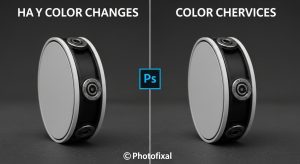
Selling colorful apparel with frequent variant launches? Save shoot days with our color change service — generate every colorway from a single ghost mannequin master file.


Budget Setups That Actually Work

You do not need a $20,000 studio. Plenty of small brands launched their entire catalog on under $300 in gear. Here is the leanest setup that still produces sellable images:

  • A foam torso mannequin from a craft supply store (often under $60)
  • A modern smartphone with a Pro/Manual shooting mode
  • Two 5500K LED desk lamps with white paper diffusers
  • A roll of white seamless paper or a clean white bedsheet
  • A free trial of Photoshop or a permanent install of GIMP
  • A phone tripod and a Bluetooth shutter remote

Process discipline matters more than equipment cost. Steam every garment, lock your settings, capture all required frames, and review at 100% before tear-down. With those habits in place, a $300 setup can produce work that is genuinely indistinguishable from a $5,000 studio shoot.


How Ghost Mannequin Photography Fits Inside a Bigger Visual Strategy

Smart brands rarely stop at front-and-back ghost mannequin shots. The full visual stack on a high-converting product page usually combines:

  • Two ghost mannequin images (front + back) as primary listings
  • Three to five close-up detail shots (stitching, hardware, fabric weave)
  • One flat lay for color and pattern reference
  • One or two lifestyle images for emotional context
  • An optional 360° interactive view for premium SKUs

Ghost mannequin imagery anchors the page. The other formats reinforce different decision triggers — texture, scale, lifestyle aspiration. This layered approach is now standard among high-performing apparel brands.


Final Thoughts: Why This Technique Is Not Going Away

Despite years of predictions that AI would replace traditional product photography, the demand for high-quality ghost mannequin imagery keeps climbing. The reason is simple: customers are getting more skeptical, not less. They want to see the inside of the collar, the way the hem actually falls, and the cut of the shoulder line — and they want to see all of it without the noise of a model’s face or pose.

Whether you build an in-house studio, run a hybrid AI workflow, or outsource to specialists, the floating-garment look has graduated from a nice-to-have into a non-negotiable conversion lever. The brands that treat it that way will keep winning the close-tab, comparison-shop moment that decides modern apparel sales.

Ready to upgrade every product page in your store? Hand off your full apparel catalog to our ghost mannequin specialists and get sale-ready images returned within 24 hours.


Frequently Asked Questions

1. What exactly is ghost mannequin photography used for?

Online apparel retailers use the technique to showcase how garments fit, drape, and flow without the visual noise of a mannequin or a human model. It works equally well for tops, dresses, jackets, pants, kids’ wear, and even bags or shoes that need interior visibility.

2. How much does ghost mannequin photography typically cost?

DIY setups start around $200–$400 in equipment. Outsourced editing usually runs $1.50 to $8 per image, depending on garment complexity and turnaround time. Full-service studio shoots — capture plus edit — typically range from $25 to $80 per SKU.

3. Can I use a smartphone for ghost mannequin photography?

Yes, comfortably. Modern flagship phones in Pro mode, paired with steady lighting and a sturdy tripod, can produce results good enough for Amazon, Shopify, and most marketplaces. The mannequin and lighting matter far more than the camera body itself.

4. Is ghost mannequin photography allowed on Amazon?

Absolutely. Amazon explicitly permits ghost mannequin images for apparel main photos and actually prohibits visible mannequins. As long as your image meets the white background and resolution rules, it qualifies.

5. How long does editing one ghost mannequin image take?

A trained editor finishes one image in roughly 8 to 20 minutes. Beginners may spend 45–60 minutes on their first attempts. AI tools generate ghost mannequin output in under a minute, though the result still typically needs human polish for premium brands.

6. Does ghost mannequin photography work for sheer or delicate fabrics?

Yes, but the lighting and editing demand extra care. Translucent fabrics reveal the mannequin through the material, so editors often shoot a duplicate flat lay to clone clean fabric texture into the see-through areas during compositing.

7. What is the difference between ghost mannequin and invisible mannequin photography?

There is none. The terms are interchangeable. Some studios also call it “hollow man” or “3D mannequin” photography, but every label describes the same multi-shot, composited technique.

8. Should I shoot ghost mannequin photos in-house or outsource the work?

Shoot in-house if you have studio space, photography skills, and fewer than 50 SKUs per month. Outsource the editing — or both shooting and editing — once your volume scales past what one person can comfortably finish in a workday without quality loss.