Home Pricing About Us Contact

From Basic Adjustments to Advanced Compositing — Everything You Need to Know in One Place

Image editing turns ordinary captures into images that sell, persuade, and inspire. Whether you run an online store, manage a creative studio, or simply want your travel photos to look magazine-worthy, understanding the right techniques saves hours of trial-and-error. This guide breaks down every essential method professionals use, explains when to apply each one, and shows how small, deliberate edits transform the final result.

You will not find vague theory here. Instead, expect clear definitions, real workflows, and the practical reasoning behind each decision. By the end, you will know which technique fits your photo, which tool delivers the cleanest finish, and how to avoid the rookie mistakes that flatten an otherwise great shot.

Quick win for online sellers: If your product images need a clean, distraction-free look before your next launch, the team at Photofixal’s professional image editing services can polish your entire catalog so every photo converts harder.


What Image Editing Actually Means

A Working Definition for 2026

Image editing covers any deliberate change you make to a photograph after the shutter clicks. The goal sounds simple: make the picture better. The execution, however, ranges from a one-second brightness slider tweak to a forty-layer composite that took eight hours.

Editors usually work toward one of four outcomes:

  • Correction — fixing exposure, white balance, or sharpness errors made during the shoot
  • Enhancement — boosting the strengths already present in the frame
  • Transformation — changing the image into something different, like swapping the sky or removing a bystander
  • Optimization — preparing the file for a specific channel, such as Amazon, Instagram, or print

Once you know which outcome you want, the technique almost picks itself. A muddy product shot needs correction. A magazine cover demands transformation. Knowing the difference saves you from over-editing — the most common amateur mistake.

Why Editing Still Matters in the AI Era

AI generators can invent images from a sentence, yet brands and photographers still rely on editing because authenticity sells. Customers trust a photo of the actual product more than a synthetic one, and Google’s helpful content guidelines reward original imagery. Editing simply makes that real photo look its best.

According to research published by Adobe on visual content marketing, product pages with professionally edited images convert measurably better than pages built on raw photography. The takeaway is straightforward — polish your real photos rather than replace them.


The Core Categories of Image Editing Techniques

Professionals usually group editing into seven practical buckets. Each one solves a different problem, and most finished images pass through three or four of them before going live.

1. Basic Adjustments — Your First Line of Defense

These are the changes every photo deserves before anything fancier happens.

  • Cropping and straightening — tighten the composition and fix tilted horizons
  • Exposure correction — pull detail back from blown highlights or muddy shadows
  • White balance — neutralize the orange cast from indoor lighting or the blue cast from shade
  • Contrast and clarity — give the image punch without crunching the edges
  • Sharpening — apply selectively, and always last in the workflow

A solid base edit takes under three minutes and fixes ninety percent of “this photo looks off” complaints. Skip this stage and every advanced technique you apply afterward sits on a shaky foundation.

2. Color Correction and Color Grading

People mix these two terms constantly, but they are not the same thing.

Color correction restores accuracy. You match the reds in the photo to the reds in real life. Editors lean on this technique when they shoot apparel, food, cosmetics, or anything else where the customer expects what they see to match what arrives in the box.

Color grading adds mood. You push the shadows toward teal and the highlights toward orange to mimic a Hollywood blockbuster, or you fade the blacks for a soft, editorial feel. Grading lives in the territory of style rather than truth.

A quick way to remember the difference — correction is science, grading is art. Most commercial work needs both, applied in that order.

3. Retouching

Retouching focuses on detail. It cleans, smooths, and sculpts a subject so the final image looks intentional rather than accidental. Common applications include:

  • Skin smoothing without that plastic, over-airbrushed finish
  • Removing flyaway hairs, lint, or stray threads from clothing
  • Eye and teeth brightening for portraits and headshots
  • Whitening fabrics that picked up a yellow cast
  • Cleaning dust spots, scratches, and sensor blotches

Good retouching stays invisible. Viewers should notice the person, not the work done on the file. Brands that need a flawless finish for executive portraits often outsource this stage — the headshot retouching service from Photofixal handles bulk corporate galleries with a consistent look across every team member.

4. Background Removal and Replacement

Removing a background sounds basic until you try it on curly hair or a feathered hat. The technique varies depending on the subject’s edge:

  • Hard edges — use a clipping path
  • Soft, fuzzy, or transparent edges — use image masking
  • Multiple separate objects in one frame — use multi-clipping paths so you can recolor or move each piece independently

Once the subject is isolated, you can drop it onto a pure white background for marketplaces, a branded gradient for your website, or a lifestyle scene for social media. The same cutout file works everywhere, which is why isolating once and reusing forever is a workflow goldmine.

5. Compositing and Manipulation

Compositing combines two or more images into a single believable scene. Real-estate photographers do this when they replace an overcast sky with a sunny one. Fashion editors do it when they place a model into a studio backdrop they never actually visited. The skill lies in matching three things:

  • Light direction — shadows must fall the same way in every layer
  • Color temperature — a warm subject on a cool background screams “fake”
  • Perspective — eye level and lens distortion need to match across layers

Manipulation pushes compositing into surreal territory — think floating islands, miniature cities, or product splashes mid-air. The techniques overlap, but the intent differs.

6. Restoration

Restoration brings damaged or aged photographs back to life. Editors repair tears, rebuild missing corners, recover faded colors, and remove the yellowing that decades of sunlight cause. Tools include the clone stamp, healing brush, frequency separation, and AI-driven scratch removal in modern Photoshop releases.

This category matters most for family archives, museum collections, and anyone digitizing prints from the analog era. Done well, the original feel survives — only the damage disappears.

7. Commercial and Product-Specific Editing

E-commerce demands its own playbook because marketplace rules and conversion psychology dictate the output. Common product-editing techniques include:

  • Pure white background creation that meets Amazon’s 85 percent fill requirement
  • Natural drop shadows so the product looks grounded rather than floating
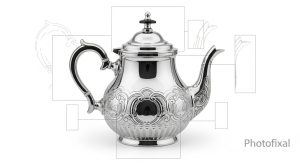
  • Reflections beneath glass, jewelry, or polished metals
  • Ghost mannequin effects for apparel, where the clothing keeps its shape but the model disappears
  • Color variant generation, so one shoot produces ten product listings

Catalog work rewards consistency above creativity. Every image in a category should share the same crop, the same shadow style, and the same white point. That uniformity builds trust with shoppers and ranks better in marketplace search.

Selling apparel online? Showcase every garment with shape, depth, and zero distractions using the ghost mannequin editing service — perfect for boutique stores scaling their lookbook.


Clipping Path vs. Image Masking — Choosing the Right Cutout

Both techniques isolate a subject. The choice depends entirely on the edge.

When to Use a Clipping Path

A clipping path uses the Pen Tool to draw a hard, vector outline around the subject. It excels with:

  • Solid products like phones, bottles, books, and shoes
  • Geometric items with crisp edges
  • Logos and graphic elements that need pixel-perfect borders

The result is a clean cut you can scale infinitely without quality loss. For straightforward products, the professional clipping path service from Photofixal handles thousands of SKUs without sacrificing precision.

When to Use Image Masking

Masking shines on edges that a pen line cannot capture honestly. Think:

  • Hair blowing across a face
  • Fur on animals
  • Smoke, glass, lace, or chiffon
  • Translucent fabrics where some light passes through

Photoshop’s Channel Masking, Refine Edge, and Select-and-Mask tools preserve those wispy details. Trying to fake them with a hard path produces that “cardboard cutout” effect everyone recognizes instantly.

A Practical Hybrid Approach

Many real photos need both. A model wearing a leather jacket benefits from a clipping path along the jacket and a mask along the hairline. Combining the two gives you sharpness where you need it and softness where the photo demands it.


Drop Shadows, Reflections, and Why They Matter

Cut a product out, drop it on a white background, and something feels off. The product looks weightless, like a sticker someone glued onto the page. Shadows fix that.

Types of Shadows in Product Editing

  • Natural drop shadow — mimics where the light naturally falls when the product sits on a surface
  • Cast shadow — shows the silhouette stretching away from a directional light
  • Reflection shadow — adds a mirrored copy beneath glossy or premium products
  • Floating shadow — used when a product needs to look elevated, like jewelry or watches

Marketplaces like Amazon and Walmart penalize images that include the original messy shadow but allow rebuilt, clean ones. Adding a believable shadow after isolating the subject keeps you compliant and visually grounded. Stores that need this stage handled at scale often rely on the drop shadow editing specialists at Photofixal.


Color Change and Color Variant Workflows

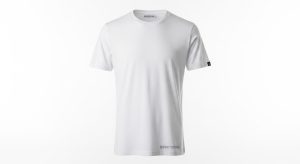
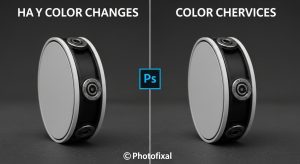
You shoot one t-shirt. You sell it in twelve colors. Reshooting twelve times is wasteful — color change editing solves the problem.

The technique uses selective masks, hue and saturation layers, and blending modes to shift only the garment while leaving the model’s skin, hair, and background untouched. Done right, the new color looks shot, not painted on.

Brands lean on color variants for:

  • Apparel catalogs with multiple colorways per style
  • Furniture and upholstery shoots
  • Automotive listings
  • Cosmetic packaging mockups

A reliable color change editing workflow cuts production budgets dramatically and gets new variants live the same week the sample arrives.


Photo Retouching for People — The Modern Standards

Retouching humans has changed. The over-smoothed, plastic look of the 2010s is dead. Today’s standard is “real, but their best day.”

Skin Retouching the Right Way

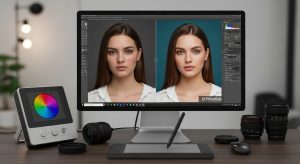
Frequency separation remains the gold standard. It splits the image into two layers — one carrying texture, one carrying color and tone. Editors smooth the color layer to even out blotches and leave the texture layer alone. Pores stay, blemishes go.

Hair, Eyes, and Teeth

  • Hair — clean stray strands, recover lost detail in shadows, never erase volume
  • Eyes — brighten the iris subtly, sharpen the pupil edge, leave the catchlight intact
  • Teeth — desaturate yellow rather than blasting them pure white; pure white reads cartoonish

Body Sculpting and Ethics

This is where editors must tread carefully. Major fashion brands now publish retouching guidelines that ban body manipulation entirely, and several countries label digitally altered ads. When in doubt, fix the lighting and the pose, not the person. For a deeper dive into ethical workflows for portrait sessions, the team at Clipping Expert Asia published a useful breakdown on the wedding photographers’ photo editing workflow that applies equally to portrait work.

High-End Beauty Editing

Cosmetic, fragrance, and luxury campaigns push retouching further than any other category. The skin needs to read as flawless under macro lenses, yet still feel like skin. The beauty retouching service from Photofixal handles the kind of frequency separation, dodge-and-burn, and porcelain finish work these campaigns demand.


The Professional Editing Workflow — Step by Step

A repeatable workflow separates pros from hobbyists. Here is the one most working studios follow:

  1. Cull and rate — pick the keepers in Lightroom, Bridge, or Capture One before any edit begins
  2. Global RAW adjustments — exposure, white balance, lens correction, basic contrast
  3. Local adjustments — gradients, radial filters, brushes for selective tweaks
  4. Move into Photoshop — for any pixel-level work the RAW editor cannot handle
  5. Cleanup pass — dust spots, sensor stains, stray hairs, distracting background objects
  6. Retouching — skin, hair, products, garments, depending on the genre
  7. Cutout or masking — if the image needs an isolated subject
  8. Compositing — backgrounds, shadows, reflections, sky replacements
  9. Color grading — final mood and style pass
  10. Sharpening and export — output-specific sharpening for web, print, or marketplace

Following the order matters. Sharpening before color grading muddies the result. Cutting out before cleaning the background creates extra work. Stick to the sequence and the file practically edits itself.

For a respected outside reference on this workflow logic, the Adobe Lightroom Classic guide walks through the non-destructive principles that underpin every modern editing app.


Image Optimization for the Web

Editing does not end when the image looks good. It ends when the image loads fast and ranks well.

Technical Specs That Move the Needle

  • Format — WebP for the web, JPEG as a fallback, PNG only when transparency is needed
  • Resolution — 1500 to 2500 pixels on the long edge for product shots; 72 DPI is fine for screen
  • File size — under 200 KB whenever possible; under 100 KB ideal for mobile
  • Compression — use a perceptual encoder rather than aggressive lossy settings
  • Color profile — sRGB for web, Adobe RGB for print, never Pro Photo for delivery

SEO-Friendly Image Hygiene

  • Rename files descriptively before upload — navy-merino-crewneck-sweater.jpg beats IMG_4421.jpg
  • Write alt text that describes the image for visually impaired users and search engines
  • Use captions where they add genuine information, not where they duplicate the alt text
  • Lazy-load images below the fold to keep Core Web Vitals scores healthy

Google’s image SEO guidelines remain the most authoritative reference and update regularly — bookmark the page and revisit it twice a year.


Common Image Editing Mistakes to Avoid

Even seasoned editors slip into bad habits. Watch for these:

  • Over-saturating colors — punchy reds turn radioactive fast
  • Crushing the blacks — losing shadow detail makes the photo feel flat in print
  • Halos around cutouts — usually caused by sloppy edge masks; refine with a 1-pixel inner shrink
  • Inconsistent shadow direction in composites — the dead giveaway of an amateur edit
  • Heavy-handed sharpening — produces visible fringing that looks worse than no sharpening at all
  • Ignoring the histogram — your eyes lie after thirty minutes; the histogram does not
  • Editing on an uncalibrated screen — what looks neutral on your laptop may print magenta

A short break and a fresh look catch most of these. Sleep on a hero edit before exporting, then return with rested eyes. You will spot problems you missed the first time.


DIY vs. Outsourcing — Knowing When to Hand It Off

Plenty of editing tasks reward learning the skill yourself. Other tasks drain your time and earn nothing back. Use this rule of thumb:

Edit it yourself when:

  • Volume is low — under thirty images a week
  • The work is creative and tied to your personal style
  • You enjoy the process and have the time

Outsource it when:

  • Volume is high — hundreds or thousands of images per cycle
  • The work is repetitive and rule-based, like background removal
  • Your time costs more per hour than the editing service does
  • Consistency across a large catalog matters more than personal flair

Many growing brands hand off the repetitive cutout, masking, and retouching work to a specialist studio while keeping the creative grading in-house. Services like Photofixal’s image masking team take fuzzy edges, fur, and translucent fabric off your plate so you can focus on shooting more product.


Tools Worth Knowing in 2026

The software landscape keeps shifting, but a small group of tools dominates serious work:

  • Adobe Photoshop — still the industry standard for pixel-level retouching, compositing, and complex masks
  • Adobe Lightroom Classic — the workflow hub for RAW processing, batching, and culling
  • Capture One — preferred by tethered studio shooters for its color science
  • Affinity Photo — a strong one-time-purchase alternative for budget-conscious creators
  • Luminar Neo — AI-driven sky replacement, portrait enhancement, and noise reduction
  • DxO PhotoLab — class-leading noise reduction for high-ISO work
  • Topaz Photo AI — repair, sharpen, and upscale with neural processing
  • Pixelmator Pro — Mac-native, light, and surprisingly capable for everyday edits

You do not need all of them. Most pros pair Lightroom with Photoshop and add one specialist tool — usually Topaz — for tricky recovery work.


How AI Is Reshaping Image Editing Without Replacing It

Generative AI grabs the headlines, but the real revolution sits quietly inside everyday tools. Modern AI handles:

  • Subject selection in one click instead of fifteen pen-tool minutes
  • Generative fill that replaces backgrounds, extends frames, or removes tourists
  • Noise reduction that recovers detail older algorithms threw away
  • Auto-color matching across a series for consistent catalog work
  • Upscaling small files to print-ready resolution

The human still drives the creative decisions. AI just removes the mouse-mileage from the boring parts. Editors who learn to brief AI tools well — using selective masks, layered prompts, and clear references — finish faster without sacrificing quality.

Tired of cleaning up product photos by hand? Save your weekends and let the background removal experts at Photofixal deliver crisp, marketplace-ready cutouts in bulk.


Putting It All Together — A Quick Decision Framework

Use this short checklist when you sit down to edit anything new:

  • What is the photo for? — marketplace, social, print, portfolio
  • What is its biggest weakness? — exposure, color, distractions, missing context
  • Which category solves that weakness? — correction, retouching, compositing, optimization
  • What is the minimum I can do to fix it? — restraint beats over-editing every time
  • Does it match the rest of my catalog? — consistency wins on marketplace and brand pages

Run through those five questions before you touch a slider, and your edits will land cleaner with less rework.


Final Thoughts

Image editing rewards patience, restraint, and a clear plan. The techniques covered here — from basic exposure tweaks to complex masks, shadows, and color grades — give you a complete toolkit to handle almost any photo that lands on your desk. Pick the technique that matches the problem, follow a repeatable workflow, and remember that the best edits are usually the ones nobody notices.

The brands that win online treat their photos as assets, not afterthoughts. Whether you do the work yourself or hand it off to a specialist, every hour invested in cleaner imagery pays back in trust, clicks, and sales.

Ready to elevate your entire image library? Explore the full photo retouching catalog at Photofixal and let a dedicated team turn your raw shoots into store-ready images.


Frequently Asked Questions

1. What is the difference between photo editing and photo retouching?

Photo editing covers every kind of post-production change, including cropping, color correction, and exporting. Retouching is one branch of editing that focuses specifically on cleaning up details inside the photo, such as skin, hair, products, or fabrics.

2. How long does professional image editing usually take?

A simple background removal takes under a minute for a skilled editor. Detailed beauty retouching on a single portrait can run between thirty minutes and two hours. Complex compositing or product shoots with hundreds of variants stretch into days, especially when consistency across the set matters.

3. Do I need Photoshop to edit professionally, or are there free alternatives?

Photoshop remains the most powerful option, but you can produce excellent commercial results with Affinity Photo, GIMP, or Photopea. The choice rarely affects the final quality — your skill and workflow matter far more than the brand of software.

4. What file format should I export my edited images in?

Use JPEG for general web delivery, WebP for faster page loads on modern sites, PNG when you need transparency, and TIFF when you plan to send the file to print. Always keep an editable master file — usually a layered PSD or RAW — for future revisions.

5. Is AI editing replacing human editors?

No. AI handles repetitive tasks faster than humans, but creative direction, brand consistency, and nuanced retouching still need a human in the loop. Most professional studios now blend AI for the heavy lifting with manual work for the decisions that affect feel and trust.

6. How do I keep image quality high while compressing for the web?

Export at the smallest resolution your channel actually displays, use perceptual compression rather than fixed-quality slider settings, and run the file through an optimizer like Squoosh or ImageOptim before upload. Sharpening should happen at the export stage, not before resizing.

7. What is the easiest way to make product photos look more professional?

Three steps deliver the biggest gains for the least effort — drop the product on a clean white background, add a soft natural shadow beneath it, and balance the colors so the product matches its real-world appearance. Doing those three things consistently across every listing already puts you ahead of most competitors.

8. When should I outsource image editing instead of doing it myself?

Outsource when the volume hurts, when the work is repetitive, or when consistency across a large catalog matters more than personal style. Keep the creative, mood-defining edits in-house and let a specialist handle the production-line tasks.

Photofixal

We are a premier image post-production company specializing in professional shadow creation and product image editing services by expert human editors. Trusted by e-commerce businesses, product brands, and photographers worldwide.

Services

Company

Contact

info@photofixal.com
+880 1714 420630
Dhaka, Bangladesh

© 2026 Photofixal. All rights reserved.

Privacy Policy | Terms of Service |