Home Pricing About Us Contact

TIFF vs JPEG Explained: Quality, Size, and Best Use Cases

A Practical Comparison for Photographers, Designers, and E-commerce Sellers

Picking the right image format feels small until a printed banner looks blurry, a product photo loses crispness after the third upload, or an archive of family pictures slowly degrades with every save. The decision between TIFF and JPEG sits behind nearly every modern imaging workflow, yet most people only learn the difference after something goes wrong.

This guide breaks down both formats in plain language. You will learn how each one compresses data, where it shines, where it struggles, and which projects deserve which file type. By the end, you will know exactly when to reach for a TIFF, when a JPEG is the smarter pick, and how to convert between them without sacrificing quality.

Quick takeaway: TIFF preserves every pixel for editing, printing, and archiving. JPEG trades a bit of quality for tiny file sizes, making it the king of websites, email, and social media.

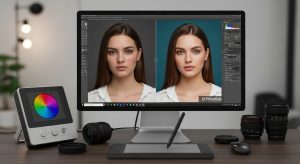
📸 Need pixel-perfect product shots before you publish? Explore our professional photo retouching service and let editors polish every image so your final TIFF or JPEG export looks flawless.


What Is a TIFF File?

The Format Built for Quality, Not Convenience

TIFF stands for Tagged Image File Format. Aldus Corporation introduced it in 1986 to help desktop scanner makers agree on a single, flexible file standard. Adobe later took over the specification after acquiring Aldus in 1994, and the format still follows the Revision 6.0 rules published in 1992 (Wikipedia).

A TIFF stores raster graphics inside a structure called an Image File Directory (IFD). These directories hold “tags” that describe the image, which is exactly where the format gets its name. Because tags can carry almost any kind of metadata, photographers, scientists, and publishers all bend the format to fit their needs.

Key Technical Features of TIFF

  • Lossless compression through LZW, ZIP, or PackBits
  • Color depth up to 16 bits per channel (and even 32-bit floating-point for scientific imaging)
  • Support for layers, transparency, and alpha channels
  • Multi-page storage — one TIFF file can hold an entire scanned book
  • Both RGB and CMYK color models, ideal for print workflows
  • Maximum file size of 4 GB (BigTIFF extends this further)
  • Wide compatibility with Photoshop, GIMP, Lightroom, Capture One, and most page-layout software

Who Actually Uses TIFFs?

  • Museums and archivists protecting historical photos
  • Commercial print shops producing billboards and gallery canvases
  • Medical imaging labs and scientific researchers
  • Magazine designers laying out high-resolution editorial spreads
  • Product photographers handing files to retouchers for non-destructive edits

What Is a JPEG File?

The Web’s Favorite Workhorse

JPEG stands for Joint Photographic Experts Group, the committee that introduced the standard in 1992. The format quickly became the global default for digital photography because it shrinks images to a fraction of their raw size while keeping them visually pleasing. Every smartphone camera, web browser, and social platform supports it natively (Wikipedia).

JPEG relies on the Discrete Cosine Transform (DCT) algorithm. The encoder converts colors from RGB into the YCbCr space, separates brightness from color, and then trims the parts of the data that human eyes barely notice. The result is a small, sharable file that still looks like a photo.

Key Technical Features of JPEG

  • Lossy compression with adjustable quality (typically 0–100)
  • 8 bits per color channel (around 16.7 million colors)
  • Tiny file sizes — often 5–10× smaller than equivalent TIFFs
  • Universal browser and device support
  • Embedded EXIF metadata (camera, lens, GPS, timestamps)
  • No layer or transparency support
  • Best results on photographs with smooth tonal gradients

Who Reaches for JPEGs?

  • Bloggers, journalists, and content marketers
  • Social media managers and influencers
  • E-commerce store owners loading product galleries
  • Email marketers attaching images to campaigns
  • Casual photographers sharing snapshots with family

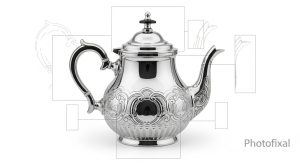
✂️ Want clean, transparent product images for your online store? Try our multi-clipping path service to isolate complex objects with surgical precision before you export web-ready JPEGs.


TIFF vs JPEG: Head-to-Head Comparison

Compression: Lossless vs Lossy

This is the headline difference, and it shapes everything else. TIFF can stay completely uncompressed, or it can use lossless compression like LZW that shrinks the file without throwing any pixels away. Reopen the file ten years later, save it again, and the data still matches the original.

JPEG works the opposite way. Every save runs the image through lossy compression, which permanently discards detail the algorithm considers unimportant. Save a JPEG, edit it, and save again — you trigger what photographers call the “generation loss” or photocopier effect, where each round adds visible artifacts (Uploadcare).

File Size: Storage Reality Check

A 24-megapixel TIFF easily lands between 70 and 140 MB. The same photo saved as a high-quality JPEG might weigh just 8 to 15 MB. For a single shoot of 500 frames, that gap balloons from roughly 6 GB to over 50 GB.

If you photograph weddings, real estate, or e-commerce catalogs, that math affects:

  • Hard drive purchases and cloud storage bills
  • Backup speeds and offsite sync times
  • Client gallery upload windows
  • Email and messenger sharing limits

Color Depth and Quality

TIFF handles 16 bits per channel, which translates to billions of color combinations. That extra headroom matters when you push shadows, recover highlights, or apply heavy color grading. Smooth skies stay smooth, gradients avoid banding, and skin tones survive aggressive retouching.

JPEG caps out at 8 bits per channel. The 16.7 million colors look great on screens, but heavy edits often expose banding in skies and posterization in skin. Professional retouchers usually finish their work in TIFF, then export a JPEG only for delivery.

Editing Flexibility

TIFF is friendlier to creative work because it preserves layers, masks, paths, alpha channels, and adjustment metadata. A retoucher can revisit the file weeks later, tweak a single mask, and export a fresh version without rebuilding the project.

JPEG flattens everything into a single layer. Once the file is saved, the layered structure is gone forever. Edits also bake in any compression artifacts, so each round of retouching nudges the image further from the original.

Web Performance and SEO

Browsers, CDNs, and search engines love JPEGs because they download fast and rarely break. Google’s Core Web Vitals reward pages that load quickly, and a lean JPEG library directly helps your Largest Contentful Paint (LCP) score (Google web.dev).

TIFF rarely renders inside browsers without plugins, and most CMS platforms refuse to embed it. If you upload a TIFF to your blog, WordPress will likely block the upload or strip the file. For online publishing, JPEG (or modern siblings like WebP and AVIF) wins by default.

Printing Quality

For prints under A4 at standard viewing distance, a high-quality JPEG often looks identical to a TIFF. The differences appear when:

  • The print exceeds 24 inches on the long edge
  • The viewer stands close to the artwork
  • Smooth gradients dominate (skies, studio backdrops, skin)
  • The press requires CMYK separation with full bit depth

Fine art printers and offset presses still demand TIFFs for these scenarios.

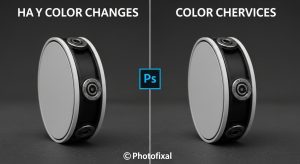
🎨 Launching a fine-art print or large-format banner? Our color change service gives your TIFF masters accurate, brand-safe hues before they hit the printer.


When to Use TIFF: Real-World Scenarios

Choose TIFF When You Need to Preserve Every Pixel

  • Long-term archiving of family heirlooms or historical photos
  • Master files that future retouchers will revisit
  • Print production for posters, billboards, magazines, and gallery canvases
  • Scientific and medical imaging where data integrity is non-negotiable
  • Document scanning for legal, governmental, or library records
  • Multi-page workflows like scanned books or technical manuals

Museums consistently choose TIFF because the format combines lossless compression, deep metadata, and decades of software support (Library of Congress Digital Preservation).

A Quick Note on Sizing

If you are planning a print run, file dimensions matter as much as format. For example, the way a 4×4 photo translates from screen to paper depends entirely on resolution settings — and you can read a friendly breakdown in this guide on how big are 4×4 pictures.


When to Use JPEG: Real-World Scenarios

Choose JPEG When Speed and Reach Matter Most

  • Website galleries, blog posts, and landing pages
  • Social media uploads to Instagram, Facebook, Pinterest, and TikTok
  • Email newsletters and marketing campaigns
  • Online store product images (paired with WebP fallbacks)
  • Client previews sent over messaging apps
  • Casual photo sharing with friends and family

A common professional workflow looks like this: shoot in RAW, edit and master in TIFF, then export to JPEG for delivery. That sequence keeps the original data safe while giving every audience a file that fits their platform.

👤 Selling fashion or apparel online? Our ghost mannequin service turns flat product shots into clean, three-dimensional images ready for any JPEG-based storefront.


TIFF vs JPEG: Side-by-Side Summary

FeatureTIFFJPEG
CompressionLossless (or none)Lossy
File sizeVery large (50–500 MB+)Small (1–15 MB)
Color depth8, 16, or 32 bit/channel8 bit/channel
Layers & transparencyYesNo
Browser supportLimitedUniversal
Print suitabilityExcellentGood (small to mid prints)
Editing safetyNon-destructiveQuality drops with each save
Best useArchiving, printing, masteringWeb, social, email

How to Convert Between TIFF and JPEG Safely

TIFF to JPEG

You convert TIFF to JPEG whenever you need a smaller, sharable version. The process is straightforward in Photoshop, Lightroom, Affinity Photo, or even free tools like GIMP and IrfanView. Always:

  • Keep the TIFF master untouched
  • Export at quality 80–90 for the best size-to-quality ratio
  • Apply final sharpening after resizing
  • Embed the sRGB profile for web delivery

JPEG to TIFF

Going from JPEG to TIFF will not recover lost detail. The compression damage is already baked in. However, converting can still help when:

  • You want to stop further generation loss during heavy edits
  • A printer or client demands a TIFF deliverable
  • You plan to combine the image with layered artwork

Treat the JPEG as the new “original” and protect it from additional re-saves.

🪄 Tired of fighting messy backgrounds in every export? Use our image masking service to handle hair, fur, and fine edges that simple clipping paths cannot.


Common Myths About TIFF and JPEG

Myth 1: “JPEG always looks worse than TIFF”

Not at the same viewing size. A JPEG saved at 90% quality is visually indistinguishable from a TIFF on most screens and even small prints. The trouble starts when you re-edit and re-save.

Myth 2: “TIFF is outdated”

Far from it. TIFF still anchors archival and printing standards in 2026. Newer formats like DNG, HEIC, and JPEG XL offer alternatives, but TIFF remains the safest choice for institutional preservation.

Myth 3: “Saving as TIFF improves a JPEG”

Format conversion never adds detail. Once data is gone, it is gone. The best you can do is stop further degradation by switching to a lossless container.

Myth 4: “Bigger files always print better”

Print quality depends on resolution (PPI), color profile accuracy, and the printer’s capabilities. A perfectly prepared 300 PPI JPEG often beats a sloppy 600 PPI TIFF.


Modern Alternatives Worth Knowing

The TIFF vs JPEG debate is no longer the only conversation. Two newer formats are reshaping web delivery:

  • WebP — Google’s format that beats JPEG in compression and supports transparency. Already supported by every major browser (Google Developers).
  • AVIF — Built on AV1 video compression. Smaller files than WebP and excellent quality, with growing browser adoption.
  • HEIC — Apple’s default mobile format. Great compression, but limited cross-platform support.
  • JPEG XL — A modern successor to JPEG with both lossless and lossy modes, plus backward compatibility.

For now, JPEG still leads in compatibility, while TIFF still leads in archival trust. The new formats sit in between, gaining traction every year.

💄 Booking headshots or portrait sessions? Our headshot retouching service refines every detail in TIFF first, then exports portfolio-ready JPEGs in any size you need.


TIFF vs JPEG for Specific Industries

E-commerce and Product Photography

Most marketplaces (Amazon, Shopify, Etsy) require JPEG or PNG uploads. Photographers usually retouch in TIFF, then deliver final JPEGs at 1500–3000 px on the long edge. Background removal and clipping paths happen on the TIFF master so transparency and layers stay intact.

Wedding and Event Photography

Photographers shoot RAW, master selects in TIFF, and deliver JPEG galleries. Album printers may request TIFFs for hero spreads where smooth gradients show banding in JPEGs.

Architectural and Interior Photography

Wide dynamic range scenes with deep shadows and bright windows benefit from 16-bit TIFFs during editing. The exported JPEGs go to the architect, while the TIFF master stays in the archive for future portfolio updates.

Beauty and Fashion Retouching

Skin retouching demands 16-bit color to prevent banding around tonal transitions. Pros work entirely in TIFF or PSD until the very last export.

Need flawless skin without the plastic look? Our beauty retouching service preserves natural texture in 16-bit TIFFs before delivering polished JPEGs to your team.


Quick Decision Checklist

Use this checklist next time you face the TIFF vs JPEG choice:

  • Will the image be printed larger than A4? → TIFF
  • Will it live on a website or social feed? → JPEG
  • Will future retouchers reopen it? → TIFF
  • Are you emailing it to a client right now? → JPEG
  • Are you scanning a historical document? → TIFF
  • Do you need transparency or layers? → TIFF (or PNG/PSD)
  • Are you uploading to a CMS that rejects large files? → JPEG
  • Are you storing a master file for a magazine cover? → TIFF

Frequently Asked Questions

1. Is TIFF really better than JPEG for photography?

For editing, archiving, and large-format printing, yes. TIFF preserves the full data your camera or scanner captured. For sharing, social media, and web galleries, JPEG is the smarter, faster, and more compatible choice.

2. Does saving a JPEG repeatedly really hurt quality?

Yes. Every re-save runs the image through lossy compression again, which is why photographers warn about “generation loss.” If you need to edit a JPEG repeatedly, convert it to TIFF or PSD first and only export to JPEG once at the end.

3. Can I print a JPEG and still get great results?

Absolutely. A high-quality JPEG (90–100 quality, 300 PPI, sRGB or AdobeRGB) prints beautifully up to A3 sizes. Most print shops accept JPEGs without complaint. TIFF only becomes essential for very large prints or fine-art reproductions.

4. Why does my email reject TIFF attachments?

TIFF files often exceed 25 MB, which is the standard email attachment limit. Use a cloud service like Google Drive, Dropbox, or WeTransfer instead, or convert to JPEG if quality loss is acceptable.

5. Is there a maximum size for TIFF files?

Standard TIFFs cap at 4 GB because of 32-bit offsets. The BigTIFF extension uses 64-bit offsets and supports much larger files, which scientific and mapping applications rely on.

6. Should I use TIFF or JPEG for scanning old photos?

TIFF, every time. Scanning is a one-shot process, and the lossless format lets you safely apply restoration, color correction, and sharpening later without compounding losses.

7. What is the best format between TIFF, JPEG, and RAW?

RAW is the camera’s untouched data — the ultimate master. TIFF is the editing and archival format. JPEG is the delivery format. Professionals typically use all three across the same project.

8. Can search engines read TIFF files?

Search engines technically index TIFFs, but they prefer JPEG, PNG, WebP, and AVIF for web indexing. For SEO, always publish JPEG (or WebP) and reserve TIFFs for downloads or behind-the-scenes assets.


Final Thoughts: Pick the Format That Matches Your Goal

There is no universal “best” format. TIFF and JPEG each solve different problems, and the smartest creators use both. Treat TIFF as your studio — the place where you build, refine, and protect your work. Treat JPEG as your storefront — the polished, lightweight version that meets the world.

Once you internalize that workflow, the decision stops feeling technical. You will reach for TIFF when craftsmanship matters and JPEG when speed matters, and your portfolio, storefront, and archive will all be better for it.

🚀 Ready to hand off your editing pipeline to professionals? Visit Photofixal to see how our team handles clipping paths, retouching, and color work for brands, studios, and photographers worldwide.