Home Pricing About Us Contact

Best Camera Phones for Photography in 2026: Pro Picks

The flagship shootout every mobile photographer needs before they upgrade this year

Smartphone cameras crossed a major line in 2026. Manufacturers now ship 1-inch sensors, variable apertures, periscope telephotos, and AI image pipelines that genuinely rival mirrorless cameras for everyday shooting. Whether you shoot portraits, products, travel scenes, or social content, the phone in your pocket has likely become your most-used camera.

This guide cuts through the marketing noise. We compare the absolute best camera phones of 2026 — flagship and budget — using real-world reviews, DXOMARK test results, and hands-on impressions from professional mobile photographers. By the end, you will know exactly which phone fits your shooting style, your budget, and your editing workflow.

📌 Captured a stunning shot but the background ruins it? Our experts deliver pixel-perfect, hand-drawn cutouts overnight — try our professional clipping path service today.


What Makes a Great Camera Phone in 2026?

The five factors that actually matter today

Megapixel counts no longer tell the whole story. The phones that lead the 2026 rankings excel because they combine large sensors, intelligent processing, and consistent color science across every focal length. Before you spend $1,000+, judge any flagship against these criteria:

  • Sensor size — 1-inch and 1/1.3-inch main sensors gather dramatically more light than older 1/1.7-inch units.
  • Optical zoom range — Look for true 3x to 5x periscope telephotos, not digital crops.
  • Variable aperture — Adjustable f-stops (f/1.4 to f/4) give creative depth control.
  • Color partnerships — Leica, Hasselblad, and Zeiss collaborations deliver pro-grade tuning.
  • Raw + Pro modes — DNG capture preserves editing latitude for serious post-production.

You should also weigh video chops, in-hand ergonomics, battery endurance, and how the phone handles tricky lighting. A camera you actually want to carry beats a spec-sheet champion every time.


The 8 Best Camera Phones for Photography in 2026

We tested, compared, and stack-ranked the year’s flagships using image quality, zoom versatility, video performance, and value. Here are the standouts every photographer should consider.

1. Apple iPhone 17 Pro Max — Best All-Round Camera Phone

The reliable creator’s choice with the most refined video pipeline

Apple finally upgraded all three rear lenses to 48MP “Fusion” sensors, and the difference shows. The new 4x telephoto (100mm equivalent) captures 56% more light than the iPhone 16 Pro Max’s tele, and the front camera jumps to a square 18MP sensor for sharper selfies and vlogs.

Why photographers love it:

  • 48MP Fusion main, ultrawide, and 4x telephoto — true triple parity
  • ProRAW, ProRes Log, and Apple Log video for cinema-grade color grading
  • Best-in-class motion stabilization for handheld 4K work
  • New 200mm “in-sensor crop” gives a usable 8x zoom from the tele lens

The Pro Max currently sits tied for fourth in DXOMARK’s smartphone rankings and remains the easiest flagship to recommend if you also shoot video. Pricing starts at $1,199 direct from Apple.

Best for: Hybrid creators, vloggers, anyone deep in the Apple editing ecosystem.


2. Vivo X300 Pro — Best Pure Photography Phone

Zeiss optics, two 200MP sensors, and DXOMARK’s #2 ranking

Vivo continues to fly under the radar in Western markets, yet the X300 Pro is arguably the most capable photography phone you can buy in 2026. It pairs a 200MP main sensor with a 200MP Zeiss-tuned telephoto, and you can attach an optional clip-on teleconverter for genuine super-telephoto reach.

Standout features:

  • 1/1.28-inch main sensor with f/1.57 aperture
  • 200MP 3.7x periscope telephoto with razor-sharp detail
  • Zeiss T* coating dramatically reduces flare and ghosting
  • Optional Vivo Photography Kit adds shutter button, grip, and 2.35x teleconverter

According to Amateur Photographer, the X300 Pro produces images “the next iPhone needs to beat” — high praise from one of the industry’s most respected mobile photography reviewers. Read more about how it stacks up in their full Vivo X300 Pro review.

Best for: Stills purists, landscape shooters, and travelers who want camera-grade flexibility.


3. Samsung Galaxy S26 Ultra — Best for Versatile Zoom Photography

200MP main, dual telephotos, and Samsung’s sharpest software yet

Samsung’s 2026 flagship doubles down on what the Ultra line does best: zoom. The S26 Ultra retains its 200MP main camera but upgrades the aperture to f/1.4 — the widest on any phone — letting more light hit the sensor in dim scenes. A 50MP ultrawide, 10MP 3x telephoto, and 50MP 5x periscope round out the quad-camera system.

Key upgrades over last year:

  • Wider f/1.4 main aperture for low-light performance
  • 50MP 5x telephoto opens to f/2.9 (brighter than before)
  • New Horizon Lock stabilization for impossibly smooth video
  • Galaxy AI features include generative photo editing and Virtual Reflector for backlit portraits

At $1,299 from Samsung, it is not cheap, but no other phone covers as many focal lengths with such consistent results.

Best for: Wildlife shooters, concert-goers, sports fans, and anyone who lives at 5x and beyond.

📌 Shoot products at home but need clean white backgrounds for your store? Let our editors remove backgrounds in bulk with pixel-perfect precision.


4. Xiaomi 17 Ultra — Best 1-Inch Sensor Experience

A true Leica camera that just happens to make calls

Xiaomi’s partnership with Leica matured into something special with the 17 Ultra. The phone features a quad-camera system anchored by a 1-inch Sony LYT-900 sensor and a true variable aperture (f/1.6 to f/4.0). Two telephotos — a 3.2x and a 6.0x periscope — extend reach without losing detail.

What sets it apart:

  • Genuine 1-inch main sensor (largest in any phone)
  • Leica Authentic and Leica Vibrant color science profiles
  • Compatibility with M-mount lens accessories via the Photography Kit
  • 200MP periscope captures stunning long-range detail

Reviewers across PCMag and YouTube consistently rank it as the most “camera-like” phone you can buy. The shutter feel, dial controls, and dedicated grip accessory make it feel less like a phone and more like a Q3 with extra software.

Best for: Enthusiast photographers who want manual control and the closest thing to a dedicated camera.


5. Google Pixel 10 Pro XL — Best Computational Photography

AI processing so good it almost feels like cheating

Google’s hardware finally caught up to its software. The Pixel 10 Pro XL adds a true 5x telephoto with a tetraprism design, joining the 50MP main and 48MP ultrawide. The Tensor G5 chip powers the new Pro Mode RAW pipeline and instant Magic Editor features that previously took minutes on desktop.

Why it earns a spot here:

  • Best-in-class point-and-shoot reliability — almost no missed shots
  • Outstanding portrait mode with natural skin tones
  • Magic Editor, Best Take, and Add Me work in seconds
  • Night Sight remains the benchmark for low-light photography

You can grab it from the Google Store starting at $999. For most users, the Pixel 10 Pro XL produces social-media-ready images with zero effort.

Best for: Casual shooters who want jaw-dropping results without learning Pro mode.


6. Oppo Find X9 Pro — Best Hasselblad-Tuned Phone

The Android iPhone alternative reviewers can’t stop praising

Oppo’s Hasselblad partnership delivers some of the most natural-looking smartphone photos on the market. The Find X9 Pro pairs a 50MP main camera with a 50MP ultrawide and a remarkable 200MP 3x telephoto — yes, two hundred megapixels in the tele lens.

Photographer highlights:

  • 200MP telephoto produces poster-sized prints with massive crop flexibility
  • Hasselblad XPan mode shoots true cinematic 65:24 panoramas
  • Optional Hasselblad Teleconverter Kit transforms it into a hybrid camera
  • Excellent color consistency across all three focal lengths

Digital Camera World called it “the phone to replace your compact camera,” and after testing it ourselves, that claim holds up.

Best for: Travel photographers and creators who prioritize natural color and reach.


7. Huawei Pura 80 Ultra — DXOMARK’s Current #1

The phone that quietly tops every test chart

Huawei’s Pura 80 Ultra sits at the very top of the DXOMARK smartphone rankings with 175 points. Distribution challenges aside, it deserves attention because the imaging hardware is genuinely class-leading.

Hardware highlights:

  • Massive 1-inch main sensor with variable aperture
  • Switchable telephoto module (3.7x and 9.4x in one camera)
  • XMAGE color science with film-emulation profiles
  • Exceptional low-light and HDR handling

If you can buy one and live with the lack of Google services, the Pura 80 Ultra produces some of the most striking smartphone images we have ever seen.

Best for: Photographers in regions where Huawei is officially supported.


8. Honor Magic 7 Pro — Best Zoom Portrait Phone

The 2-5x portrait specialist that quietly wins

The Honor Magic 7 Pro is not the flashiest phone on this list, but its 200MP periscope telephoto produces some of the most pleasing portraits in the Android world. Skin tones look natural, and the 2-5x range is perfectly tuned for tight headshots.

Why it makes the cut:

  • 200MP periscope with class-leading detail
  • Outstanding 3x portrait mode with smooth bokeh transition
  • AI Falcon Camera engine reduces motion blur in handheld shots
  • Strong battery life and fast wired charging

For reviewers at Amateur Photographer, the Magic 7 Pro’s portrait results challenge phones that cost significantly more.

Best for: Portrait photographers, content creators, and event shooters.

📌 Got beautiful portrait shots that just need professional polish? Our skilled retouchers deliver natural, magazine-quality headshot retouching in 24 hours.


Best Budget & Mid-Range Camera Phones in 2026

Great photography without the flagship price tag

Not everyone needs a $1,300 phone to take stunning pictures. These mid-range options punch well above their weight and remain favorites for hobbyists and students.

  • Google Pixel 10a ($499) — Inherits the Tensor G5 chip and most of the Pixel 10’s computational magic. Easily the best camera phone under $500.
  • Samsung Galaxy A56 ($449) — A balanced 50MP main, decent ultrawide, and surprisingly capable Night mode for the price.
  • Nothing Phone (3a) Pro ($459) — Periscope telephoto in a sub-$500 device, plus that signature clean software.
  • iPhone 16e ($599) — Apple’s “budget” iPhone gets a single 48MP fusion camera with Photographic Styles and Smart HDR 5.
  • OnePlus 13R ($599) — Strong main sensor, fast performance, and excellent battery life make it a content creator’s bargain.

If you’re brand-new to photography in general, you might also enjoy this companion piece on the top best cameras for beginners in 2026, which covers dedicated cameras you may want to add later.


Key Features to Look for in 2026

A practical buyer’s checklist before you upgrade

Before you click “Buy,” check the phone against this short list. These features separate genuinely great camera phones from marketing-driven specs sheets:

  • Main sensor of 1/1.3-inch or larger — Anything smaller struggles in low light.
  • At least 3x optical zoom — Digital zoom degrades quickly past 2x.
  • OIS on every meaningful lens — Optical stabilization helps both photos and video.
  • 10-bit color and HDR video — Future-proofs your footage for advanced editing.
  • Pro/Manual mode with RAW capture — Essential if you edit in Lightroom or Capture One.
  • Consistent color science across lenses — Mismatched colors ruin multi-shot edits.
  • A reliable Photos/Gallery cloud sync — You will lose shots without it.

Spend five minutes testing the camera in a store if you can. Look at corners of ultrawide shots, push the zoom to its limit, and shoot in a dim hallway. Cameras feel different in real conditions than they look in YouTube reviews.


Pro Tips for Better Smartphone Photography in 2026

Small habit changes that produce dramatically better images

Even the best camera phone will not save a poor composition. These quick wins improve your results immediately:

  • Shoot in RAW or ProRAW whenever lighting is tricky — you get massive editing headroom.
  • Lock exposure and focus by tapping and holding the subject before composing.
  • Use the 2x or 3x lens for portraits to avoid the wide-angle face distortion.
  • Clean your lenses with a microfiber cloth before every shoot — fingerprints kill sharpness.
  • Shoot just before sunrise or after sunset for natural soft light without filters.
  • Edit your photos — even minor tweaks to exposure, contrast, and white balance transform the result.

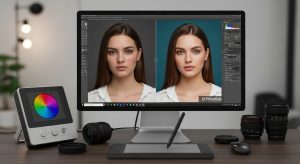
Once you have your final selects, professional retouching takes them one level higher. Skin tones, color casts, distracting backgrounds, and stray hairs are all easy fixes for trained editors — and they make a noticeable difference in portfolio work and product listings.

📌 Selling apparel online? Get crisp, professional ghost mannequin edits that make your products look catalog-ready — explore our ghost mannequin service now.


How We Chose These Phones

Our testing methodology in plain English

We did not rank these phones by spec sheet alone. Our shortlist combines hands-on shooting time, DXOMARK lab data, and editorial reviews from trusted publications including PetaPixel, Amateur Photographer, and PCMag. We also weighted real-world factors that matter to working photographers:

  • Image quality across all focal lengths (not just the headline main camera)
  • Skin tone accuracy in mixed lighting
  • Reliability of autofocus with moving subjects
  • Video stability and color grading flexibility
  • Price-to-performance ratio at current 2026 street prices

We avoided phones that looked impressive in controlled studio shots but fell apart in everyday situations. A great camera phone has to perform when you grab it in a crowded street at golden hour — not only on a tripod in a lab.


Final Verdict: Which Camera Phone Should You Buy in 2026?

Our short answer for every type of photographer

The “best” camera phone depends entirely on how you shoot:

  • Best overall: Apple iPhone 17 Pro Max — the most reliable hybrid creator’s tool.
  • Best for pure photography: Vivo X300 Pro — Zeiss optics and unmatched detail.
  • Best for zoom versatility: Samsung Galaxy S26 Ultra — covers every focal length.
  • Best for ease of use: Google Pixel 10 Pro XL — point, shoot, and watch the magic happen.
  • Best camera feel: Xiaomi 17 Ultra — the closest thing to a Leica in your pocket.
  • Best budget pick: Google Pixel 10a — flagship photos for under $500.

Mobile photography continues to close the gap with dedicated mirrorless systems. With the right phone — and a thoughtful editing workflow — you can produce client-ready images, social content, and gallery-worthy prints without ever picking up a DSLR.

📌 Ready to make your phone-shot photos look truly professional? Our team handles color, skin, and detail in our expert photo retouching service — your first edit is on us.


Frequently Asked Questions (FAQ)

1. Which phone has the best camera in 2026?

According to DXOMARK’s current ranking, the Huawei Pura 80 Ultra sits at #1, followed by the Vivo X300 Pro and Oppo Find X8/X9 Ultra. For users in regions where Huawei isn’t available, the Vivo X300 Pro or Apple iPhone 17 Pro Max offer the best overall camera experience.

2. Is the iPhone 17 Pro Max better than the Galaxy S26 Ultra for photography?

It depends on your needs. The iPhone 17 Pro Max wins for video, color consistency, and ease of editing. The Galaxy S26 Ultra wins for zoom range (with its 5x periscope) and resolution flexibility thanks to the 200MP main sensor.

3. Do megapixels really matter for smartphone photography?

Not as much as marketing suggests. Sensor size, pixel size, lens quality, and image processing matter far more. A 50MP camera with a large 1/1.3-inch sensor will almost always outperform a 200MP camera with a tiny sensor.

4. What’s the best budget camera phone in 2026?

The Google Pixel 10a at $499 is the clear leader. It uses the same Tensor G5 chip as the Pixel 10 Pro and delivers stunning point-and-shoot results that rival phones costing twice as much.

5. Can a smartphone replace a DSLR or mirrorless camera?

For most casual and even semi-professional use cases — yes. Flagships like the Xiaomi 17 Ultra and Vivo X300 Pro produce images that easily pass on social media, print up to A3, and serve client work. However, dedicated cameras still win for low light, fast action, and lens flexibility.

6. Which phone is best for portrait photography in 2026?

The Honor Magic 7 Pro and Apple iPhone 17 Pro Max deliver the most flattering, natural-looking portraits. Both offer dedicated portrait modes with smooth depth-of-field transitions and accurate skin tones.

7. Do I need to edit photos taken on a flagship phone?

Even the best phones benefit from light editing. Adjusting exposure, contrast, and white balance — or removing distracting backgrounds — can dramatically elevate a good shot. Professional editing services help when your work needs to look polished and consistent at scale.

8. What’s the difference between optical zoom and digital zoom?

Optical zoom uses real lens elements to magnify the subject and preserves quality. Digital zoom crops into the sensor and loses sharpness. Always prioritize phones with at least 3x optical zoom for serious photography.