Home Pricing About Us Contact

Canon PowerShot V1 Review 2026: Specs, Pros, Cons, Verdict

A Hands-On Review of Canon’s Boldest Vlogging Compact Yet

Canon entered the premium compact arena with confidence in 2025, releasing the PowerShot V1 as its long-awaited answer to a rapidly evolving creator market. After spending real time with this camera — and cross-checking dozens of hands-on tests, studio comparisons, and creator workflows — one conclusion stands out clearly: this isn’t just another point-and-shoot. The PowerShot V1 represents Canon’s most serious effort yet to merge professional video features with true pocket portability. The camera officially launched in April 2025 at an MSRP of $899.99, and reviewers at PetaPixel confirmed it would directly challenge Sony’s long-dominant ZV-1 Mark II.

If you create YouTube videos, shoot travel photography, record podcasts, or post-product content to Instagram and TikTok, this review will tell you everything you need before opening your wallet. We’ll dig into the sensor, lens, autofocus, stabilization, video features, ergonomics, real-world performance, and how the V1 compares to its closest rivals. We’ll also share which creators benefit most and which should keep looking.

🎯 Want every shot from your new Canon V1 to look magazine-ready? Try our professional photo retouching service and save hours of editing time.


Quick Verdict: Who the Canon PowerShot V1 Is Really For

Before we unpack the technical layers, here’s the short version. The PowerShot V1 sits comfortably between a high-end smartphone and a full mirrorless rig. It earns its $899 price tag with a noticeably larger sensor, a bright ultra-wide zoom, and video tools you usually find on cameras costing twice as much.

  • Best for: Vloggers, travel creators, hybrid shooters, and indie filmmakers needing pocket flexibility.
  • Not ideal for: Sports shooters, serious wildlife photographers, or anyone needing interchangeable lenses.
  • Standout features: 1.4-inch sensor, built-in 3-stop ND, active cooling fan, Canon Log 3, and Dual Pixel AF II.
  • Price at launch: $899.99 globally, per the official Canon U.S.A. listing.

This camera quickly earned recognition as one of the best premium compact vlogging cameras of 2026, according to a curated industry roundup published by Clipping Expert Asia.


Design, Build Quality, and Ergonomics

Canon kept the V1’s dimensions surprisingly tight at roughly 4.7 × 2.7 × 2.1 inches and a balanced weight of 426 grams (about 15 ounces). Pull it out of the box and you immediately sense a confident, dense build — far from the plastic feel of cheaper compacts. The matte finish hides fingerprints, while the subtle texturing on the grip gives your fingers something to bite into during single-handed shooting.

Form Factor Highlights

  • Pocketable but purposeful: It slides into a jacket pocket or small sling bag effortlessly.
  • Right-hand grip: Comfortable even for users with larger hands, according to The-Digital-Picture’s hands-on testing.
  • Flush control layout: Buttons sit close to the body, preventing accidental presses during selfie-style filming.
  • Fully articulating LCD touchscreen: Flips sideways and rotates 180 degrees for vlogging confidence.
  • Multifunction hot shoe: Compatible with Canon’s digital microphones and accessories.

Canon clearly studied creator workflows here. The flip-out screen avoids blocking the hot shoe — a frustration that plagues some Sony designs — letting you mount a microphone, light, or wireless receiver without sacrificing visibility. The retractable lens design also keeps the camera flat when powered off, which matters when you’re constantly slipping it in and out of bags. One legitimate complaint: the camera uses a micro HDMI port rather than a full-size HDMI, which feels like a step back for video-first users connecting to external monitors. The micro HDMI cable is also notoriously fragile in field conditions.


Sensor and Image Quality: The Real Game-Changer

This is where Canon made its boldest move. The PowerShot V1 uses a freshly developed 22.3-megapixel Type 1.4 (18.4 × 12.3mm) Dual Pixel CMOS AF sensor. To put that into context, this sensor is roughly the same surface area as a Micro Four Thirds chip and significantly larger than the 1-inch sensors found in nearly every other premium compact. According to DPReview’s technical analysis, the design borrows heavily from the EOS R7’s APS-C sensor architecture — Canon essentially cropped the R7 chip to fit a smaller body.

Real-World Image Performance

  • Resolution: 22.3MP delivers excellent detail for prints, social, and 4K content.
  • Dynamic range: Comfortably above 1-inch competitors, particularly in shadows.
  • Color science: Canon’s signature warm, natural skin tones shine without heavy editing.
  • ISO range: Native ISO 100–32000, expandable to 51200.
  • Low-light usability: Clean files up to ISO 1600; visible noise starts at ISO 3200; ISO 6400 is the practical ceiling.

The combination of generous sensor real estate and Canon’s color processing creates an immediate “professional” look in straight-out-of-camera JPEGs. Skin tones in particular benefit from Canon’s reliable rendering — a quiet but powerful advantage for portrait shooters and content creators who don’t want to color-grade every clip.

Canon PowerShot V1 sample photo demonstrating dynamic range and color depth

That said, the V1 isn’t immune to physics. At very high ISO settings, noise becomes noticeable, especially in shadow recovery. If you push exposure during editing — particularly underexposed evening shots — you’ll notice graininess earlier than you would on a full-frame system. For most creator use cases, however, this limitation rarely surfaces.

🎨 Need clean, distraction-free product shots from your V1? Order professional background removal services for crisp, e-commerce-ready images today.


Lens and Optical Performance

The fixed lens design is one of the most polarizing decisions on the V1. You can’t swap it out — but Canon engineered the built-in zoom to cover the focal lengths most creators actually use.

Lens Specifications

  • Focal length (stills): 8.2–25.6mm, equivalent to 16–50mm in 35mm terms.
  • Focal length (video): Equivalent to 17–52mm due to slight crop.
  • Maximum aperture: f/2.8 at the wide end, narrowing to f/4.5 at telephoto.
  • Built-in 3-stop (0.8) ND filter for shooting wide open in bright sunlight.
  • Optical Image Stabilization baked directly into the lens.

The 16mm wide end is the secret weapon for vlogging. You can hold the camera in one hand, capture yourself plus the surrounding scene, and never need a selfie stick. The 50mm end is more functional than impressive — fine for tighter portraits, casual product shots, and street photography, but a touch limited if you crave reach. Several professional reviewers, including Ross Jukes Photography, noted they’d prefer a longer telephoto reach closer to 80–105mm equivalent.

Optical quality holds up impressively for a retractable zoom. Center sharpness is excellent across the focal range. Corner softness appears wide open, particularly at f/2.8, but tightens noticeably by f/5.6. Lateral chromatic aberration sits at minor-to-modest levels — completely fixable in Lightroom or Canon’s DPP software. The built-in ND filter alone justifies a chunk of the price for video creators. You can finally maintain a 1/50s shutter for cinematic motion blur in midday sun without screwing on external filters.

Canon PowerShot V1 lens close-up with 16-50mm focal range markings

Video Capabilities: Why This Camera Exists

Make no mistake — Canon built the PowerShot V1 primarily for video creators. Every design decision, from the cooling fan to the screen articulation, reflects a video-first philosophy.

Core Video Specifications

  • 4K UHD up to 30p using the full sensor width (oversampled from 5.7K capture).
  • 4K UHD up to 60p with a modest 1.4× crop.
  • Full HD up to 120p for smooth slow-motion sequences.
  • Canon Log 3 for high dynamic range capture and color grading flexibility.
  • 10-bit 4:2:2 internal recording for serious post-production workflows.
  • H.264 and H.265 codec support.
  • Built-in cooling fan virtually eliminates overheating worries.
  • 3.5mm microphone input and headphone output.

Cooling Fan: A Genuine Differentiator

The active cooling fan deserves special attention. Many compact cameras throttle, crash, or shut down during extended 4K sessions — a problem that has plagued mirrorless cameras for years. Canon’s solution borrows a strategy normally reserved for full-size cinema cameras. With Auto Power Off set to High, the V1 can record 4K/60p continuously for over two hours in typical conditions, according to documentation referenced by PetaPixel. In 4K/30p or Full HD, there’s effectively no recording time limit beyond battery and storage capacity.

In practical testing, the fan is also impressively quiet. You’ll only hear it if you press your ear directly against the body. For interviews, podcasts, and ASMR-style work where audio matters, this matters tremendously.

Audio: Built-In That Actually Works

Canon equipped the V1 with a high-quality stereo microphone array and ships it with a furry windscreen. Outdoor vlogging benefits enormously from this little accessory — wind noise becomes a non-issue at moderate speeds. While serious creators will still upgrade to a Canon DM-E1D shotgun mic or wireless lavalier, the onboard audio is genuinely usable for casual content. This is a clear improvement over the muffled, tinny audio common to compact cameras.

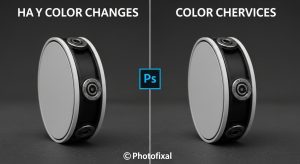
🎨 Shooting product reviews with your V1? Use our professional color change service to showcase product variants without reshooting every angle.


Autofocus: Inherited Brilliance from the EOS R6 Mark II

Canon made one of the smartest engineering decisions here by porting the autofocus system from the EOS R6 Mark II directly into the V1. This places the PowerShot V1’s AF performance in genuinely professional territory.

Autofocus Strengths

  • Dual Pixel CMOS AF II across the entire frame.
  • Eye, face, and body detection for humans.
  • Animal detection for dogs, cats, and birds.
  • Subject tracking rated among the fastest in the compact category.
  • Excellent low-light AF performance at the wide end.
  • Close-up Demo mode designed for product reviewers and unboxers.

Eye detection locks instantly and rarely loses subjects, even when they turn their head or move quickly. The dedicated “Close-up Demo” mode is a clever touch for product-focused YouTubers — hold something up to the lens and the camera shifts focus from your face to the object within milliseconds. The major exception in the otherwise stellar AF: there’s no vehicle detection, which the R6 Mark II offers. Most V1 users won’t miss this, but motorsport or car content creators should note the gap.


Image Stabilization: Mixed Results

The V1 combines optical lens-based stabilization with several digital IS modes for video. Combined, they’re effective for casual handheld work but won’t replace a gimbal for fast walking shots.

Stabilization Modes

  • Standard Movie Digital IS: Modest crop, smooth output.
  • Enhanced Movie Digital IS: Heavier crop, much more aggressive correction.
  • Subject Tracking IS: Heavy crop but keeps subjects centered automatically.

According to DPReview, the V1’s stabilization is noticeably smoother than Sony ZV-1 II’s during pans. Slow-walking vlog clips look clean, and the subject tracking mode is genuinely useful for one-person shoots where you can’t constantly reframe. However, fast walks or running motions still produce visible bumps. If you regularly shoot motion-heavy footage, pair the V1 with a small gimbal like the DJI RS 4 Mini.


Stills Photography: A Surprisingly Capable Sidekick

Although Canon marketed the V1 primarily as a video tool, its still photo chops are stronger than many reviewers initially assumed.

Stills Performance Highlights

  • Mechanical shutter: Up to 1/2000s.
  • Electronic shutter: Up to 1/16000s for action and bright daylight wide-open shots.
  • Continuous burst: Up to 30 fps with electronic shutter in RAW or JPEG.
  • RAW + JPEG simultaneous capture for hybrid workflows.
  • 22.3MP files support large prints and substantial cropping flexibility.

Street, travel, and family photography all benefit from the V1’s responsive shutter and reliable autofocus. The mechanical shutter limit of 1/2000s is the one constraint photographers should know about — beyond that, you’ll need the electronic shutter or the ND filter to shoot wide open in bright sun. For most creator use cases, the V1 delivers files that look noticeably better than smartphone output, especially in mixed lighting and indoor scenes.


Battery Life and Connectivity

The V1 uses Canon’s familiar LP-E17 battery pack, the same cell found in many EOS R-series cameras. This makes spare batteries inexpensive and easy to source — a quiet but meaningful advantage.

Power and Connectivity Specifications

  • CIPA-rated stills: Approximately 340–400 shots per charge depending on settings.
  • Video runtime: Roughly 70–75 minutes per battery in 4K modes, with some testers reaching 66 minutes of continuous 4K/24p before the battery died (no overheating).
  • USB-C charging and power delivery allows external power banks for marathon sessions.
  • Built-in Wi-Fi and Bluetooth for instant mobile transfer.
  • Canon Camera Connect app for remote control and live streaming.
  • Live streaming via USB or Wi-Fi, plus compatibility with the Canon Live Switcher Mobile app.
  • Single UHS-II SD card slot.

Battery life is the V1’s weakest specification, particularly for all-day shoots. Plan on carrying two or three spares — or use a USB-C power bank for tethered continuous shooting. The live streaming features make the V1 a strong choice for Twitch streamers, podcast hosts, and live event creators who want a camera that doubles as a webcam without expensive capture hardware.

🎨 Created stunning portraits with the Canon V1? Polish them with our beauty retouching service for flawless, natural-looking results.


Canon PowerShot V1 vs. Sony ZV-1 Mark II: The Head-to-Head

The Sony ZV-1 Mark II is the V1’s most direct rival, and the comparison reveals genuine differences in approach.

FeatureCanon PowerShot V1Sony ZV-1 Mark II
Sensor22.3MP Type 1.4 (18.4×12.3mm)20.1MP 1-inch (13.2×8.8mm)
Lens16–50mm equiv. f/2.8–4.518–50mm equiv. f/1.8–4.0
4K/60pYes (1.4× crop)No
Canon Log 3 / S-Log 3C-Log 3 onboardS-Log 3 onboard
Built-in ND filterYes (3-stop)No
Cooling fanYesNo
Headphone jackYesNo
StabilizationOptical + Digital ISDigital only
Weight426g292g
Launch price$899.99$899.99

The Verdict on the Comparison

Sony’s ZV-1 Mark II remains lighter, slightly faster at the wide end, and arguably more pocketable. The V1 counters with a substantially larger sensor, 4K/60p capability, optical stabilization, headphone monitoring, and an active cooling fan. For nearly every creator who plans to shoot more than five minutes of 4K at a time, the V1 is the more future-proof choice. The Sony still wins in low-light street photography where the f/1.8 wide aperture matters most.


Real-World Use Cases: Where the V1 Shines

After examining all the technical specifications, the question becomes: who actually benefits most from this camera? Based on extensive hands-on coverage, several creator profiles emerge as clear winners.

Ideal Users

  • YouTube vloggers who shoot indoor talking-head, outdoor walking content, or travel vlogs.
  • Travel photographers who want one camera that handles stills and 4K B-roll without bulk.
  • Product reviewers who appreciate the Close-up Demo mode and 22MP detail.
  • Podcast and stream hosts who want a serious-quality webcam alternative.
  • Hybrid creators transitioning from smartphone to dedicated camera.
  • Wedding second-shooters capturing candid B-roll between primary shots.
  • Real estate content creators taking advantage of the 16mm wide angle.

Not the Best Match

  • Sports and wildlife photographers needing long telephoto reach.
  • Studio photographers requiring interchangeable lenses and external flash.
  • Astrophotographers who need exposed long-exposure performance beyond 30 seconds.
  • Cinema professionals who need ProRes or full-size HDMI output.

Pros and Cons Summary

What We Loved

  • Larger Type 1.4 sensor outclasses 1-inch compact competitors.
  • Built-in 3-stop ND filter eliminates external filter hassles.
  • Active cooling fan removes virtually all overheating concerns.
  • Canon Log 3 with 10-bit color offers genuine professional video flexibility.
  • EOS R6 Mark II–derived autofocus delivers tier-leading subject tracking.
  • Headphone jack for accurate audio monitoring (rare in compacts).
  • Articulating touchscreen stays usable in selfie mode without blocking the hot shoe.
  • 30 fps electronic burst for fast-action stills.
  • Multifunction hot shoe with digital audio support.

Where It Falls Short

  • No interchangeable lens option limits creative flexibility.
  • Micro HDMI port is fragile and feels dated.
  • Battery life is modest at 340–400 shots per charge.
  • Telephoto reach maxes at 50mm equivalent — short for portraits and distance work.
  • High rolling shutter in standard 4K modes can show jello effect on quick pans.
  • No weather sealing rules out heavy rain or dusty environments.
  • Limited external dial control forces frequent touchscreen menu use.

Smart Accessories Worth Adding

To unlock the V1’s full creative potential, a few well-chosen accessories help round out the kit.

  • Spare LP-E17 batteries (carry at least two extras).
  • Fast UHS-II V90 SD card — Canon is picky about card speed for 4K/60p.
  • Small carbon-fiber tripod for static vlog setups.
  • Wireless lavalier microphone for talking-head clarity.
  • USB-C power bank with 9V/2A PD support for marathon shooting.
  • Compact ND filter set if you want stops beyond the built-in 3-stop range.
  • Soft camera pouch to protect the lens during pocket carry.

Pricing, Availability, and Value Assessment

At its launch MSRP of $899.99, the PowerShot V1 occupies an interesting price tier. It costs more than entry-level mirrorless kits but less than enthusiast hybrids like the Canon EOS R10 or Sony a6700. By late 2025, some retailers began bundling discounts that effectively dropped street prices to around $849. Compared against the cost of a smartphone-plus-gimbal-plus-microphone setup that smartphone vloggers often build, the V1 delivers a significant image quality leap for similar money. The cooling fan, built-in ND, and Canon Log 3 combination alone would cost several hundred dollars to replicate with external accessories on competing systems.

📸 Capturing client headshots with your Canon V1? Get studio-quality results with our headshot retouching service within 24 hours.


How the Canon PowerShot V1 Stacks Up Against the Compact Camera Landscape

Beyond the Sony ZV-1 II, several other cameras deserve mention. The Sony ZV-E10 II offers a larger APS-C sensor but requires interchangeable lenses and lacks the V1’s all-in-one convenience. The Fujifilm X-M5 brings beautiful film simulations but lacks the V1’s cooling fan and headphone monitoring. The DJI Osmo Pocket 3 is smaller and includes a gimbal, but its sensor and lens flexibility are far more limited. For shoppers researching the broader market, our deeper roundup of the best vlogging cameras of 2026 breaks down nine top contenders across every budget and creator type.


Frequently Asked Questions

1. Is the Canon PowerShot V1 worth the $899 price tag in 2026?
Yes, for most creators. The V1 combines a sensor larger than typical 1-inch compacts, professional video features like Canon Log 3, and a built-in cooling fan that justify the premium over cheaper alternatives.

2. Can the Canon PowerShot V1 shoot 4K at 60fps?
Yes. The V1 records 4K UHD at 60p with a modest 1.4× crop. For uncropped 4K, use the 30p mode, which is oversampled from a 5.7K capture for excellent detail.

3. How long can the PowerShot V1 record video continuously?
With the cooling fan active and Auto Power Off on High, it can record 4K/60p for over two hours per session. In 4K/30p and Full HD modes, there’s effectively no time limit beyond battery and card capacity.

4. Does the Canon PowerShot V1 have interchangeable lenses?
No. It uses a fixed 16–50mm equivalent zoom (f/2.8–4.5). The lens covers most common creator focal lengths but limits flexibility for telephoto or specialty work.

5. Is the PowerShot V1 good for photography or only vlogging?
It’s better than expected for stills. The 22.3MP sensor delivers sharp, color-accurate images with excellent dynamic range. It works well for travel, street, product, and family photography.

6. How does battery life compare to other vlogging cameras?
Battery life is average. Expect 340–400 shots or 70–75 minutes of 4K video per charge. Carry at least one or two spare LP-E17 batteries for full-day shoots.

7. Can I use the Canon PowerShot V1 as a webcam or for live streaming?
Yes. The V1 supports USB and Wi-Fi live streaming, works with the Canon Live Switcher Mobile app, and connects directly with the Camera Connect app for seamless integration.

8. Does the Canon PowerShot V1 overheat during long recordings?
Rarely. The built-in cooling fan keeps temperatures controlled even during extended 4K/60p sessions, addressing one of the most common compact camera complaints.


Final Verdict: Should You Buy the Canon PowerShot V1?

The Canon PowerShot V1 isn’t a camera trying to be everything to everyone — and that’s exactly why it succeeds. Canon identified a specific creator profile (the hybrid YouTube/Instagram/TikTok content creator who has outgrown smartphone video) and engineered a tool that addresses every pain point of that workflow. The larger sensor delivers visibly better image quality than 1-inch competitors. The built-in ND filter and Canon Log 3 give serious video flexibility. The cooling fan eliminates the overheating anxiety that’s plagued cameras like the Sony a7C and Fujifilm X-S20. The R6 Mark II–derived autofocus is genuinely best-in-class for the form factor.

What you give up — interchangeable lenses, vehicle detection, full-size HDMI, weather sealing — represents reasonable trade-offs for the V1’s intended audience. If you’re starting a YouTube channel today, building a creator brand on Instagram, or simply tired of your iPhone’s compressed video files, the PowerShot V1 deserves a serious look. At $899, it sits in that rare sweet spot where you pay for capability without paying for excess.

For photographers who shoot mostly stills, an APS-C mirrorless like the Canon EOS R10 or Sony a6400 with a kit lens still offers more long-term flexibility. But for the creator audience Canon targeted, the V1 is the most polished compact vlogging camera Canon has ever shipped — and arguably the best premium compact creator camera on the market in 2026.

✂️ Ready to make every Canon PowerShot V1 photo look studio-perfect? Try our expert clipping path service for crisp, professional edits today.