Home Pricing About Us Contact

How Big Is a 5×7 Photo? Complete Size Guide in Inches, CM, MM & Pixels

A Friendly Walkthrough of the World’s Most Loved Print Size

Photo sizes confuse a lot of people, and the 5×7 print sits right at the top of that list. You probably grabbed your phone, snapped a beautiful moment, and now you want to print it—but you keep wondering whether 5×7 is the right pick. Maybe you’re shopping for a frame, ordering custom invitations, or sending a portrait to grandma. Whatever the reason, knowing the exact dimensions saves you from blurry prints, awkward cropping, and wasted money.

This guide answers every question you have about the 5×7 photo size. We’ll walk through dimensions in inches, centimeters, millimeters, and pixels. We’ll cover aspect ratios, DPI settings, framing tips, and even how 5×7 stacks up against other popular sizes like 4×6 and 8×10. You’ll also learn how professional editing services can rescue an off-ratio image without sacrificing your subject.

🎯 Ready to print stunning 5×7 photos? Let our experts at PhotoFixal Photo Retouching polish every pixel so your prints look magazine-worthy on the very first try.


What Are the Exact Dimensions of a 5×7 Photo?

A 5×7 photo measures 5 inches wide by 7 inches tall in its most common portrait orientation. Photographers usually list width before height, so the “5” sits horizontally and the “7” rises vertically. Flip the photo on its side, and the same image becomes 7 inches wide by 5 inches tall in landscape mode. Both layouts share identical dimensions—only the orientation changes.

The number itself feels small, but a 5×7 print packs surprising visual presence. It fits comfortably on a desk, slips into a greeting card, and stands tall on a bookshelf. Plenty of professional photographers consider it the sweet spot between portability and detail.

Quick Conversion Chart

Here’s how a 5×7 photo translates across every common measurement system:

  • Inches: 5 × 7 inches
  • Centimeters: 12.7 × 17.78 cm
  • Millimeters: 127 × 177.8 mm
  • Pixels at 300 DPI: 1500 × 2100 pixels (print-ready)
  • Pixels at 150 DPI: 750 × 1050 pixels (medium quality)
  • Pixels at 72 DPI: 360 × 504 pixels (screen only)

You won’t find a perfectly round metric equivalent because the imperial inch doesn’t divide evenly into centimeters. That’s why printers in Europe sometimes label this size as 13×18 cm, which rounds the dimensions slightly for shelf-friendly packaging.


Understanding the 5:7 Aspect Ratio

Aspect ratio describes the relationship between a photo’s width and height. The 5×7 print uses a 5:7 ratio, which roughly equals 1:1.4. That ratio sits between the boxy 4:5 ratio of an 8×10 print and the elongated 2:3 ratio of a 4×6 photo.

Most digital cameras and smartphones capture images in a 3:2 or 4:3 ratio. Neither matches 5:7 exactly, which means you must crop part of your original image when printing at 5×7. Don’t panic, though—this crop is usually small and easy to control.

Why the 5:7 Ratio Matters for Composition

The 5:7 ratio favors portraits because the slightly taller frame flatters faces, full-body shots, and vertical landscapes. It feels balanced—not too square, not too long. Wedding photographers, real estate agents, and graduation studios love this ratio because it keeps the subject centered and visually weighted.

If you shoot a horizontal landscape and want a 5×7 print, you’ll lose more of the frame than you would with a 4×6. Plan your composition with breathing room around the subject so cropping doesn’t chop important details.


How Many Pixels Do You Need for a Sharp 5×7 Print?

Pixels decide whether your 5×7 print looks crisp or pixelated. The math is simple: multiply the inches by your chosen DPI (dots per inch). A higher DPI delivers sharper detail, while a lower DPI saves file size at the expense of quality.

Recommended DPI Settings for 5×7 Prints

  • 72 DPI (360 × 504 px): Ideal only for web previews and social media thumbnails.
  • 150 DPI (750 × 1050 px): Acceptable for casual home prints viewed at arm’s length.
  • 200–250 DPI (1000–1250 × 1400–1750 px): Solid middle ground for everyday photo gifts.
  • 300 DPI (1500 × 2100 px): The professional gold standard for sharp, gallery-quality output.
  • 400 DPI (2000 × 2800 px): Reserved for fine-art prints or close-up inspection.

Most online photo labs default to 300 DPI because it strikes the perfect balance between file size and visual clarity. If your phone or camera produces a 12-megapixel image, you already exceed the pixel requirement for a 5×7 print at 300 DPI. That gives you room to crop without losing sharpness. Adobe’s official image resolution guide explains how DPI and pixel dimensions work together if you want a deeper technical breakdown.


Common Uses for 5×7 Photos

The 5×7 photo dominates personal, creative, and commercial spaces because it’s compact yet impactful. Here are the most popular ways people use this versatile size every day:

  • Family portraits: Display kids, pets, or grandparents on desks and side tables.
  • Wedding invitations and save-the-dates: Match the standard envelope size perfectly.
  • Greeting cards: Birthday, holiday, and thank-you cards often print at 5×7.
  • Real estate flyers: Showcase property highlights in agent brochures.
  • Headshots: Actors, authors, and corporate teams favor this size for press kits.
  • Gallery walls: Mix 5×7 frames with 4×6 and 8×10 prints for layered displays.
  • Photo gifts: Custom calendars, scrapbooks, magnets, and laminated coasters.
  • Art prints: Independent artists sell signed editions at craft fairs.

✨ Selling products online? Make every listing pop with crisp edges using our Multi Clipping Path Service—perfect for catalogs, lookbooks, and high-converting product photos.


How a 5×7 Photo Compares to Other Standard Sizes

The 5×7 print sits in the middle of the photo size spectrum, which is why so many people choose it. To help you visualize the differences, here’s how it compares to other common formats.

5×7 vs 4×6

The 4×6 print is the global standard for casual snapshots, and it uses the 2:3 aspect ratio that matches most camera sensors. A 4×6 covers 24 square inches, while a 5×7 covers 35 square inches—roughly 46% more visual real estate. The 4×6 is cheaper to print in bulk and fits inside wallets, mini albums, and photo booth strips. The 5×7, on the other hand, feels more intentional and frame-worthy.

5×7 vs 8×10

An 8×10 print covers 80 square inches, more than double the area of a 5×7. It uses the 4:5 aspect ratio, which is squarer and better suited for studio portraits and graduation photos. The 8×10 demands a bigger frame and more wall space, while the 5×7 fits on tight bookshelves and crowded desks. If you’re decorating a small apartment, 5×7 wins on practicality.

5×7 vs 11×14

The 11×14 print enters poster territory. It’s commonly used for gallery statement pieces, family group photos, and large wall art. The 5×7 simply can’t compete on impact, but it costs a fraction of the price and travels more easily in greeting cards or scrapbooks.

Quick Size Comparison Table

  • 4×6: 24 sq inches • 2:3 ratio • wallet-friendly
  • 5×7: 35 sq inches • 5:7 ratio • desk and gift sweet spot
  • 8×10: 80 sq inches • 4:5 ratio • portrait studios and headshots
  • 11×14: 154 sq inches • 11:14 ratio • wall statement piece

Choosing the Right Frame for a 5×7 Photo

Frames make or break a 5×7 display. Standard 5×7 frames fit the print directly, but designers often suggest “matting up” to create gallery-quality drama. Adding a wide mat inside an 8×10 or 11×14 frame turns a humble 5×7 into a focal point.

Frame Options at a Glance

  • Direct 5×7 frame: Snug fit, ideal for desks and shelves.
  • 8×10 frame with 5×7 mat: Adds visual breathing room and elegance.
  • 11×14 frame with 5×7 mat: Creates a gallery feel for formal portraits.
  • Floating frames: Showcase the print without borders, modern and minimalist.

Always confirm the frame’s interior dimensions before buying. Some “5×7” frames actually measure slightly smaller because of the lip that holds the print. The Library of Congress provides practical preservation tips on how to mount and store printed photos so they stay vibrant for decades.

🎨 Want flawless background separation for framed prints? Our pros handle Background Removal so your subject pops cleanly inside any frame or mat.


How to Resize a Photo for a 5×7 Print Without Losing Quality

Resizing sounds intimidating, but it’s surprisingly easy once you understand the principles. The goal is to maintain the 5:7 aspect ratio while keeping enough pixels for crisp output at 300 DPI.

Step-by-Step Resizing in Photoshop or Lightroom

  1. Open your image in your favorite editor.
  2. Crop using the 5:7 preset from the crop tool dropdown.
  3. Position the subject carefully—leave breathing room near the edges.
  4. Set the dimensions to 1500 × 2100 pixels at 300 DPI.
  5. Sharpen lightly before exporting to maintain crispness.
  6. Save as JPEG or TIFF at maximum quality for the printer.

If your original image was shot at 3:2, you’ll lose a small slice on the long edge. If it was shot at 4:3, you’ll lose a slice on the short edge. Either way, the 5:7 ratio sits comfortably between both, so the crop is rarely dramatic.

Online Tools That Make Resizing Simple

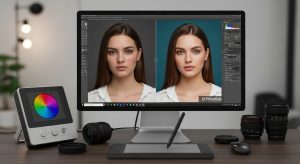
You don’t need pro software to resize photos for 5×7 prints. Free tools like Canva, Fotor, and Pixlr include 5×7 templates with auto-crop features. Smartphone apps like Snapseed and Lightroom Mobile also offer 5:7 crop presets. For complex edits like skin smoothing or hair masking, professional retouching always delivers cleaner results than automated apps.

💡 Need a portrait that looks polished and professional? Try our Headshot Retouching Service for natural skin smoothing, eye sharpening, and stray-hair cleanup that prints beautifully at 5×7.


Best Paper and Finish Options for 5×7 Prints

Paper choice changes the entire feel of a 5×7 print. Glossy paper boosts color saturation, matte paper softens reflections, and metallic paper adds a luxurious shimmer. Photographers often pick paper based on lighting conditions and subject matter.

Popular Paper Options for 5×7 Prints

  • Glossy: Vivid colors and high contrast—best for vibrant landscapes and portraits.
  • Matte: Soft, fingerprint-resistant surface—ideal for black-and-white and vintage looks.
  • Lustre/Satin: A balance between glossy and matte—the standard for wedding albums.
  • Metallic: Shimmery, three-dimensional finish—great for fine art editions.
  • Pearl: Subtle iridescence and rich blacks—loved by portrait photographers.

Pair the paper with the right finish and your 5×7 print transforms into a keepsake. If you’re printing a portrait, lustre paper hides minor imperfections while keeping skin tones natural. For product photos, glossy paper makes details pop in catalogs and brochures.


Adding Realistic Shadows and Depth to 5×7 Prints

Flat-looking prints rarely impress viewers. Shadows give photos dimension, weight, and realism—especially for product photography destined for catalogs. If you’re printing 5×7 product shots, learning how to add realistic shadows in Photoshop can completely change the impact of your prints.

When Drop Shadows Help

  • Product photography: Anchors items to the surface and adds realism.
  • Cut-out portraits: Prevents subjects from looking pasted onto the background.
  • E-commerce listings: Improves perceived quality and conversion rates.
  • Mockups and presentations: Creates believable depth without distracting viewers.

🌑 Want photos that feel three-dimensional? Our Drop Shadow Service adds natural-looking shadows that transform flat prints into lifelike, gallery-worthy 5×7 images.


Common Mistakes to Avoid When Printing 5×7 Photos

Even seasoned photographers mess up 5×7 prints. Here are the pitfalls you should sidestep before sending files to the lab.

Top Mistakes That Ruin 5×7 Prints

  • Ignoring aspect ratio: Submitting a 3:2 file without cropping leads to surprise edges getting chopped.
  • Low resolution files: Anything below 1500 × 2100 pixels at 300 DPI looks soft up close.
  • Wrong color profile: Use sRGB for online labs; CMYK only when your printer requests it.
  • Skipping the soft proof: Always preview the cropped 5:7 version before checkout.
  • Over-sharpening: A heavy hand makes skin look gritty and edges crunchy.
  • Forgetting bleed: Some labs need a small bleed margin to prevent thin white borders.

A quick pre-flight check fixes 90% of issues. Open the file at 100%, confirm the dimensions, eyeball the crop, and verify the color profile. Two minutes of caution saves you a reprint.


When to Use Professional Editing for 5×7 Prints

DIY editing covers basic fixes, but professional retouching becomes essential when you’re printing portraits, products, or commercial work. The smaller the print, the more obvious a stray hair, blemish, or distracting background becomes when viewed up close.

Situations That Benefit From Pro Editing

  • Wedding portraits: Skin smoothing, eye brightening, and dress retouching.
  • Product photography: Background removal, color correction, and clean edges.
  • Real estate prints: Sky replacement, lawn enhancement, and clutter removal.
  • Fashion lookbooks: Hair masking, color matching, and ghost mannequin effects.

👗 Selling apparel online? Get a polished, hollow-man look with our Ghost Mannequin Service so your 5×7 catalog prints showcase clothing without distractions.


Tips to Make Your 5×7 Photo Look Stunning

A few simple habits push your 5×7 prints from “nice” to “wow.” These tips work whether you’re printing a holiday card or a professional headshot.

Pro Tips for Outstanding 5×7 Prints

  • Compose with the 5:7 ratio in mind before clicking the shutter.
  • Use natural light whenever possible for true-to-life skin tones.
  • Calibrate your monitor so screen previews match printed output.
  • Order a test print before bulk printing for events or albums.
  • Keep edits subtle—heavy filters look exaggerated in print.
  • Leave room around faces so framing doesn’t crop ears or hairlines.

Print the same image on two different paper types and compare. You’ll quickly learn which paper matches your style and subject best.


Conclusion: Why the 5×7 Photo Is Here to Stay

The 5×7 photo earns its popularity through balance. It’s big enough to feel important and small enough to fit anywhere. Whether you frame it for grandma’s mantel, slip it into a wedding invitation, or sell it as a limited-edition art print, the 5×7 size delivers professional polish in a compact format.

Now that you know the exact dimensions—5 × 7 inches, 12.7 × 17.78 cm, 127 × 178 mm, or 1500 × 2100 pixels at 300 DPI—you can confidently order, frame, and share prints that look exactly the way you imagined. Pair the right aspect ratio, paper, and resolution with thoughtful editing, and every 5×7 print becomes a small piece of art.

🚀 Ready to make your 5×7 prints unforgettable? Visit PhotoFixal today and let our editing experts handle the details so your photos shine in any frame, gift, or portfolio.


Frequently Asked Questions (FAQ)

1. Is a 5×7 photo bigger than a 4×6?

Yes, a 5×7 photo is noticeably bigger than a 4×6 print. A 4×6 covers 24 square inches, while a 5×7 covers 35 square inches—about 46% more area. The 5×7 also has a different aspect ratio (5:7 vs 2:3), which means you’ll crop slightly more of the original image.

2. What aspect ratio does a 5×7 photo use?

A 5×7 photo uses a 5:7 aspect ratio, which is approximately 1:1.4. This ratio sits between the 2:3 ratio of a 4×6 print and the 4:5 ratio of an 8×10. It works especially well for portraits, wedding invitations, and vertical landscapes.

3. How many pixels do I need for a high-quality 5×7 print?

For sharp results at 300 DPI, you need 1500 × 2100 pixels. Anything less than that risks looking soft or pixelated when viewed up close. Most modern smartphones easily exceed this requirement, so you usually have room to crop without losing sharpness.

4. Can I print a 5×7 photo from my phone?

Absolutely. Phones with 8 megapixels or higher capture more than enough detail for a sharp 5×7 print. Just remember to crop the image to the 5:7 aspect ratio inside your phone’s editor or your printing app before submitting the order.

5. What is the difference between a 5×7 photo in inches and 13×18 cm?

The 13×18 cm size is the metric equivalent that European labs use to label 5×7 prints. The actual dimensions are slightly different—5×7 inches converts to 12.7 × 17.78 cm—but most printers round it up to 13×18 cm for packaging and frame compatibility.

6. What frame size works best for a 5×7 photo?

A direct 5×7 frame works perfectly for desks and shelves. For a more elegant gallery feel, mat the print inside an 8×10 or 11×14 frame to add white space around the image. Always check the frame’s interior dimensions before buying.

7. Should I print my 5×7 photo on glossy or matte paper?

Glossy paper enhances color and contrast, making it ideal for vivid landscapes and product shots. Matte paper softens reflections and hides fingerprints, which works beautifully for portraits and black-and-white photos. Lustre or satin paper offers a balance of both.

8. Can a horizontal photo be printed as 5×7?

Yes, but you’ll need to rotate the dimensions. A horizontal 5×7 print measures 7 inches wide by 5 inches tall. Make sure your original image has enough resolution and that the composition still works after cropping to the 5:7 ratio.