Home Pricing About Us Contact

How Many FPS Can the Human Eye See? The Science, Myths & Truth Explained

A Complete Guide to Frame Rates, Visual Perception, and What Your Eyes Actually Process

For decades, gamers, filmmakers, photographers, and tech enthusiasts have argued about one stubborn question: how many frames per second (FPS) can the human eye actually see? Some swear the limit sits at 30 FPS. Others insist it caps at 60. A few claim our eyes process visuals at 1,000 FPS or more. So, who’s right?

The honest answer surprises most people. Human vision does not operate like a camera or a monitor. Your eyes do not “record” the world in discrete frames. Instead, your visual system continuously streams light signals to your brain, where neurons stitch them into the smooth motion you perceive every waking second. That said, scientists have measured clear thresholds for what the human visual system can detect, recognize, and react to.

In this guide, we’ll unpack the real science, debunk the famous myths, and show you why frame rate still matters — whether you’re editing photos, gaming on a 240Hz monitor, or watching a film at 24 FPS. We’ll also explore why visual quality in still images (a related but distinct topic) depends just as much on professional editing as it does on resolution or frame rate.

✨ Want crisp, scroll-stopping product photos that hold a viewer’s attention the moment their eye lands on them? Explore Photofixal’s professional photo editing services and let pixel-perfect images do the heavy lifting for your brand.


The Short Answer: How Many FPS Can the Human Eye See?

Most vision researchers agree on a practical range:

  • The average human eye comfortably perceives motion at 30 to 60 FPS.
  • Trained observers, gamers, and pilots can detect changes well beyond 100 FPS.
  • Under specific conditions, humans notice flicker artifacts at rates over 500 Hz, according to a peer-reviewed study published in Nature Scientific Reports.
  • The brain can identify an entire image flashed for just 13 milliseconds, as documented in the landmark MIT neuroscience study.

So no, our vision does not “cap” at 24, 30, or 60 FPS. The human visual system processes information far faster — but with diminishing returns the higher you climb.


Why the “Human Eye Sees in FPS” Idea Is Misleading

Let’s clear something up first. Your eye does not see in frames at all. Cameras capture the world by snapping discrete still images at fixed intervals. Your eye, by contrast, behaves more like an analog sensor that constantly funnels photons into the retina.

How Vision Actually Works

Your retina contains two key photoreceptor types:

  • Rods — handle low-light and motion detection in your peripheral vision.
  • Cones — handle color, sharpness, and detail in your central vision (the fovea).

When light hits these cells, they convert photons into electrochemical signals. The optic nerve carries those signals to the visual cortex, which assembles the input into a continuous mental “video.” Because rods refresh faster than cones, your peripheral vision can detect motion and flicker that your central vision misses.

The “Frame Rate” of Biology

Even though we don’t see in frames, scientists still measure how fast the visual system reacts. Key benchmarks include:

  • Reaction to a flash of light: roughly 13–80 milliseconds.
  • Flicker fusion threshold (light appears solid): about 50–90 Hz for most people.
  • Detectable flicker on bright displays: documented up to 500 Hz under certain conditions.
  • Smooth motion perception: kicks in around 30–60 FPS.

So while there’s no hard FPS ceiling, your nervous system has clear performance windows — and they vary from person to person.


Common Myths About Human Eye FPS

Myth 1: “The Eye Can Only See 24 FPS”

This claim is everywhere on Reddit, Quora, and forum threads — and it’s flat-out wrong. The 24 FPS figure comes from cinema history, not biology. Hollywood adopted 24 FPS in the late 1920s because it was the lowest frame rate that produced acceptably smooth motion while saving expensive film stock. As Medium contributor Gyanateet explains, it was an economic compromise, not a scientific limit.

Myth 2: “60 FPS Is the Eye’s Maximum”

This myth grew out of early CRT monitor specs. Engineers discovered that a refresh rate of 60 Hz prevented most users from seeing flicker — so marketers concluded 60 FPS was “all the eye needs.” But anyone who has played a fast-paced shooter on a 144Hz panel will tell you: 60 vs. 144 FPS is night and day.

Myth 3: “Humans Can See Unlimited FPS”

Equally inaccurate. Neurons in the optic pathway have refractory periods (cooldown times) of 1–2 milliseconds. That puts an upper biological ceiling somewhere around 500–1,000 FPS for raw signal detection — far below the “infinite vision” some marketers suggest.


What Science Actually Says: Key Studies on FPS Perception

The MIT 13-Millisecond Study

In 2014, neuroscientists at MIT proved the human brain can identify a familiar image flashed on screen for as little as 13 milliseconds. That’s equivalent to roughly 75 FPS for image recognition, though the brain can process even faster motion cues without full identification.

The Nature 500 Hz Flicker Study

Researchers Davis et al. (2015) demonstrated that humans can perceive flicker artifacts at frequencies above 500 Hz when high-contrast spatial edges are involved. Their findings, published in Nature Scientific Reports, completely overturned older assumptions that vision tops out at 60–90 Hz.

Air Force Pilot Studies

The U.S. Air Force found that fighter pilots could correctly identify aircraft silhouettes flashed for just 1/220th of a second. That’s roughly 220 FPS — and they could not only detect the image but also classify it.

🎯 Want your product photos to grab attention in that exact same fraction of a second? Discover Photofixal’s expert clipping path service and watch shoppers pause on your listings instead of scrolling past them.


How FPS Affects What You See in Real Life

Frame rate matters in different ways depending on the medium. Here’s a quick breakdown:

MediumTypical Frame RateWhy It Works
Cinema24 FPSCreates the cinematic “film look”
TV broadcast30 FPSMatches NTSC standards
Console games30–60 FPSBalanced performance and visuals
PC gaming60–240 FPSReduces input lag, sharpens motion
VR headsets90–120 FPSPrevents motion sickness
High-speed cameras1,000+ FPSCaptures slow-motion detail

Why Higher FPS Feels Smoother

When frames update faster than your brain’s flicker fusion threshold, motion looks fluid. Each additional frame:

  • Reduces motion blur on fast-moving objects.
  • Lowers perceived input lag.
  • Sharpens edges of moving subjects.
  • Improves immersion in interactive content.

You won’t always see every individual frame above 100 FPS, but your nervous system feels the difference — especially during quick mouse swipes, panning shots, or VR head turns.


Why Gamers Notice the Difference Between 60, 120, and 240 FPS

Competitive gamers spend thousands on high-refresh monitors for a reason. While casual viewers may not consciously distinguish 120 FPS from 240 FPS, professional players exploit micro-advantages such as:

  • Lower motion blur — enemies stay sharper as they strafe across the screen.
  • Faster reaction windows — frames update closer to real time, shaving milliseconds off response time.
  • Reduced eye strain — smoother motion fatigues the eyes less during long sessions.

According to Healthline’s review of human eye FPS research, trained observers consistently outperform untrained ones in motion-detection tasks above 60 FPS — proof that perception isn’t fixed and can be sharpened with practice.


Peripheral vs. Central Vision: The Hidden FPS Gap

Here’s a fact most people miss. Your peripheral vision actually processes motion at a higher effective frame rate than your central vision.

  • Central vision (fovea): dense with cones, optimized for color and fine detail, slower temporal resolution.
  • Peripheral vision (rod-rich edges): optimized for motion and low-light contrast, faster temporal resolution.

That’s why you’ll often catch a flickering monitor or fluorescent bulb out of the corner of your eye, but the flicker disappears when you look directly at it. Game designers and UX experts often build interfaces around this quirk.

💡 Building a product catalog where every detail matters? Try Photofixal’s image masking service for hair-fine edges, transparent backgrounds, and the kind of clean cutouts that survive any zoom level.


Frame Rate vs. Refresh Rate: They’re Not the Same Thing

People often confuse FPS with refresh rate, but they describe two different processes:

  • FPS (frames per second): how many unique images your GPU or camera generates per second.
  • Refresh rate (Hz): how many times per second your display redraws the image on screen.

For peak smoothness, your monitor’s refresh rate must equal or exceed the source frame rate. Pairing a 240 FPS game with a 60Hz monitor wastes most of your hardware horsepower because the panel can only show 60 of those frames each second.

Quick Reference

  • 60 Hz panel → ideal for 60 FPS content.
  • 120 Hz panel → benefits 60–120 FPS content.
  • 144 Hz panel → sweet spot for competitive gaming.
  • 240 Hz panel → diminishing but real returns for esports.
  • 360–500 Hz panels → cutting-edge, primarily marketed to pros.

Does FPS Matter for Photographers and Image Editors?

Absolutely — but in a different way. Still photography depends on shutter speed, aperture, and ISO rather than raw frame rate. However, video-capable cameras and high-burst-mode shooters now record at 30, 60, 120, or even 240 FPS for slow-motion sequences. Post-production teams also work at variable frame rates while editing motion content.

For still images, what matters most is clarity, color accuracy, and clean composition — qualities that often need professional retouching to perfect. Even the sharpest 8K photo can fall flat without proper background cleanup, color grading, and skin retouching.

📸 Showcasing models, products, or e-commerce shots? Lean on Photofixal’s high-end photo retouching service to deliver magazine-grade finishes that look great on any screen at any frame rate.


How Many FPS Do Animals See?

Humans are slow compared to many animals. Different species have wildly different flicker fusion thresholds, partly because their lifestyles demand it.

  • Dogs: about 70–80 FPS — that’s why old TVs looked like flickering strobes to them.
  • Cats: roughly 100 FPS, helping them track quick prey.
  • Chickens: 100–120 FPS.
  • Flies and bees: up to 250–300 FPS, allowing them to dodge fast-moving threats.
  • Mantis shrimp: estimated 300+ FPS, one of the fastest visual systems ever measured.

So the next time someone says the human eye is “the most advanced camera,” remember: a housefly outpaces us in temporal resolution by a factor of five.


Practical FPS Recommendations by Use Case

Choosing the right frame rate depends entirely on your goal. Here’s a quick cheat sheet:

  • Casual movie watching: 24 FPS keeps the cinematic feel.
  • Sports broadcasts: 60 FPS reduces motion blur on fast plays.
  • YouTube and social video: 30 or 60 FPS strikes the ideal upload balance.
  • Console gaming: 60 FPS for most titles; 120 FPS for performance modes.
  • Competitive PC gaming: 144–240 FPS minimizes input lag.
  • VR: never below 90 FPS to avoid simulator sickness.
  • Cinematic slow motion: record at 120–240 FPS, play back at 24 or 30 FPS.

Why Image Quality Still Matters More Than Raw FPS

Here’s a truth professionals often emphasize: a poorly composed 240 FPS clip will always lose to a stunning 24 FPS one. Frame rate enhances motion, but it cannot rescue weak lighting, soft focus, dull color, or distracting backgrounds. The same applies to e-commerce photos, portraits, and product catalogs.

For brands selling on Amazon, Shopify, or their own websites, professional editing remains the difference-maker. Industry roundups such as Clipping Expert Asia’s list of top clipping path providers consistently rank specialist studios that focus on pixel-perfect cleanup over generic photo apps. Whether you’re shipping a single hero image or a thousand SKUs, a clean, color-corrected photo converts better than any high-FPS stunt.

🛍️ Selling fashion online? Get the magazine-quality finish your buyers expect with Photofixal’s ghost mannequin service — clean, hollow-form garment shots that lift conversions on every storefront.


Can You Train Your Eyes to See More FPS?

Sort of. You can’t physically increase your retinal refresh rate, but you can train your brain to interpret high-frame-rate input more efficiently. Studies on athletes, fighter pilots, and esports players show that:

  • Repeated exposure to fast motion improves recognition speed.
  • Reaction-time drills sharpen visual-motor processing.
  • Eye-tracking exercises expand functional visual bandwidth.

So while a complete novice might shrug at 60 vs. 144 FPS, a competitive gamer with thousands of hours of practice will spot the difference instantly. Vision isn’t purely hardware — it’s a partnership between your eyes, your brain, and your experience.


Color Accuracy, Editing, and the Visual Brain

Frame rate affects motion. Color and contrast affect emotion. Together, they shape how viewers feel about an image. That’s why post-production color correction is so powerful, especially for online businesses where shoppers form opinions in fractions of a second.

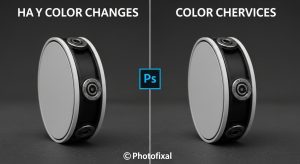
🎨 Need products that match their real-world colors across every device? Try Photofixal’s color change and correction service for true-to-life tones that win customer trust.


The Future of FPS: 360 Hz, 480 Hz, and Beyond

Display tech continues to push limits. Manufacturers now release 360 Hz, 480 Hz, and even 540 Hz panels, while VR headsets target 120–240 FPS rendering. But will any of it matter for the average viewer?

Probably not directly. Still, higher refresh rates do help in subtle ways:

  • They reduce strobe-based motion blur.
  • They lower input lag for competitive players.
  • They smooth scrolling on phones, tablets, and laptops.
  • They future-proof devices for AI-generated and real-time rendered content.

According to vision research summarized by ScienceDirect, the perceptual benefits of frame rates above 60 FPS exist but follow a strict diminishing-returns curve. So while 1,000 Hz monitors may arrive someday, expect the difference between 240 and 1,000 to feel far smaller than between 60 and 240.


Final Verdict: How Many FPS Can the Human Eye See?

Here’s the no-nonsense conclusion:

  • There’s no fixed FPS limit. The human visual system is analog, not digital.
  • Most people perceive smooth motion between 30 and 60 FPS.
  • Trained observers can detect differences up to 200–240 FPS, sometimes more.
  • Flicker artifacts can register at 500 Hz or higher under specific conditions.
  • Diminishing returns kick in fast above 120–144 FPS.

So the next time someone tells you “the human eye can only see 30 FPS,” you’ll know better. Vision is far more flexible — and far more fascinating — than that worn-out myth suggests.

🚀 Ready to give your photos the same level of polish your audience expects in modern visuals? Partner with Photofixal’s headshot retouching specialists for natural, professional portraits that look stunning at any frame rate.


Frequently Asked Questions (FAQ)

1. Can the human eye actually see 240 FPS?

Yes, in many situations. While most people stop noticing dramatic improvements after 120–144 FPS, trained gamers and pilots regularly identify motion changes up to 240 FPS, especially in fast-paced environments.

2. Why do movies use only 24 FPS if we can see more?

24 FPS became the cinematic standard for cost and stylistic reasons, not biological ones. Filmmakers also love the natural motion blur it produces, which gives movies their signature “cinematic” feel.

3. Is there a real difference between 60 Hz and 144 Hz monitors?

Absolutely. The jump from 60 Hz to 144 Hz delivers visibly smoother motion, reduced input lag, and less eye strain — especially during scrolling, gaming, and panning shots.

4. What’s the highest FPS the human eye can detect?

Under controlled conditions with high-contrast edges, humans can perceive flicker artifacts up to roughly 500 Hz. For continuous motion perception, the practical ceiling sits around 200–240 FPS.

5. Does FPS affect eye strain?

Yes. Higher refresh rates reduce flicker and motion blur, which lowers eye fatigue during long screen sessions. Low-FPS or low-refresh displays often trigger headaches and dryness.

6. Why does my peripheral vision notice flicker more than my central vision?

Your peripheral vision relies heavily on rod cells, which respond faster to motion and light changes than the cone cells dominating your central vision. That makes flicker easier to spot at the edges of your view.

7. Do animals see more FPS than humans?

Many do. Flies process visuals at roughly 250 FPS, and mantis shrimp may exceed 300 FPS. Domestic dogs and cats also outpace humans, which is why traditional CRT TVs often appeared as strobes to them.

8. Does higher FPS make photos look better?

FPS applies to motion, not still images. For photos, image quality depends on resolution, lighting, color accuracy, and editing. That’s why professional retouching often does more for visual impact than camera specs alone.