Home Pricing About Us Contact

How to Become a Commercial Photographer: A Complete 2026 Career Roadmap

From First Click to Six-Figure Contracts — Your Step-by-Step Guide to Breaking Into Paid Brand Photography

Commercial photography sits at the intersection of art, psychology, and commerce. Every cereal box, billboard, perfume ad, skincare hero shot, and Instagram product reel you scroll past was crafted by someone who learned to translate a brand brief into a frame. If you’ve ever wondered how to get into commercial photography — or how to turn a passion for images into a paycheck — this guide walks you through the exact path, gear, pricing, and post-production workflow that actually books work in 2026.

The U.S. photography industry has grown at roughly 5.8% CAGR between 2020 and 2025, and the global photography services market is projected to reach $93.1 billion by 2035 (Business Research Insights). Translation: brands still need photographers, and they’re paying well — the average U.S. commercial photographer earns between $66,000 and $97,000 a year, with top studio specialists in cities like San Jose averaging well above $130,000.

Let’s break down exactly how to claim your slice of that market.

💡 Want your portfolio shots to look gallery-ready before you pitch your first agency? Get pixel-perfect edits with Photofixal’s professional photo retouching service — so every image you send out closes the deal.


What Is Commercial Photography? — Defining the Craft Before You Chase the Career

Commercial photography means any image created to sell, market, or promote a product, service, brand, or idea. If a business pays for the photo and uses it to drive revenue, it’s commercial work — full stop.

The category splits into several lucrative specialties:

  • Product photography — e-commerce, packaging, hero shots
  • Food and beverage photography — restaurants, CPG brands, cookbooks
  • Fashion and apparel photography — lookbooks, campaigns, editorials
  • Beauty and cosmetics photography — skincare, makeup, fragrance
  • Lifestyle photography — branded scenes featuring real people using products
  • Architectural and interior photography — real estate, hospitality, design firms
  • Industrial and corporate photography — factories, executives, annual reports
  • Automotive photography — dealerships, manufacturers, car culture brands

Editorial work pays in tearsheets and exposure. Commercial work pays in invoices. Knowing the difference shapes how you price, contract, and license everything you shoot.


Skills Every Commercial Photographer Must Master — The Technical Non-Negotiables

Commercial clients hire photographers who deliver consistently, not photographers who got lucky once. Master these fundamentals before you pitch a single brand:

  • Manual exposure control — shutter, aperture, ISO, and how each shapes mood
  • Studio lighting — strobes, continuous LEDs, modifiers, flags, and grids
  • Tethered shooting — connecting your camera to Capture One or Lightroom for live client review
  • Color theory and color management — calibrated monitors, ICC profiles, soft-proofing for print
  • Composition for negative space — leaving room for headlines, logos, and copy overlays
  • Advanced retouching — frequency separation, dodge-and-burn, compositing, focus stacking
  • Client communication — translating mood boards into deliverables without scope creep

If you’re newer to lighting theory, the Strobist blog by David Hobby remains one of the most respected free resources for off-camera flash education on the internet.


Choose a Niche — Why Specialists Earn More Than Generalists

Art directors hire specialists. A creative director casting a luxury skincare campaign won’t pick a wedding photographer who occasionally shoots bottles — they’ll book the photographer whose entire feed screams “clean beauty.”

Pick a lane based on three honest questions:

  • What do I love shooting? — burnout kills careers faster than bad gear
  • Who pays well in that lane? — beauty, automotive, and food generally pay more than headshots
  • What can I shoot near me? — your geography shapes your starter clients

Once you commit, build everything — your portfolio, Instagram grid, website, and pitch emails — around that single specialty for at least 12 months.


Gear: What You Actually Need to Start (Not What YouTube Sells You)

You don’t need a $40,000 kit to land your first paid commercial gig. You need dependable, color-accurate gear that lets you deliver clean files on a tight schedule.

A practical starter setup looks like this:

  • A full-frame mirrorless body — the Canon R6 II, Sony A7 IV, or Nikon Z6 III all handle commercial deliverables beautifully
  • A 24-70mm f/2.8 zoom — your daily workhorse for lifestyle, environmental, and editorial frames
  • A 90mm or 100mm macro lens — essential for product detail, jewelry, and beauty close-ups
  • One quality strobe with a softbox and grid — Godox AD600 Pro or Profoto B10
  • A solid tripod plus a tethering cable — non-negotiable for product work
  • Reflectors, V-flats, and seamless paper rolls — shape and bounce light cheaply
  • A color-calibrated monitor — BenQ SW or Eizo ColorEdge keeps your edits true to client expectation

If you’re still researching bodies, this comparison of the best mirrorless cameras for commercial work breaks down sensor performance, dynamic range, and tethering reliability across price tiers.

📸 Shooting on white backgrounds for Amazon, Shopify, or your portfolio? Hand the heavy lifting to Photofixal’s clipping path service and get crisp, e-commerce-ready cutouts delivered overnight.


Build a Portfolio That Actually Books Work — Quality Beats Quantity Every Time

Your portfolio is your résumé, your sales pitch, and your trust signal rolled into one. Creative directors spend roughly 8 to 12 seconds skimming a site before deciding whether to email you.

Follow these portfolio rules:

  • Show only the work you want to repeat — if you don’t want to shoot weddings again, kill the wedding gallery
  • Cap your hero gallery at 12–18 images — tight beats sprawling
  • Edit ruthlessly — if you wouldn’t proudly send the shot to a creative director at Sephora, cut it
  • Maintain a consistent visual voice — color, contrast, and composition should feel like one photographer made every frame
  • Refresh quarterly — stale portfolios signal a stalled career
  • Caption strategically — name the brand, the lighting setup, or the concept in one short line

If real clients haven’t hired you yet, shoot personal projects that look identical to the briefs you want. Buy three indie skincare products on Amazon, build a campaign around them, and credit yourself as both photographer and creative director.

Host the portfolio on a fast, mobile-optimized site. Squarespace, Format, and Pixpa all integrate proofing galleries and basics, while Behance doubles as a discovery platform for art buyers actively scouting talent.


How to Land Your First Paying Commercial Clients — Strategies That Actually Convert

Most new photographers wait for clients. Working photographers go find them. Use a layered outreach approach:

  • Start with warm markets — friends running e-commerce shops, family members with small businesses, local cafés rebranding their menus
  • Run a personal campaign series — shoot one self-directed concept per month for a year and post it like a paid campaign
  • Send personalized cold emails — research the brand, name the marketing manager, attach two relevant samples, keep it under 120 words
  • Show up at industry events — trade shows, beauty expos, food festivals, and local marketing meetups put you face-to-face with decision-makers
  • Assist established commercial photographers — paid assisting teaches you set etiquette, lighting workflows, and how seven-figure studios actually run
  • List with talent platforms — Wonderful Machine, Production Paradise, and Found Artists actively connect art buyers with photographers

One photographer profiled by Fstoppers committed to one unpaid sports shoot per month for a year — by month 10, paid contracts arrived organically because the work spoke for itself.

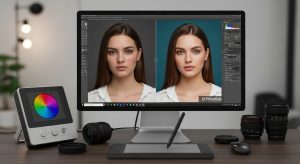
🎯 Pitching your first beauty brand? Polish every face in your book with Photofixal’s beauty retouching service — natural skin, perfect detail, zero plastic look.


Pricing Commercial Photography — The Three-Layer Model Pros Use

Underpricing is the fastest way to kill a commercial career. Charging by the image or by the hour caps your income and trains clients to undervalue your work. Use the three-layer pricing model instead:

  • Creative fee — your day rate or project fee for the actual shoot day
  • Production costs — studio rental, models, stylists, props, catering, retoucher fees, and travel (passed through at cost or marked up 15–20%)
  • Usage and licensing — where the images run, for how long, in what territories, and whether the client gets exclusivity

A skincare hero image used for one year on a U.S. e-commerce site is worth far less than the same image running on a 12-month global campaign across billboards, social, print, and packaging. Price accordingly.

For licensing benchmarks, contracts, and negotiation guidance, the American Photographic Artists (APA) and fotoQuote are the two industry standards working photographers consult.


Post-Production: Where Commercial Images Are Truly Made

A great capture gets you 70% of the way there. Post-production delivers the final 30% that separates amateur work from campaign-ready imagery. Commercial clients expect:

  • Flawless backgrounds — no dust, no shadows, no color fringing
  • Color-accurate hero products — Pantone-perfect packaging, true-to-life skin tones
  • Compositing skills — combining 5 to 30 frames into one impossible shot
  • Ghost mannequin effects — for apparel and e-commerce
  • Reflection and shadow work — natural drop shadows, mirror reflections, soft highlights
  • Frequency separation retouching — for beauty, headshots, and skin

Most commercial photographers don’t retouch every image themselves. They build a workflow where the studio handles creative direction and a trusted retouching partner handles volume. That’s how working pros deliver 60-image campaigns in 72 hours without burning out.

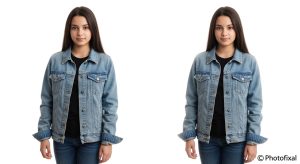
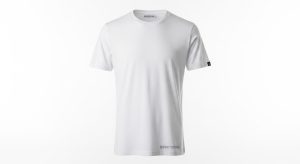
✂️ Selling apparel online? Make every garment look like it’s worn by an invisible model with Photofixal’s ghost mannequin service — clean, dimensional, conversion-ready.


Marketing Yourself — The Channels That Move the Needle

Talent matters. Visibility books work. Build a marketing engine that runs whether you’re shooting or sleeping:

  • A fast, optimized website — niche keywords in titles, alt text on every image, schema markup for local search
  • An Instagram grid that matches your niche — post-production, behind-the-scenes, finished campaigns
  • A LinkedIn presence — art buyers, creative directors, and brand marketers all live there
  • A Pinterest profile — Pinterest still drives massive discovery traffic for product, food, and interior photographers
  • An email newsletter — quarterly portfolio drops to a curated list of past clients and prospects
  • Case studies on your blog — every campaign you shoot becomes a 600-word post with before/afters
  • Google Business Profile — for local commercial work like real estate, headshots, and restaurants

🖼️ Need transparent, web-ready product images at scale? Speed up your e-commerce launches with Photofixal’s background removal service — clean cutouts in hours, not days.


Common Mistakes That Stall New Commercial Photographers

Avoid these career-killing patterns most beginners walk into:

  • Shooting everything for everyone — generalists struggle to attract premium clients
  • Skipping the contract — verbal agreements collapse the moment a payment dispute starts
  • Underpricing to “get the job” — cheap clients refer cheap clients
  • Posting unedited work — your worst public image becomes the ceiling clients judge you by
  • Ignoring color management — uncalibrated monitors deliver prints that don’t match approvals
  • Outsourcing creative direction entirely — clients hire you for taste, not just technique
  • Refusing to learn the business — invoicing, taxes, contracts, and licensing are 50% of the job

How Long Does It Actually Take to Become a Commercial Photographer?

Honest timelines vary, but the working consensus from industry pros looks like this:

  • Year 1 — master your camera, build a niche portfolio with personal projects, start assisting
  • Year 2 — first paid commercial gigs from warm markets, refined website, defined niche
  • Year 3 — repeat clients, contract retainers, four-figure invoices on routine projects
  • Year 4–5 — agency-level work, five-figure invoices, licensing income, hiring assistants

Photographers who treat the craft as a business — not a hobby — typically reach sustainable full-time income between months 24 and 36.


Do You Need a Degree to Become a Commercial Photographer?

No. Almost no working commercial photographer holds a photography degree as a hiring requirement. Clients buy portfolios and reliability, not diplomas. Self-taught photographers, assistants who graduated through real sets, and bootcamp grads from places like the New York Institute of Photography all compete on equal footing.

That said, structured education accelerates the learning curve if you want it. Workshops with niche masters — beauty, food, automotive — often deliver more career value in five days than a four-year program.

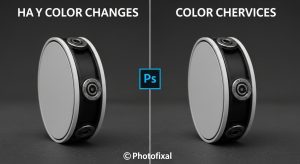
🎨 Refreshing seasonal product variants without a reshoot? Save days of studio time with Photofixal’s color change service — accurate, photorealistic recolors on every SKU.


Frequently Asked Questions

1. How much can a beginner commercial photographer charge?
Beginners typically charge $300–$800 per half-day for small e-commerce or local brand work. As your portfolio strengthens and licensing terms expand, rates climb into four- and five-figure day rates within two to three years.

2. Is commercial photography a good career in 2026?
Yes. Brands still need consistent visual content for e-commerce, social, and advertising, and the U.S. photography market continues to grow at roughly 4–6% annually. Photographers who niche down, master post-production, and treat the work as a business reach sustainable income within 24–36 months.

3. What’s the difference between commercial and editorial photography?
Commercial photography sells a product or service and pays usage fees based on where the image runs. Editorial photography illustrates stories in magazines and pays a one-time editorial rate with limited usage. Same camera, very different paychecks.

4. Do I need a studio to start?
No. Many top commercial photographers start with a window, a bounce card, and seamless paper rolls in a spare room. Rent studios as needed for bigger productions, then build out a permanent space once retainer income justifies the overhead.

5. What software do commercial photographers use most?
Capture One for tethering and color, Adobe Photoshop for retouching and compositing, Lightroom Classic for cataloging, and Helicon Focus for focus stacking on product work.

6. How do I license my photos correctly?
Spell out usage in writing on every contract: media (web, print, OOH), territory (U.S., North America, worldwide), duration (3 months, 1 year, in perpetuity), and exclusivity (exclusive vs. non-exclusive). Reference APA or fotoQuote benchmarks when negotiating.

7. Should I focus on Instagram or a website first?
Build both, but treat your website as the closer and Instagram as the funnel. Art buyers verify Instagram talent on a dedicated portfolio site before sending a brief.

8. Can AI image generation replace commercial photographers?
AI handles concept boards and stock-style fillers well, but brand-specific, product-accurate, model-released campaign work still requires real photographers. The photographers who thrive will integrate AI for ideation and pre-viz while owning the final capture and licensing.


Final Thoughts: Your Commercial Photography Career Starts With One Frame

Becoming a commercial photographer isn’t a single decision — it’s hundreds of small ones, repeated daily. Pick the niche. Buy the dependable lens, not the trendy one. Shoot the personal project nobody asked for. Send the cold email. Sign the contract. Raise your rate next quarter. Outsource the retouching so you can sleep.

Every photographer working at Apple, Sephora, Whole Foods, or Vogue once stood exactly where you stand now — staring at a window, a bounce card, and a single product, wondering if the work was good enough to send. Spoiler: the work is rarely “ready.” You ship it anyway, and you get better in public.

The market is growing, brands are buying, and licensing income compounds for photographers who treat this like a business from day one.

🚀 Ready to launch your commercial portfolio with images that look like they belong on a billboard? Partner with Photofixal’s full-service photo editing studio and turn every shoot into agency-ready deliverables.