Home Pricing About Us Contact

How to Make Camera Quality Better: 11 Proven 2026 Tips

Practical Settings, Lighting Tricks, and Editing Techniques That Transform Ordinary Shots Into Standout Images

You raise your phone or camera to capture a quiet morning, a child’s laugh, or a skyline glowing at dusk. You tap the shutter, glance at the screen, and feel the familiar sting of disappointment. The shot looks soft. Colors fall flat. Noise creeps into the shadows. If that scene plays on repeat in your photo gallery, you are in good company — millions of hobbyists and even seasoned shooters battle the same gremlins.

Here is the encouraging truth: you rarely need a new camera body or a four-figure lens to fix the problem. Most quality issues come from habits, settings, and small technical missteps that you can correct today. This guide walks through the methods that genuinely move the needle, whether you shoot on a flagship smartphone, an entry-level DSLR, or a mirrorless workhorse.

🎯 Capturing sharp images is half the battle — let our experts polish them with our professional photo retouching services for studio-quality results.


Why Camera Quality Often Disappoints (And What Actually Controls It)

Subheading: The Real Culprits Behind Soft, Noisy, or Lifeless Photos

Most people blame the hardware first. Yet sensor megapixels, lens cost, and brand badges only tell part of the story. Image quality depends on a chain of decisions that begins before you press the shutter and ends after you finish editing.

Here are the five factors that influence quality the most:

  • Light direction and intensity — bad light destroys good gear faster than anything else.
  • Focus accuracy — even a sharp lens looks soft when focus lands on the wrong plane.
  • Exposure balance — blown highlights or crushed shadows kill detail permanently.
  • Camera stability — micro-shake softens images at every focal length.
  • Post-processing discipline — heavy filters and over-sharpening ruin clean captures.

Once you understand that quality comes from the photographer’s choices, not just the equipment, every tip below starts to click.


Step 1: Clean Your Lens — The Free Upgrade Most People Skip

Subheading: A Smudge-Free Front Element Beats a New Camera Every Time

A fingerprint or oily film on the front element scatters light and crushes contrast. Before you change a single setting, look at the glass.

A safe lens-cleaning routine looks like this:

  • Blow first, wipe later. Use a rocket air blower to remove grit before any cloth touches the surface.
  • Choose a clean microfiber cloth. Wipe gently in spirals, starting from the center.
  • Use lens solution sparingly. Apply two drops to the cloth — never spray the lens directly.
  • Skip tissues, shirts, and paper towels. These materials scratch coatings under magnification.
  • Tackle the rear element and sensor only when needed. Over-cleaning causes more damage than dust.

Smartphone shooters often forget that pockets coat lenses in skin oils within minutes. Wipe the lens before every important shoot. For a deeper walkthrough, Nikon USA publishes a clear lens-cleaning tutorial that doubles as a useful reference for any brand.


Step 2: Master the Exposure Triangle

Subheading: Three Settings Decide How Every Photo Looks

Auto mode plays it safe, but safe rarely produces stunning images. The three settings you must control are aperture, shutter speed, and ISO. Photography Life offers an excellent deep dive into the exposure triangle if you want a longer technical breakdown, but the essentials live below.

Aperture (the f-stop) controls how wide the lens opens. A wide aperture like f/1.8 produces creamy background blur and rescues low-light scenes. A narrow aperture like f/11 keeps everything from foreground flowers to distant peaks tack-sharp.

Shutter speed dictates how long the sensor sees light. Speeds at 1/1000s freeze a hummingbird mid-flap. Speeds at 1/4s blur waterfalls into silk — provided you stabilize the camera.

ISO sets sensor sensitivity. Lower numbers like 100 or 200 deliver clean files. Higher numbers above 1600 introduce grain that even Lightroom struggles to hide.

Practical advice for getting started:

  • Begin in aperture priority mode so the camera handles shutter speed while you control depth of field.
  • Switch to shutter priority when you photograph sports, kids, or pets.
  • Move to full manual only after the first two modes feel automatic.
  • Keep ISO between 100 and 400 in good light to maximize image quality.

The faster you internalize how these three settings interact, the faster your photos start looking intentional rather than accidental.


Step 3: Treat Light as Your Most Important Tool

Subheading: Shape, Soften, and Direct Light Before You Touch a Setting

Camera sensors only record what light gives them. Harsh midday sun crushes shadows. Mixed indoor lighting paints faces yellow and orange. Dim rooms force ISO into noisy territory.

Use these light-handling principles:

  • Chase the golden hour. The hour after sunrise and before sunset wraps subjects in warm, directional light.
  • Position subjects near windows. A north-facing window provides flattering, indirect daylight all day.
  • Diffuse harsh sun. A white sheet, sheer curtain, or even a translucent umbrella tames hot shadows.
  • Bounce light when needed. A simple foam board reflects light into shadows and adds dimension.
  • Avoid mixed color temperatures. Warm tungsten bulbs combined with cool LED panels confuse white balance.

If you shoot products at home, a single window plus a white reflector outperforms many cheap softbox kits. For portraits, place the subject so light hits one cheek at a 45-degree angle. The face gains depth instantly.

🎯 Need every product photo to look catalog-ready in minutes? Try our precise clipping path service for crisp edges and pure white backgrounds.


Step 4: Nail Focus Every Single Time

Subheading: Sharp Photos Start With Knowing Where the Camera Is Looking

Modern autofocus is fast, but it does not read minds. The camera will happily lock onto the nose when you wanted the eye, or onto a leaf when you wanted the bird.

Focus reliably with these habits:

  • Use single-point AF for portraits. Move the focus point manually onto the subject’s eye.
  • Switch to continuous AF for motion. Sports, pets, and toddlers need AF-C (Nikon, Sony) or AI Servo (Canon).
  • Activate eye-detection AF. Mirrorless cameras and flagship phones now find eyes automatically, even at wide apertures.
  • Tap to focus on smartphones. Then long-press to lock both focus and exposure.
  • Use manual focus in low light. Autofocus hunts when contrast disappears — manual focus stays put.

Focus peaking, available on most mirrorless cameras, paints sharp edges in red or yellow. Once you trust peaking, manual focusing becomes faster than autofocus in tricky scenes.


Step 5: Compose With Intention

Subheading: The Frame Itself Decides Whether a Photo Feels Amateur or Polished

Even technically perfect photos collapse under weak composition. Strong composition pulls the viewer’s eye exactly where you want it.

Apply these composition rules in everyday shooting:

  • Turn on the grid overlay. Place subjects along the rule-of-thirds lines or at intersections.
  • Get closer than feels comfortable. Empty space rarely strengthens an image.
  • Watch the corners. Stray branches, trash bins, and photobombers ruin otherwise great shots.
  • Keep horizons level. Crooked horizons distract instantly.
  • Look for leading lines. Roads, fences, and rivers guide the viewer’s gaze toward your subject.

Compose deliberately, then break the rules when your gut tells you to. Centered subjects, dead-zone empty space, and tilted horizons can all work — once you understand why they usually do not.


Step 6: Avoid Digital Zoom Like a Bad Habit

Subheading: Optical Beats Digital Every Time

Optical zoom uses real glass to magnify the scene. Digital zoom simply enlarges existing pixels and discards detail in the process. The result looks soft, blocky, and unprofessional.

Smarter alternatives include:

  • Walk closer. Your feet are still the best zoom lens.
  • Use a phone with multiple lenses. Stick to the dedicated 2x or 3x telephoto rather than pinching beyond it.
  • Shoot wide and crop later. Cropping in post preserves more detail than digital zoom.
  • Add a clip-on telephoto lens. Quality varies, but a decent one beats heavy digital zoom.

Once you train yourself to ignore the digital zoom slider, your sharpness improves overnight.


Step 7: Shoot RAW for Maximum Editing Flexibility

Subheading: The File Format That Gives You a Second Chance

JPEG files compress your image and bake in white balance, contrast, and sharpening. Once written, those choices stick. RAW files preserve everything the sensor recorded, which means you can rescue blown skies, recover shadow detail, and shift white balance with no penalty.

Set RAW quickly on most devices:

  • DSLR or mirrorless: Open the menu, find Image Quality, and select RAW or RAW+JPEG.
  • iPhone Pro models: Settings → Camera → Formats → Apple ProRAW.
  • Android flagships: Open Pro mode and toggle the RAW or DNG icon.
  • Older smartphones: Install Lightroom Mobile or Halide for RAW capture.

Yes, RAW files are larger. Storage is cheap. Lost detail is not.

🎯 Working through hundreds of RAW portraits? Our skin-perfecting beauty retouching service keeps faces natural while erasing blemishes flawlessly.


Step 8: Stabilize Your Camera Properly

Subheading: Stillness Is the Most Underrated Quality Booster

Camera shake softens photos in ways most people never notice until they zoom in at 100%. Even your pulse causes movement. Stabilization solves this.

Stabilize with these techniques:

  • Apply the reciprocal rule. At 100mm, shoot no slower than 1/100s without help.
  • Tuck your elbows in. Treat your body like a tripod — feet shoulder-width apart, breath held during the shot.
  • Brace against walls or trees. A simple lean transforms handheld results.
  • Use a tripod for anything below 1/30s. Cheap travel tripods now handle most setups.
  • Trigger the shutter remotely. A two-second self-timer prevents the press-induced jolt.

In-body image stabilization (IBIS) and optical lens stabilization help, but they do not replace solid handholding technique. Pair both for maximum benefit.


Step 9: Edit Smarter, Not Harder

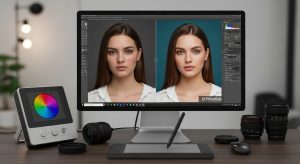
Subheading: Post-Processing Is Where Average Becomes Excellent

Every image in a magazine, on a luxury website, or in your favorite Instagram feed has been edited. Skipping post-processing leaves obvious quality on the table.

Begin with these adjustments in any editor:

  • Exposure: Brighten or darken the global tone first.
  • White balance: Correct color casts before anything else.
  • Highlights and shadows: Recover blown skies and lift inky shadows.
  • Contrast and clarity: Add small amounts to introduce punch without harshness.
  • Sharpening and noise reduction: Apply both lightly — heavy hands ruin both.

Free tools like Snapseed and Darktable rival paid software for everyday editing. Adobe Lightroom remains the industry standard if you process large libraries.

If you photograph people, gear, or e-commerce items at scale, outsourcing repetitive edits frees you to keep shooting. Adobe’s RAW vs JPEG guide explains why professional editors prefer RAW for serious retouching work.

🎯 Selling apparel online? Our ghost mannequin editing service creates the hollow-man effect that doubles conversion rates on product pages.


Step 10: Use the Right Gear at the Right Time

Subheading: Small Accessories Deliver Outsized Quality Gains

You do not need a studio to elevate image quality. A handful of inexpensive accessories punch far above their weight.

Useful additions to your kit:

  • Circular polarizer: Cuts glare from water and glass, deepens skies, and saturates foliage.
  • Variable ND filter: Lets you shoot wide apertures in bright sun.
  • Mini reflector (5-in-1): Bounces light or blocks it depending on color choice.
  • Solid tripod: Replaces shaky hands during long exposures.
  • External microphone (for video): Audio quality affects perceived video quality enormously.

Shopping for a new body? This curated guide to the best mirrorless cameras breaks down options by budget and skill level. The right body, paired with the techniques above, removes most quality complaints permanently.


Step 11: Practice With Specific Goals

Subheading: Random Shooting Produces Random Results

Photographers improve fastest when they assign themselves micro-projects. Vague practice — “I’ll shoot more” — produces vague results.

Try these focused exercises:

  • Shoot the same subject at every aperture. Note how depth of field changes.
  • Spend a full hour in manual mode. Force yourself to think before each frame.
  • Photograph in only one type of light all day. Window light, golden hour, or shade.
  • Edit one RAW file three different ways. Discover the range hidden inside a single capture.
  • Critique professional photos. Identify the lighting setup, lens choice, and edits used.

Skill grows through repetition with feedback. Review every session. Compare results to images you admire. Adjust accordingly.


Advanced Techniques for Serious Improvement

Subheading: Push Your Image Quality Further Once Fundamentals Click

Once the fundamentals feel automatic, layer in these advanced moves:

  • Find your lens’s sweet spot. Most lenses peak in sharpness at f/5.6 to f/8.
  • Bracket high-contrast scenes. Capture three exposures and merge them later for full tonal range.
  • Use back-button focus. Separating focus from the shutter button improves accuracy with moving subjects.
  • Calibrate your monitor. You cannot edit what you cannot see accurately.
  • Clean your sensor periodically. Dust spots ruin every photo at narrow apertures.

B&H Explora’s circular polarizer guide is a great deeper read once you start using filters seriously.


Common Mistakes That Quietly Destroy Camera Quality

Subheading: Avoid These Pitfalls and Quality Climbs Immediately

  • Pushing ISO above 3200 unnecessarily. Add light first, raise ISO last.
  • Using flash without diffusion. Direct on-camera flash flattens features.
  • Over-sharpening in editing. Tiny halos appear around every edge.
  • Saving final exports at low quality. Never sabotage your work at the export stage.
  • Ignoring white balance. A warm or cool cast undermines otherwise great captures.

Awareness alone removes most of these errors from your workflow.


Conclusion: Better Photos Start With Better Habits

Camera quality is rarely about megapixels or marketing specs. It is about clean glass, intentional settings, deliberate light, accurate focus, steady hands, and thoughtful editing. Anyone can apply these principles starting with their next photo session — no purchase required.

Begin with the lens cleaning. Move to manual exposure. Add lighting awareness. Then layer in composition, RAW workflow, and post-processing. Within a few weeks, your photos will look measurably sharper, cleaner, and more professional. Photography rewards patient practice, and every image teaches something new.

🎯 Ready to give your photos a flawless final touch? Send your images to our expert background removal team and watch them become portfolio-ready overnight.


Frequently Asked Questions

1. Why do my photos still look blurry on a high-megapixel camera?

Megapixels measure resolution, not sharpness. Blur usually comes from focus errors, slow shutter speeds, or camera shake. Verify focus on the eye or main subject, follow the reciprocal rule for shutter speed, and stabilize your camera before blaming the sensor.

2. Does a higher megapixel count guarantee better image quality?

No. Sensor size, lens quality, processing engine, and pixel pitch matter more. A 24-megapixel full-frame camera typically beats a 108-megapixel phone sensor in dynamic range, low-light noise, and color depth.

3. Can software alone fix poor camera quality?

Software helps but cannot rescue every shot. Focus errors, blown highlights, and severe noise rarely recover fully. Capture the best possible image first, then enhance it. Editing should polish — not perform CPR.

4. What is the fastest way to improve smartphone photo quality?

Wipe the lens with a clean microfiber cloth, tap the screen to set focus, and turn on the grid overlay. These three actions take ten seconds combined and immediately produce sharper, better-composed photos.

5. How do I reduce noise in low-light photos?

Lower your ISO and add light when possible. Open the aperture wider, slow the shutter speed (with stabilization), or move closer to existing light sources. Apply gentle noise reduction in editing — heavy smoothing destroys fine detail.

6. Why do my indoor photos appear yellow or orange?

Auto white balance often misreads tungsten and warm LED bulbs. Switch to a manual white balance preset like Incandescent, set a custom Kelvin value, or shoot RAW so you can correct the cast precisely during editing.

7. Is a tripod really necessary?

A tripod becomes essential below 1/30s, during long exposures, for landscapes, and when shooting interiors. Even a small travel tripod eliminates the camera shake that softens otherwise sharp images.

8. How often should I clean my camera lens?

Only when you see visible smudges, dust, or contrast loss. Over-cleaning risks scratching coatings. Use an air blower for daily dust and a microfiber cloth for fingerprints when needed.