Home Pricing About Us Contact

Learning Photography for Beginners: Skills That Actually Matter

A practical roadmap for new photographers who want real progress, not gear envy

Picking up a camera for the first time feels equal parts thrilling and overwhelming. You scroll through stunning images online, you press the shutter on your own camera, and the gap between the two stares back at you. That gap is normal. Every photographer you admire stood exactly where you are standing now, fumbling with dials, second-guessing settings, and wondering whether the problem is the camera or the person holding it.

The good news? Learning photography for beginners is less about memorizing technical jargon and more about training your eyes. You don’t need a $4,000 mirrorless body or a cinematic lens collection to make photographs people stop scrolling for. You need a basic understanding of light, a willingness to practice, and a few smart habits that compound over months. This guide walks you through the foundations, the common traps, and the workflow tweaks that turn casual snapshots into images you genuinely want to share.

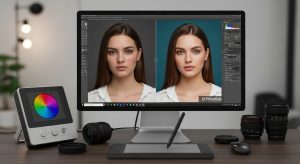
Ready to make your first portfolio shots truly shine? Let our editors handle the professional photo retouching so you can focus on shooting more and stressing less.


Why Photography Feels Hard at First (and Why That’s Actually Good)

The taste-skill gap every beginner faces

Filmmaker Ira Glass once described a phenomenon every creative person experiences: your taste develops faster than your skill. You can recognize a beautiful photograph long before you can produce one. That mismatch frustrates beginners, but it also means your eye is already ahead of your hands. Your job is simply to let your hands catch up.

Most new photographers blame their gear, their lighting, or their location. The real culprit is usually unfamiliarity, not equipment. Once you understand a handful of core principles, your camera stops feeling like a puzzle and starts feeling like a paintbrush.

What you actually need to start

You don’t need much to begin learning photography seriously:

  • A camera you already own — this includes your smartphone, a hand-me-down DSLR, or an entry-level mirrorless body
  • One versatile lens — a 35mm or 50mm prime works wonders if you have an interchangeable-lens system
  • A free editing app — Lightroom Mobile, Snapseed, or Darktable cover the basics without costing a cent
  • A notebook or notes app — write down what you learn after every shoot
  • Curiosity and patience — these matter more than megapixels

Master the Exposure Triangle: Your Foundation for Every Photograph

Aperture, shutter speed, and ISO explained simply

The exposure triangle sounds intimidating until you realize it’s just three sliders that control how bright your photo is. Every photo you take is a balance between these three values, and once the relationship clicks, manual mode stops feeling scary.

  • Aperture (f-stop) controls depth of field. A wide aperture like f/1.8 blurs the background beautifully. A narrow aperture like f/11 keeps everything sharp from foreground to horizon.
  • Shutter speed controls motion. Fast speeds like 1/1000s freeze a sprinting dog. Slow speeds like 1/30s create silky waterfalls but require a steady hand.
  • ISO controls sensor sensitivity. Low ISO (100–400) produces clean files. High ISO (3200+) introduces grain but rescues you in dim rooms.

Photography Life offers an excellent visual breakdown if you want to dig deeper into the relationships between these settings — their exposure triangle guide is one of the clearest tutorials online.

A simple way to practice exposure

Spend one weekend shooting the same subject — your coffee mug, your dog, a houseplant — at different settings. Try f/1.8 and f/8. Try ISO 100 and ISO 3200. Compare the results side by side. The lessons will stick faster than reading another article.


Composition: The Skill That Separates Snapshots From Photographs

Why framing matters more than your camera

A perfectly exposed photo of a cluttered scene still looks cluttered. A slightly grainy photo with strong composition stops viewers mid-scroll. Composition is the single most underrated skill among beginners because it doesn’t require spending money — only paying attention.

You don’t need to memorize twenty rules. Start with these five and you’ll already shoot better than 80% of casual photographers:

  • Rule of thirds — place your subject along imaginary grid lines instead of dead center
  • Leading lines — use roads, fences, or shadows to guide the eye toward your subject
  • Negative space — let empty areas breathe so the subject feels intentional
  • Frame within a frame — shoot through doorways, windows, or branches for depth
  • Simplification — remove or reposition anything that doesn’t serve the subject

Move your feet before you press the shutter

Most beginners zoom with their lens. Better photographers zoom with their feet. Walking three steps closer, crouching low, or shooting from above transforms ordinary scenes. Before you press the shutter, ask yourself one question: what is this photo about? Then remove everything that doesn’t support the answer.

Got product photos with messy backgrounds? Our background removal service cleans up busy frames in hours, not days, so your subject finally takes center stage.


Light Is the Real Subject of Every Photograph

Learn to see light before you shoot it

The word “photography” literally translates to “writing with light.” Cameras don’t capture objects — they capture how light bounces off objects. Once you internalize this, you stop chasing locations and start chasing light.

Pay attention to:

  • Direction — front light flattens, side light reveals texture, backlight creates rim glow
  • Quality — soft, diffused light flatters faces; harsh midday sun creates strong shadows
  • Color — warm tones at sunrise and sunset, cool tones in shade and overcast
  • Time of day — the golden hour (the hour after sunrise and before sunset) is forgiving and cinematic

Free practice you can do today

Walk through your home at 9 a.m., noon, 4 p.m., and 7 p.m. Notice which rooms glow and which fall flat. That single exercise teaches more about natural light than any YouTube tutorial.


Choose Your First Lens Wisely

Why glass beats body in the early years

Camera bodies in the same price bracket are remarkably similar. Lenses, however, dramatically change how your photos look and feel. If you’re considering an upgrade, skip the new body and invest in glass instead.

For most beginners, the best first lens after a kit zoom is a fast prime — typically a 35mm f/1.8 or 50mm f/1.8. These lenses cost between $150 and $300, weigh almost nothing, and produce noticeably sharper images with creamy background blur. Your first portrait shot wide open will feel like magic.

Lens recommendations by genre

  • Portraits — 50mm f/1.8 or 85mm f/1.8
  • Travel and street — 35mm f/1.8 or a compact 24–70mm zoom
  • Landscapes — 16–35mm wide-angle zoom
  • Wildlife and sports — 70–200mm telephoto

Building a portrait portfolio? Our headshot retouching service gives faces clean, professional polish without the over-edited plastic look that screams “amateur edit.”


Shoot Raw Files, Not JPEGs

The format that gives you a creative safety net

Your camera offers two file formats: JPEG (compressed and finished) and RAW (uncompressed sensor data). JPEGs look ready to share straight from the camera, but the camera makes permanent decisions about white balance, contrast, and sharpening that you can’t undo. RAW files look flat at first, but they hold dramatically more detail — especially in highlights and shadows.

Why RAW matters for beginners specifically:

  • You can rescue overexposed skies and underexposed shadows
  • You can correct white balance after the fact with zero quality loss
  • You learn editing faster because RAW responds to adjustments more gracefully
  • You build a habit professionals already follow

The downside is bigger file sizes and the requirement to edit before sharing. That’s a small price for the creative freedom RAW gives you.

Editing software worth learning

Adobe Lightroom remains the industry standard, but Capture One, DxO PhotoLab, and the free Darktable are excellent alternatives. Pick one and commit to it for at least three months before judging whether it fits your workflow.


Build a Repeatable Editing Workflow

Why workflow beats willpower

Random editing produces random results. A consistent workflow — even a simple one — gives your photos a recognizable look and saves hours every week. Wedding and event photographers especially rely on tight editing pipelines because they handle thousands of files per shoot. You can learn a lot from how professionals structure their post-production. This breakdown of a wedding photographer’s photo editing workflow walks through the entire process from culling to delivery.

A simple beginner workflow looks like this:

  • Import and back up — copy files to two drives before deleting from your card
  • Cull ruthlessly — keep only your strongest 10–20% of frames
  • Adjust globally — exposure, white balance, contrast, color
  • Adjust locally — brushes and masks for skin, skies, and subjects
  • Export with intention — different sizes for web, print, and social

Avoid the over-editing trap

Beginners discover sliders and immediately push them to 100%. Resist. Heavy clarity, blown saturation, and crushed shadows make photos scream “amateur.” A useful rule: edit your photo, then dial every adjustment back by 20%. Your first instinct is almost always too aggressive.

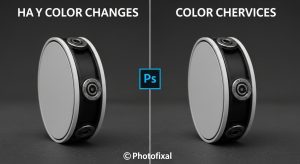
Need consistent color and tone across an entire product line? Try our precise color change service for catalog-ready results that match your brand exactly.


Understand Autofocus Modes and Use Them Right

Single-shot vs. continuous focus

Modern autofocus systems are brilliant, but they still need direction. Two modes cover 95% of situations:

  • Single-shot AF (AF-S / One Shot) — for stationary subjects like landscapes, products, posed portraits
  • Continuous AF (AF-C / AI Servo) — for moving subjects like kids, pets, sports, candid street

Plenty of beginners leave their camera in single-shot mode and then wonder why their dog photos look soft. Switch to continuous AF the moment your subject starts moving, and your keeper rate will jump immediately.

Use eye-detection autofocus for portraits

Almost every mirrorless camera made after 2019 includes eye-detection AF. Turn it on whenever you photograph people. The camera locks onto the nearest eye automatically, freeing you to focus on expression, light, and composition instead of fiddling with focus points.


Critique Your Work Honestly

The 24-hour rule

After a shoot, resist the urge to post immediately. Import everything, walk away for a day, then return with fresh eyes. The image that excited you in the moment because of the memory often looks technically weak the next morning. The frame you almost deleted may turn out to be your strongest because it has something genuinely surprising in it.

Ask yourself five honest questions about every photo you consider sharing:

  • Is the subject immediately clear to a stranger?
  • Does the light support the mood?
  • Is anything in the frame distracting from the subject?
  • Is the focus exactly where it should be?
  • Does this image tell a story or evoke a feeling?

Find honest critique partners

Friends and family will tell you everything looks great. That’s kind, not useful. Join photography communities like Reddit’s r/photocritique where strangers offer specific, technical feedback. Honest critique stings briefly and improves you permanently.


Avoid Gear Acquisition Syndrome

Why upgrading rarely fixes the problem

Gear Acquisition Syndrome (GAS) is the trap of buying lenses and bodies instead of practicing. Every photographer falls into it at least once. The cycle goes like this: you notice a limitation, convince yourself the gear is the bottleneck, spend money, feel briefly excited, then realize your photos didn’t improve because the bottleneck was never the equipment.

Spend on these instead, in roughly this order:

  • Practice time — workshops, weekend trips, paid model sessions
  • Education — books, courses, in-person classes
  • One quality lens — better than three mediocre ones
  • Editing skills — a single advanced Lightroom course beats a new camera
  • Storage and backups — losing a year of photos hurts more than missing a lens

When upgrading actually makes sense

Upgrade when a specific limitation is repeatedly costing you shots — not when you’re bored. If your camera’s autofocus genuinely can’t keep up with your kid’s soccer games, upgrade. If you just saw a YouTube review, wait six months and see if the urge survives.


The Habits That Actually Build Skill

Practice with constraints, not freedom

Unlimited freedom paralyzes beginners. Constraints unlock creativity. Try:

  • One lens for thirty days — forces you to compose with your feet
  • One subject for a week — teaches you to find new angles in familiar scenes
  • Black and white for a month — strips color away so you focus on light and shape
  • Ten visits to one location — proves how much variety exists anywhere

Study photographs every day

Looking at great work trains your eye faster than shooting alone. Follow photographers whose work makes you uncomfortable in a good way. Read photo books. Visit galleries. Magnum Photos and the National Geographic photography archive are free and endlessly inspiring. Don’t just admire — analyze. Where is the light coming from? What did the photographer choose to exclude? What moment did they wait for?

Set realistic timelines

Photography rewards patience. Expect noticeable progress over months, not days. Some weeks you’ll feel stuck. Plateaus are part of the process, not signs you’ve peaked. The photographer you’ll be a year from now will look back at today’s images and see clear room for growth — which is exactly the sign of a craft worth pursuing.

Launching an e-commerce store with consistent product shots? Our ghost mannequin editing service creates that clean, hollow-fill look shoppers trust on Amazon, Shopify, and beyond.


Common Beginner Mistakes (and Quick Fixes)

Mistakes that kill otherwise good photos

Even strong compositions die from small, fixable errors. Watch out for these:

  • Tilted horizons — straighten them in-camera or in editing every time
  • Cutting off limbs at joints — frame above or below knees, elbows, ankles
  • Cluttered edges — check all four corners before pressing the shutter
  • Subjects merging with backgrounds — move slightly so trees stop “growing” out of heads
  • Flat lighting — wait, move, or add a reflector instead of accepting it
  • Over-relying on auto mode — you’ll never grow if the camera makes every decision

Build a pre-shutter checklist

Professionals run mental checklists before every important frame. Borrow theirs:

  • Focus point on the subject’s eye? ✓
  • Background clean? ✓
  • Exposure not blinking highlights? ✓
  • Shutter speed fast enough for the subject? ✓
  • Composition intentional, not accidental? ✓

That five-second pause separates lucky shots from repeatable ones.


Frequently Asked Questions About Learning Photography

How long does it take to get good at photography?

Most beginners produce photos they’re proud of within 3–6 months of regular practice. Reaching a level where strangers pay you usually takes 1–3 years of consistent shooting, studying, and editing. Skill compounds — six months in, your progress accelerates noticeably.

Do I need an expensive camera to start?

No. Modern smartphones produce excellent images, and entry-level mirrorless cameras like the Canon R50, Sony ZV-E10, and Fujifilm X-T30 III deliver professional-quality files. Spend more on lenses, education, and practice trips than on the body itself.

Should I learn manual mode right away?

Yes — at least temporarily. Spend two or three weeks shooting only in manual to understand how aperture, shutter speed, and ISO interact. After that, aperture priority and shutter priority modes are perfectly acceptable for everyday shooting.

What’s the best subject for a beginner to practice on?

Photograph what you love. Beginners who chase trendy subjects burn out fast. Pets, family, food, neighborhood streets, and houseplants are all excellent training grounds because access is unlimited and motivation stays high.

How do I develop my own photography style?

Style emerges from consistency, not invention. Shoot the subjects you love repeatedly, edit with similar choices each time, and study photographers whose work resonates with you. Within a year of focused practice, your “look” appears naturally.

Is it cheating to edit my photos?

No. Every professional photographer edits. Editing is part of photography, not separate from it. Ansel Adams spent hours dodging and burning prints in the darkroom — the modern version is Lightroom. Edit with restraint, but never feel guilty about editing.

How do I avoid getting overwhelmed by tutorials online?

Pick one trusted teacher and finish their full course before jumping to another. Constant switching causes confusion. Depth beats breadth in the first year — master fundamentals from one source, then branch out.

What should I do with photos that aren’t quite right?

Save them, study them, and learn from them. Many beginner photos suffer from minor issues like distracting backgrounds or uneven skin tones that professional editors can fix affordably. Outsourcing post-production lets you keep shooting while specialists handle the cleanup.


Final Thoughts: Patience Beats Perfection

Learning photography for beginners isn’t about memorizing settings or buying the right lens. It’s about training your eyes, repeating fundamentals until they feel automatic, and showing up week after week even when progress feels invisible. Every photographer whose work moves you walked through the same fog you’re walking through now. They didn’t escape it by buying gear — they escaped it by shooting more, looking harder, and being honest with themselves about what worked and what didn’t.

Start small. Pick one principle from this guide — light, composition, or RAW editing — and focus on it for the next two weeks. Then add another. Skill stacks slowly, then suddenly.

Ready to take the next step with images that look truly professional? Explore the full range of photo editing services at PhotoFixal and let our retouching team handle the polish while you focus on the craft.