Home Pricing About Us Contact

Remove Background in Adobe Express: Step-by-Step Tutorial

A Beginner-Friendly Walkthrough to Cut Out Subjects, Replace Backdrops, and Export Crisp PNGs in Minutes

Removing a busy or distracting background from a photo used to feel like a chore reserved for Photoshop power users. Today, Adobe Express flips that script. The browser-based design tool turns a once-tedious task into a single click, and the AI does most of the heavy lifting before you’ve even reached for the eraser. Whether you sell handmade candles on Etsy, run a TikTok account, or build pitch decks at a startup, learning how to remove background in Adobe Express will save you hours every week.

In this guide, I’ll walk you through the exact workflow I use, share lesser-known refinement tricks, compare Adobe Express to other popular tools, and answer the questions most beginners ask. By the end, you’ll know how to produce clean, transparent PNGs that look professional on any background — and when it’s smarter to hand the job to a specialist instead.

🎯 Need flawless cutouts on hundreds of product photos at once? Our team at Photofixal’s professional background removal service delivers pixel-perfect results that AI tools simply can’t match for tricky edges, hair, and transparent objects.

What Adobe Express Actually Is (and Why It’s Not Photoshop)

Adobe Express is Adobe’s free, web-first design platform built for non-designers. Think of it as the lighter, faster cousin of Photoshop. It runs in your browser, syncs to a mobile app, and ships with thousands of templates for social posts, flyers, reels, and resumes.

The Background Remover sits inside Adobe Express as a “Quick Action.” That means you can run it without opening a full editor. Just upload, click, download — done.

A few practical differences worth knowing before you start:

  • Adobe Express focuses on graphics, social content, and one-click edits.
  • Photoshop Express is a separate mobile app for retouching photos.
  • Photoshop (full version) offers layer-based, pixel-level control for advanced compositing.

For most everyday cutouts, Express handles the job beautifully. For complex hair, fur, transparent fabrics, or jewelry reflections, you’ll usually want a human touch. Adobe itself confirms that Express uses Adobe Sensei AI to detect subjects automatically Adobe Express Background Remover.

Why Removing the Background Matters More Than Ever

Visual clutter kills conversions. Studies from the Nielsen Norman Group repeatedly show that users scan, not read, and a noisy background pulls attention away from the subject your viewer should care about Nielsen Norman Group on visual hierarchy.

Cutting out the background helps you:

  • Spotlight the subject so the eye lands exactly where you want it.
  • Maintain brand consistency across product listings, ads, and thumbnails.
  • Layer creatively — think collages, memes, banners, and double-exposure effects.
  • Save time by reusing one transparent PNG across multiple campaigns.
  • Boost click-through rates on marketplaces like Amazon, Etsy, and Shopify, which often require pure white or transparent backgrounds.

If you’re an e-commerce seller juggling hundreds of SKUs, the difference between a cluttered shot and a clean cutout often translates directly into higher trust signals and better conversions.

What You Need Before You Start

You don’t need a powerful computer or a paid Adobe subscription. Here’s the short list:

  • A modern browser (Chrome, Edge, Safari, or Firefox)
  • A free Adobe account (you can sign up with Google, Apple, or email)
  • An image in JPG, PNG, or GIF format
  • A file size under 17 MB and dimensions between 50 px and 6000 px

For best AI accuracy, choose a photo with:

  • A clearly defined subject
  • Decent lighting and contrast between subject and background
  • Minimal motion blur

A 4 MP smartphone snap usually works fine. A grainy, low-light pic will give the AI trouble around edges.

How to Remove Background in Adobe Express: Step-by-Step

Here’s the exact workflow, broken into clean, repeatable steps.

Step 1: Open Adobe Express

Head to adobe.com/express in your browser. From the homepage, scroll down or use the search bar to find the “Remove Background” Quick Action. You can also navigate via Quick Actions → Photo → Remove Background.

If you’re on mobile, download the Adobe Express app from the App Store or Google Play. The interface mirrors the desktop version closely.

Step 2: Upload Your Image

Click Upload your photo. You’ll get three choices:

  • Drag and drop a file from your desktop
  • Browse and select a file from your computer or phone
  • Use a sample image to test the feature first

Adobe Express accepts JPG, PNG, and GIF files. Keep the file under 17 MB or the upload will fail silently.

Step 3: Let the AI Do Its Thing

Once uploaded, the AI processes the image automatically. On a typical broadband connection, this takes three to ten seconds. You’ll see your subject isolated against a transparent checkerboard pattern — the universal sign of “no background here.”

You don’t need to draw selections, paint masks, or trace edges. The AI handles all of that.

Step 4: Refine the Edges (Optional but Recommended)

The auto cutout is rarely 100% perfect. Hair strands, soft shadows, and translucent fabric often need a tiny bit of cleanup. Click Edit to open the full editor, then use:

  • Erase tool — manually wipe out leftover background pixels.
  • Restore brush — bring back parts of the subject the AI accidentally removed.
  • Zoom — work at 200%–400% for fine edges, especially around hair.

Take your time here. A clean edge is the difference between an amateur cutout and a professional one.

💡 Working with hair, fur, or fine fabric? Our image masking experts at Photofixal preserve every strand and translucent detail using advanced channel and alpha masking — perfect for portraits, models, and lifestyle photography.

Step 5: Add a New Background or Keep It Transparent

This is where Adobe Express gets fun. With your subject isolated, you can:

  • Drop in a solid color (great for product listings)
  • Pick from 50,000+ stock backgrounds
  • Add a gradient, pattern, or texture
  • Layer in another photo for a composite shot
  • Add text, icons, animations, or stickers

For Etsy, Amazon, and Shopify, plain white (#FFFFFF) is often required. For social posts, a brand-color gradient pops nicely.

Step 6: Download Your Final Image

Hit Download in the top-right corner. You’ll see options for:

  • PNG (transparent or with new background) — best for web and reuse
  • JPG — smaller file, but no transparency
  • PDF — useful for print
  • MP4 — if you added animation

For most use cases, PNG is the right pick. It preserves transparency and keeps quality high.

Pro Tips That Most Tutorials Skip

After cutting out hundreds of images in Adobe Express, here are the lesser-known habits that elevate results.

Shoot with the cutout in mind. A subject photographed against a plain wall or solid backdrop gives the AI dramatically cleaner data to work with. Even a bedsheet works.

Avoid backgrounds that match the subject. A brunette against a dark brown couch will confuse any AI. A blonde against a beige wall will too. Aim for contrast.

Resize before uploading. If your photo is 24 MP straight from a DSLR, downsizing to about 3000 px on the long edge speeds up processing and rarely hurts quality.

Save the transparent PNG as a master file. Once you have a clean cutout, you can drop it into countless future designs without repeating the work.

Use the Adobe Express mobile app for on-the-go edits. The Quick Action lives there too, and the camera roll integration makes it fast.

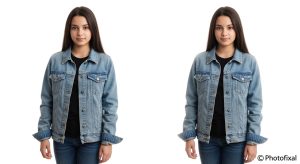
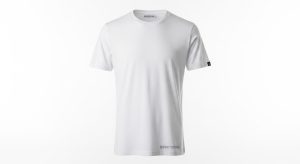
✨ Selling apparel, shoes, or accessories online? Get the invisible mannequin look that converts shoppers with our ghost mannequin editing service — your products will look like they’re floating, ready to be worn.

When Adobe Express Falls Short (and What to Do)

Adobe Express is brilliant for most everyday cutouts, but it has limits. Be honest with yourself when the job is too complex for AI.

Where Adobe Express struggles:

  • Wispy hair against busy backgrounds
  • Glass, ice, or transparent objects
  • Jewelry with reflections
  • Fur, feathers, and lace
  • Heavily compressed JPGs from social media
  • Subjects that blend in tonally with the background

In those cases, you have a few options:

  • Manual hand-tracing in Photoshop using the Pen Tool — slow but precise.
  • A specialist clipping service for batch volumes or tricky edges.
  • Combining tools — let Express do the rough cut, then refine in Photoshop.

A professional clipping path service uses hand-drawn vector paths that follow every contour exactly, which produces sharper edges than any automated tool. For e-commerce sellers with hundreds of products, outsourcing is usually faster and cheaper than doing it yourself.

If you also work with vector graphics, you may find this guide useful: How to crop an image in Illustrator — the techniques pair well with what you’ve just learned in Express.

Adobe Express vs. Other Background Removal Tools

I get asked this question a lot. Here’s an honest, side-by-side breakdown.

Adobe Express

  • Free, browser-based, no install
  • One-click AI removal
  • Built-in editor for further design
  • Best for: social posts, marketing graphics, casual users

Remove.bg

  • Single-purpose, very fast
  • Free downloads at low resolution; HD costs credits
  • No editing tools beyond the cutout
  • Best for: quick one-off cutouts

Canva Background Remover

  • Smooth integration with Canva designs
  • Requires a Canva Pro subscription
  • Best for: people already living inside Canva

Photoshop (full)

  • Unmatched edge precision with Refine Edge and Select Subject
  • Steeper learning curve
  • Best for: complex hair, hero images, print campaigns

Photoroom

  • Excellent mobile-first experience
  • Strong template library for product shots
  • Best for: small sellers shooting on a phone

For free, fast, and good-enough quality, Adobe Express remains the easiest entry point. For professional volume work, hand it to humans.

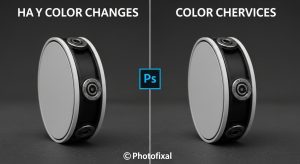
🎨 Want background swaps that match your brand identity perfectly? Try our color change service to generate multiple color variants from a single product photo — ideal for variant listings and A/B testing.

How Background Removal Fits Into a Bigger Editing Workflow

Cutting out a subject is rarely the final step. Here’s the typical chain professional editors follow:

  1. Background removal — isolate the subject.
  2. Edge refinement — clean up hair, fur, or soft transitions.
  3. Color correction — match the subject to the new background’s lighting.
  4. Drop shadow or reflection — add depth so the subject doesn’t look “pasted.”
  5. Retouching — remove blemishes, dust, or distractions on the subject itself.
  6. Final export — choose the right format and resolution for the channel.

Skipping the shadow step is the #1 reason cutouts look fake. A natural-looking shadow grounds the subject and tells the viewer’s brain it belongs there.

🌑 Want your products to look professionally photographed in a real studio? Add lifelike depth with our drop shadow service — natural cast, reflection, and floating shadows that make flat cutouts feel three-dimensional.

Real-World Use Cases for Adobe Express Background Removal

Different roles use this feature differently. Here’s how I see clients applying it in practice.

E-commerce sellers isolate products and place them on pure white for marketplace compliance, then on lifestyle backgrounds for ads.

Real estate agents cut out For Sale signs or staging items for clean property thumbnails.

Content creators build memes, podcast cover art, and YouTube thumbnails by layering multiple cutouts.

Recruiters and HR teams standardize headshots for company directories and LinkedIn-style profiles.

Teachers and trainers create flashcards, worksheets, and slide decks with crisp imagery instead of cluttered photos.

Small business owners design flyers, menu cards, and social ads without paying a designer.

The common thread: a clean cutout makes everything else faster.

Common Mistakes to Avoid

A few traps I see beginners fall into repeatedly:

  • Uploading a tiny image and expecting a high-res cutout. Garbage in, garbage out.
  • Relying only on the auto cutout for portraits. Always check the hairline at 300% zoom.
  • Forgetting to add a shadow when placing the subject on a new background.
  • Saving as JPG when you need transparency. JPG doesn’t support it; only PNG, WebP, and TIFF do.
  • Mixing color spaces — keep everything sRGB unless you have a specific reason not to.
  • Skipping the refinement step because the preview “looks fine.” It rarely is at full resolution.

If you catch yourself making any of these, slow down. Two extra minutes now saves a redo later.

When to Outsource Instead of DIY

Be honest about your time. If you’re cutting out three product photos a week, Adobe Express is fantastic. If you’re doing 300, the math changes fast.

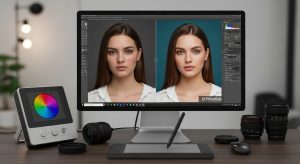
A skilled editor on a photo retouching team can turn around hundreds of cutouts overnight, at consistent quality, with manual edge refinement that no AI matches yet. The hourly rate often works out cheaper than your own time once you factor in revisions, exports, and quality control.

Outsource when you have:

  • Bulk volumes (50+ images)
  • Tight marketplace specifications
  • Complex subjects (hair, fur, jewelry, glass)
  • Tight deadlines for an ad campaign or product launch
  • A need for consistent style across a catalog

Frequently Asked Questions

1. Is Adobe Express background removal free?
Yes. The Background Remover Quick Action is free for everyone with a free Adobe account. You can remove backgrounds, download as PNG, and replace backgrounds without paying. Premium plans unlock advanced templates, fonts, and stock assets, but the core feature is free Adobe Express plans and pricing.

2. What file types and sizes does Adobe Express accept?
Adobe Express supports JPG, PNG, and GIF for the Background Remover. The minimum dimension is 50 px, the maximum is 6000 px on the long edge, and the file size cap is 17 MB.

3. Does Adobe Express work on mobile?
Yes. The mobile app for iOS and Android includes the same Background Remover Quick Action. Results are essentially identical to the web version, and you can edit further in the same app.

4. Can I remove the background from multiple images at once?
Adobe Express handles one image at a time in the Quick Action flow. For batch processing across hundreds of photos, you’re better off using a specialist editing team or a paid bulk-processing API.

5. Why does the cutout look fuzzy or jagged around hair?
AI tools struggle with fine, semi-transparent edges. Use the Restore brush at high zoom to fix it, or let an image masking specialist handle it manually with alpha channel masking.

6. Will Adobe Express keep my image quality?
Yes, as long as you download as PNG. JPG compresses and removes transparency, so always export PNG when quality and a transparent background matter.

7. Do I need an Adobe Creative Cloud subscription?
No. Adobe Express has a generous free tier that includes the Background Remover. Creative Cloud is for users who want Photoshop, Illustrator, Lightroom, and other professional tools.

8. Is my uploaded photo private?
Adobe states that uploaded files are processed securely and are not used to train its AI without explicit permission. Review Adobe’s privacy policy for the latest details before uploading sensitive content.

Wrapping Up

Adobe Express has made background removal genuinely accessible. In under a minute, you can transform a cluttered phone snap into a clean, transparent asset ready for ads, listings, social posts, or pitch decks. The AI handles the heavy lifting, and the built-in editor gives you the refinement tools to polish what’s left.

That said, AI has limits. For high-volume work, complex edges, or campaigns where quality is non-negotiable, a human editor still wins. The smartest workflow combines both: Adobe Express for everyday cutouts, professional services for the stuff that really matters.

Now go cut out something. Your designs will thank you.

🚀 Ready to scale your photo editing without the headaches? Partner with Photofixal’s full editing studio for consistent, deadline-friendly results across thousands of images — from cutouts to retouching to color correction.