Home Pricing About Us Contact

Introduction: The Tiny Rectangle That Holds Everything

You open your wallet dozens of times a day—for coffee, for your ID, for transit cards. But tucked inside that same leather compartment, a small photograph instantly brings a smile to your face. That tiny rectangle holds a memory of someone you love, a pet, or a moment you never want to forget.

But have you ever tried to print one of your own, only to find it doesn’t quite fit? Maybe the edges curl up, or the face gets awkwardly cut off. You are not alone in this frustration.

The real issue starts before you even hit “print.” Successful wallet photos live or die by three key factors: the exact dimensions, the image resolution, and the final finishing touches. Get these right, and your photo slides in perfectly and stays flat. Get them wrong, and you will end up with a blurry, ill-fitting mess.

This guide walks you through everything—from the specific sizes to the professional editing tips that make your tiny prints look sharp, vibrant, and flawless.


📸 Perfect your wallet photos like a pro

Turn your favorite memories into crisp, perfectly sized prints. Our experts can professionally retouch, resize, and prepare any photo for wallet printing.
Get Your Photo Ready Now →


Standard Wallet Photo Dimensions Explained (The Exact Answer)

If you search online for a single answer, you will find two competing numbers. So, which one is correct?

The industry standard for a wallet photo measures 2.5 inches wide by 3.5 inches tall (63.5 mm x 88.9 mm).

This classic vertical orientation provides a balanced, flattering frame for portraits. Most professional labs treat this measurement as the primary wallet size.

However, many modern printing services and photography studios also frequently offer a 2 x 3 inch (50.8 mm x 76.2 mm) option. This smaller size works perfectly for narrower wallet slots or minimalist cardholders.

Quick Reference Breakdown:

  • Standard (US/Global): 2.5″ x 3.5″ (5:7 Aspect Ratio)
  • Compact (Modern): 2″ x 3″ (2:3 Aspect Ratio)
  • Dimensions in MM: 63.5 x 88.9 mm (Standard) / 50.8 x 76.2 mm (Compact)
  • Square Variant: 2″ x 2″ (Often used for IDs and passports)

The “Credit Card” Rule
If you are unsure which size to pick, pull out a standard credit card. It measures roughly 2.125 inches by 3.375 inches. The 2.5″ x 3.5″ wallet size is slightly larger than this. If your wallet fits cards comfortably, the 2 x 3 inch size is usually the safest bet.

Why Photo Size Accuracy Matters More Than You Think

Choosing the wrong dimensions leads to more than just frustration. It directly impacts how your print looks and how long it lasts. Getting the size right prevents frustrating situations where prints do not fit properly or look awkwardly cropped.

Why precision is non-negotiable:

  • Prevents cropping disasters: If your digital image has a 4:3 ratio (common on phones) and you try to stuff it into a 2.5 x 3.5 frame without cropping, you will lose heads or feet.
  • Ensures physical fit: A standard 2.5″ x 3.5″ photo perfectly slides into 5″ x 7″ die-cut sheets. The smaller 2″ x 3″ fits better into magnetic plastic sleeves.
  • Maintains Professional Quality: Whether you order 10 copies or 200, using the proper standard ensures every shot maintains the same professional look and feel.

Common Wallet Photo Variations Explained (2″x3″ vs 2.5″x3.5″)

While the industry may have a “standard,” photographers often use up to four different sizes depending on the wallet type and the photography package.

Let’s break down the two most common contenders.

1. The Compact Standard: 2 x 3 Inches

This is the rising star of the digital age.

  • Best for: Men’s wallets, minimalist cardholders, and school photo packages.
  • Aspect Ratio: 2:3. This is essential because most modern digital cameras and smartphones shoot natively in a 2:3 ratio. That means you will often have to do zero cropping to make this work.
  • Popularity: Considered the standard size in many parts of the United States and Europe for general use.

2. The Classic Format: 2.5 x 3.5 Inches

This is the “old school” photography studio standard.

  • Best for: Traditional frames, scrapbooks, and trading card collections.
  • Aspect Ratio: 5:7.
  • Origin Story: Historically, this size derived from printing four wallet-sized photos on a single sheet of 5×7-inch paper (which was a standard darkroom print size). Cutting that sheet into four equal pieces gave you the 2.5×3.5 inch dimensions.

Comparison Table: Quick Pick Guide

Feature2″ x 3″ (Compact)2.5″ x 3.5″ (Standard)
Aspect Ratio2:35:7
Camera MatchPerfect (Matches most phones)Requires cropping
Wallet FitSlim, fits tight slotsTraditional, roomier fit
UsageSchool photos, ID badgesPortraits, gifts

Wallet Photo Size vs. Other Common Print Sizes (Chart)

Context is everything. To truly understand how small a wallet print is, you need to see how it stacks up against the photos you usually hold in your hand. A 2×3 or 2.5×3.5 image is roughly half the size of a standard 4×6 print.

Comparison Chart:

  • 4×6 (Regular): Aspect Ratio 2:3 — The classic snapshot. A wallet photo is half this size.
  • 5×7 (Desk Frame): Aspect Ratio 5:7 — This actually shares the same aspect ratio as the 2.5×3.5″ wallet. If you print a 5×7 photo and cut it into four equal pieces , you get four 2.5×3.5 photos.
  • 8×10 (Wall Frame): Aspect Ratio 4:5 — Much wider. If you try to print a phone photo (2:3) on an 8×10, the top and bottom will get cut off.
  • Passport (2×2): Aspect Ratio 1:1 — Strictly for government IDs.

The “Print Sheet” Hack
If you are ordering bulk prints, the math matters. A standard 4×6 sheet of photo paper can fit four 2×3 wallet photos (two across, two down). A 5×7 sheet can fit four 2.5×3.5 photos. This knowledge helps you estimate costs.

The Technical Specs: DPI, Pixels, and Resolution

A wallet photo is small, so even minor blurring becomes impossible to ignore. You hold it close to your face. Therefore, resolution is everything.

The gold standard for high-quality photo printing is 300 DPI (Dots Per Inch) .

The Math:

  • For a 2×3 wallet: Multiply width by DPI (2 x 300 = 600) and height by DPI (3 x 300 = 900).
    • Minimum Pixel Dimensions: 600 x 900 pixels.
  • For a 2.5×3.5 wallet:
    • Minimum Pixel Dimensions: 750 x 1050 pixels.

Pro Tip: If your photo is smaller than these pixel dimensions, do not try to stretch it in Photoshop. Stretching a 400×500 photo to fit 750×1050 will turn it into a pixelated, blurry puzzle. You will need upscaling or restoration services to fill in that missing data.

How to Prepare Your Photos for Wallet Printing (Editing Tips)

Moving from a smartphone screen to a physical wallet print requires a few non-negotiable adjustments. Follow this workflow to get professional results.

1. Cropping to the Correct Aspect Ratio

Most smartphones shoot in 4:3 or 16:9. Wallet photos, however, require a specific shape to avoid cutting off heads.

Action Steps:

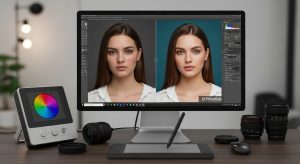
  • Open your photo editing software (Photoshop, GIMP, or even your phone’s editor).
  • Always set the crop tool to a fixed aspect ratio of “2:3” or “5:7” depending on your target print size. Do not freehand crop.
  • Use the “Rule of Thirds” overlay to center the subject’s eyes in the upper third of the frame.
  • Leave breathing room: Because printing machines (especially laser printers) can shift paper by 1/16th of an inch, you must leave a small border around the entire image to account for “bleed”.

2. Sharpening for Small Prints

The smaller the print, the higher the need for “micro-contrast.”

  • Apply sharpening as the last step before saving. Do not sharpen before cropping, as resizing after sharpening causes unpredictable ghosting artifacts.
  • In Lightroom or Camera Raw, increase the “Clarity” slider (10-20 points) to add pop to the facial features without oversaturating the skin.

3. Color Correction for Skin Tones

Yellowish or orange skin tones look terrible on a tiny print.

  • The White Balance Check: Ensure the background is true white or neutral gray.
  • The Screen Check: Adjust your monitor to around 70% brightness. What looks good on a bright phone screen will often print too dark.

✂️ Need the perfect cutout?

Create a stunning wallet photo by isolating the subject from a messy background. Use our professional clipping path service to get clean, sharp edges ready for any print size.
Try a Free Clipping Path Test →

Where to Print: Professional Labs vs. DIY at Home

You have two main roads to travel when turning your pixels into paper. Each has distinct advantages.

Option A: Professional Photo Labs (Best Quality)

If you want long-lasting, professional-grade results, choose a lab. Services like Mpix or Nations Photo Lab are known for their color accuracy and strong paper stock.

  • Pros: Perfect color matching, sturdy cardstock paper, rounded corners (optional), and bulk ordering.
  • Cons: It takes a few days for shipping.

Option B: DIY Home Printing (Fastest)

If you need the photo right now, use a home photo printer.

  • Requirements: You must use glossy or satin photo paper. Standard printer paper will look dull and bleed ink.
  • The Multiple Print Strategy: If you are printing 2×3 photos on a 4×6 sheet, arrange the photo in a grid (four images per sheet – two rows of two). Leave at least 1/4 inch of space between them to allow for cutting.

Creative Uses for Wallet-Sized Photos

Wallet photos are not just for leather folding cases.

  • Lockets and Jewelry: Small 2×2 or 1.5×1.5 prints fit perfectly into vintage lockets. You can use a corner rounder punch for a polished look.
  • DIY Polaroid-Style Gifts: Glue a wallet photo onto a piece of cardstock, leaving a thick white border at the bottom. Write the date or a message there.
  • Business Card Alternatives: Photographers and realtors often print their headshot on a 2×3 wallet card to hand out as a more personal business card.
  • Keepsake Boxes: Keep a stack of wallet photos in your car glovebox or desk drawer to give to friends and family spontaneously.

✨ Make every detail shine

Small photos demand flawless skin and clarity. Our professional beauty retouching service removes blemishes, smooths skin, and enhances eyes for stunning wallet-sized prints.
Get Flawless Retouching →

Frequently Asked Questions

1. Is a wallet photo the same as a passport photo?

No. Passport photos are strictly regulated. The U.S. State Department requires them to be 2 x 2 inches with the head height specifically between 1 and 1 3/8 inches. Wallet photos (2×3 or 2.5×3.5) do not meet government ID regulations because the head size is relatively too small.

2. What is the best aspect ratio for wallet photos?

It depends on your camera source.

  • If you use a smartphone (most default to 4:3) , the 2×3 (ratio 2:3) wallet will require the least amount of cropping.
  • If you are using a DSLR or mirrorless camera, either ratio works fine, but you must adjust the crop composition accordingly.

3. Can I print wallet photos at CVS or Walgreens?

Yes. Most retail pharmacies offer “wallet size” options on their self-service kiosks or apps. However, check the width. Many big-box stores default to printing four 2.5×3.5 prints on a 5×7 sheet. If you have a slim wallet, ask if they can do true 2×3 prints.

4. Why are my wallet photos coming out blurry?

This is almost always a resolution issue. You are likely trying to print a low-resolution image (e.g., a small thumbnail downloaded from social media) at a physical size that requires more pixels. Remember, you need 300 pixels for every inch of print.

5. How do I cut wallet photos without jagged edges?

Always use a paper trimmer (guillotine style), not scissors. Scissors tend to ripple the paper edge. For rounded corners (to match credit cards), invest in a small “corner punch” craft tool from an art supply store.

6. What is a “Jumbo” wallet photo?

A “Jumbo” wallet typically refers to the larger standard size of 2.5 x 3.5 inches. Some brands call the 2×3 “Mini” and the 2.5×3.5 “Jumbo” because it offers a bit more room for the photo.

7. Can I use a high DPI for wallet photos (600+)?

Technically, yes. 600 DPI will provide more detail for archival purposes. However, most consumer printers and standard photo paper do not show a visible difference between 300 DPI and 600 DPI at arm’s length. 300 DPI is the sweet spot for file size versus visual quality.

Conclusion: Fit the Memory, Not Just the Size

A wallet photo is more than just a printed piece of cardstock. It is a daily connection to the people and moments you love. Whether you choose the classic 2.5 x 3.5 for a traditional portrait or the compact 2 x 3 for a modern cardholder, the rules remain the same: Crop with intent, print at 300 DPI, and always leave a small safety margin.

Do not let digital confusion ruin a physical memory. If your image is too dark, too small, or has a distracting background, professional editing can transform it into a crisp, keepsake-quality print before it ever reaches the printer tray.


🖼️ Ready to frame your perfect shot?

Get your image professionally prepped for printing. Our team handles color correction, background removal, and precise resizing so your wallet photos fit perfectly and look amazing.
Start Your Photo Edit →

Photofixal

We are a premier image post-production company specializing in professional shadow creation and product image editing services by expert human editors. Trusted by e-commerce businesses, product brands, and photographers worldwide.

Services

Company

Contact

info@photofixal.com
+880 1714 420630
Dhaka, Bangladesh

© 2026 Photofixal. All rights reserved.

Privacy Policy | Terms of Service |